Precision Fenestration Systems for Commercial & Residential Tenders
Direct factory production, thermal break profiles, precision extrusion alloy EN AW-6063-T6, and NFRC/AS2047 compliant assemblies configured for international real estate developers and specifiers.
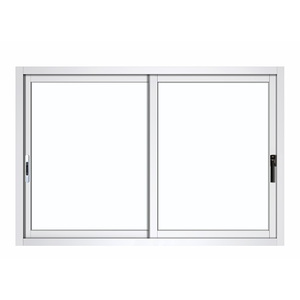
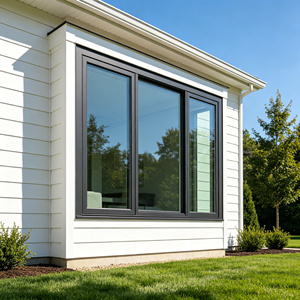
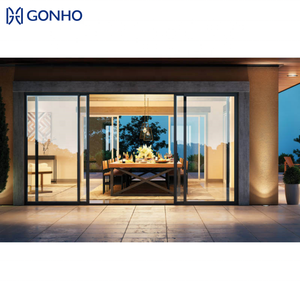
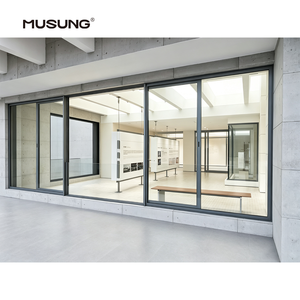
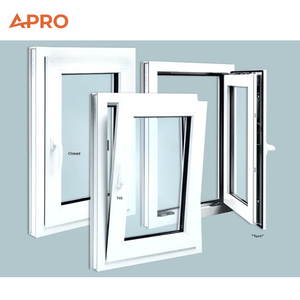
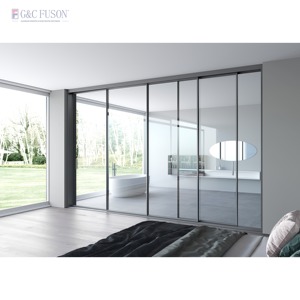
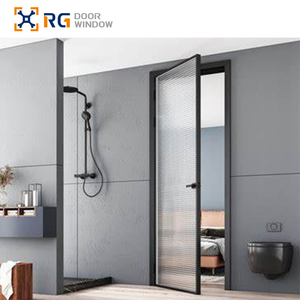
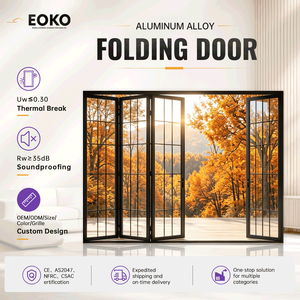
Integrated OEM/ODM Engineering: From Billet to Certified Assembly
Operating from our high-throughput Foshan industrial facility, we maintain absolute lifecycle governance over raw 6063-T6 alloy extrusion, multi-chambered polyamide thermal break insertion (PA66GF25), state-of-the-art fluorocarbon coating, and robotic insulating glass unit (IGU) sealing.
By eliminating third-party processing bottlenecks, we offer developers, structural engineers, and importers an uninterrupted supply chain. Every production run undergoes rigorous verification—including helium mass spectrometry leak testing for argon gas retention, ensuring thermal U-values down to 0.8 - 1.4 W/m²·K.
- Structural Resilience: Certified to AS2047 ultimate limit state wind pressures exceeding 4500 Pa (N6 Cyclonic).
- Thermal Decoupling: High-density technoform polyamides minimizing linear thermal expansion stress.
- Sealing Integrity: Co-extruded EPDM marine-grade gaskets resistant to continuous UV radiation and saline degradation.

Emerging Trends Shaping the Future of Aluminium Window Procurement
Global real estate developers and general contractors are fundamentally pivoting procurement frameworks toward decarbonization metrics, extreme weather resilience, and pre-engineered envelope integration.
1. Embedded Carbon Accounting & Circularity
B2B procurement criteria have shifted significantly from simple ex-factory unit pricing to comprehensive Environmental Product Declarations (EPD). Tier-1 real estate funds prioritize building envelopes manufactured with secondary recycled aluminium billets processed via renewable hydropower.
Our OEM manufacturing pipeline is optimized to slash embodied carbon by up to 42% compared to standard coal-powered smelting profiles, directly accelerating client BREEAM and LEED Platinum certifications.
2. Hyper-Strict Fenestration Performance Standards
International building authorities are enforcing tighter U-factor caps alongside stringent solar heat gain coefficient (SHGC) limits. Standard double glazing is evolving rapidly toward asymmetrical laminated makeups incorporating warm-edge composite spacers.
Procurement teams must audit factory gas-filling chambers to guarantee >90% argon concentration, counteracting the historical 1% annual leakage rate and avoiding localized seal failures over extended 25-year structural warranties.
3. Direct-to-Factory BIM Digital Coordination
The historical disconnect between architectural design and site implementation is eliminated by direct integration of parametric Revit/IFC digital files. B2B contracts increasingly require comprehensive shop drawings prior to raw material cutting.
Our in-house facade engineering department converts conceptual schedules into structural FEA calculations, verifying frame deflection ratios (L/175 to L/250) to eliminate expensive field misfits during high-rise structural installation.
Technological Trajectories: The Next Generation of Architectural Glazing
Continuous R&D investments across profile thermodynamics, smart metallurgy, and vacuum cavity configurations are defining contemporary high-performance fenestration.
Vacuum Insulated Glass (VIG) Hybridization
The industry is transitioning toward hybrid IGU units combining conventional 6mm low-E tempered glass with an ultra-thin 0.15mm vacuum cavity. This innovation achieves thermal isolation values rivaling solid insulated walls (U-values < 0.60 W/m²·K) without expanding the frame profile depth or adding excessive deadweight to structural anchors.
Integrated Concealed Mechatronic Actuation
Modern architectural schemes demand zero-sightline aesthetic continuity. Next-generation double glazed casement and tilt-and-turn units feature integrated 24V brushless DC motors concealed completely within the thermal break rebate. These mechanisms connect directly with centralized Building Management Systems (BMS) for automated natural ventilation cycles.
Nanotech Superhydrophobic & Coastal Coatings
For installations within 500 meters of marine coastlines, standard architectural anodizing degrades prematurely due to chloride ion penetration. Advanced electrophoretic fluorocarbon formulations and multi-layer PVDF systems provide salt spray endurance exceeding 3,000 to 5,000 hours (ASTM B117), ensuring colorfast durability and self-cleaning attributes.
Frequently Asked Questions for Project Directors & Importers
Clear, technically verified responses addressing compliance, engineering metrics, packaging, and project timelines for global window procurement.
Q: How do your double glazed window systems meet Australian AS2047 and American NFRC testing criteria?
Our profiles are tested under NATA-accredited third-party laboratories. For Australian compliance, structural deflection, positive/negative wind pressures, and water penetration resistance (typically 450Pa to 600Pa) meet AS2047 and AS1288 codes, reaching up to the N6 classification. For North America, fenestration units are engineered and certified to meet AAMA/WDMA/CSA 101/I.S.2/A440 standards with NFRC-certified solar optical and thermal simulation data.
Q: What is the operational distinction between standard thermal break and non-thermal break profiles in coastal villas?
Non-thermal profiles offer high structural strength but act as direct thermal bridges, leading to condensation, interior drywall mold, and HVAC inefficiencies. Our thermal break profiles feature precision-crimped 24mm to 34mm polyamides (PA66 reinforced with 25% glass fiber), effectively isolating the exterior temperature zone from the interior conditioned air while preventing interstitial condensation even under high indoor humidity conditions.
Q: What standard tolerances, hardware brands, and sealant configurations are deployed in your ODM orders?
We deploy certified Siegenia, GU, or Hopo multi-point locking gear paired with 304/316 grade stainless steel hinges rated for 50,000 continuous open-close cycles. Glass IGUs incorporate Dow Corning structural silicone seals alongside warm-edge composite spacers filled with molecular sieve desiccant, maintaining localized atmospheric pressure stability during high-altitude shipping logistics.
Q: How does your factory mitigate shipping distortion, glass breakage, and moisture ingress during ocean transit?
Every fenestration unit undergoes protective film masking, protective corner guards, and immersion wrapping inside heavy-gauge polyethylene moisture barriers. Sub-assemblies are secured within fully enclosed, fumigated solid timber export crates with internal high-density EVA shock-dampening pads. Crates are engineered with base channels for balanced forklift offloading, minimizing transit acceleration impact.
Q: Can our architectural firm request customized extrusion dies for unique curtain wall or window sills?
Yes. Our in-house tooling division engineers bespoke extrusion dies based on client CAD/BIM specifications. The standard prototyping timeline is 12 to 16 calendar days for initial die extrusion and profile sample production, followed by photogrammetric and structural validation prior to commissioning full-scale extrusion batches.
Q: What documentation is provided for commercial building certifiers and council planning approvals?
Every commercial dispatch is accompanied by an extensive documentation binder containing structural shop drawings approved by registered structural engineers, raw material chemical composition mill certificates (EN 10204 3.1), glass acoustic transmission test certificates (STC/Rw ratings), cyclone impact test records, and comprehensive 10-to-25-year manufacturer warranties.