Engineered Architectural Window & Door Systems
Each system is manufactured using primary 6063-T5/T6 architectural aluminum billet, thermally isolated by high-tensile Technoform polyamide strips, and tested against water penetration, structural deflection, and cyclic air infiltration.
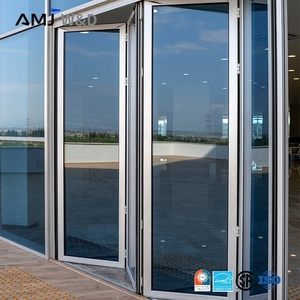
China Folding and Sliding Exterior Double Low-E Glass Aluminum Bi Folding Door
Bottom-weighted stainless steel roller tracks, Low-E double glazing with argon gas, and multi-point perimeter seals.
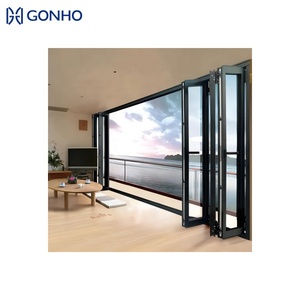
NFRC Standard Soundproof Bi-Folding Aluminum Windows & Doors
Engineered for commercial acoustic isolation (STC 42), polyamide thermal breaks, and extreme weatherproofing.
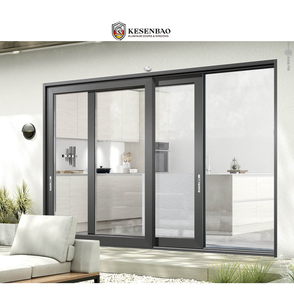
Outdoor Hurricane Proof Patio Impact Glass Balcony Aluminum Sliding Doors
SGP laminated impact glass, structural interlocks engineered for design pressures over 4500 Pa (N6 wind category).
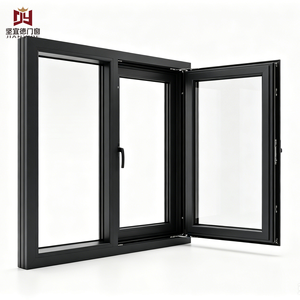
Aluminium System Tilt & Turn Energy Saving Casement Windows
Dual-action European hardware with German multi-lock points, PA66GF25 thermal insulation, and U-value ≤ 1.4 W/m²K.
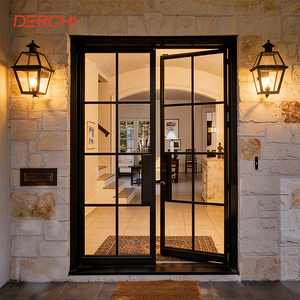
DERCHI Modern Luxury Slim Profile Glass French Swing Aluminum Door
Minimalist narrow-bezel styling, concealed hinges, fluorocarbon surface finish, and magnetic airtight latching.
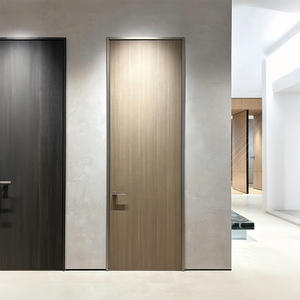
Acoustic Aluminum Honeycomb Wood Veneer Interior System Door
Aviation-grade aluminum honeycomb core, warp-free anodized perimeter frame, and sound attenuation damping chambers.
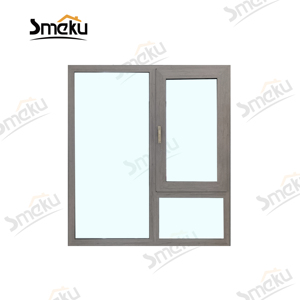
Anthracite Grey Casement Window & Architectural Fixed Glass Panel
Qualicoat Class 2 architectural powder coat, flush interior sash profiles, and multi-tier EPDM automotive grade gaskets.
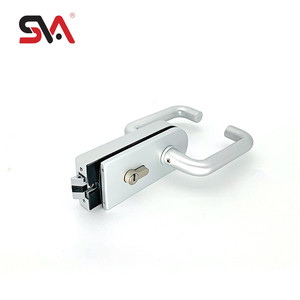
Architectural Aluminum Alloy Tempered Glass Enclosure System
Corrosion-proof 316 stainless/alloy hardware, nanometer easy-clean hydrophobic glass surface, smooth quiet rollers.
The Engineering Blueprint of Custom OEM Aluminum Fabrication
Specifying custom fenestration profiles for international commercial, institutional, and luxury residential projects requires an uncompromising assessment of metallurgical alloys, thermal break architectures, and surface coating resilience.
Primary Alloy Metallurgies
DERCHI fabricates exclusively from virgin 6063-T5 and structural 6061-T6 aluminum ingots. Unlike remelted scrap aluminum containing iron impurities that initiate intergranular micro-corrosion, our prime profiles deliver tensile strengths surpassing 205 MPa and yield strengths ≥ 170 MPa, ensuring zero sash warping across 3.5-meter floor-to-ceiling spans.
Isobaric Polyamide Cavities
Thermal bridge neutralization is achieved by inserting 25% glass fiber reinforced polyamide 66 (PA66 GF25) thermal struts. By calibrating the thermal expansion coefficient of the composite strut to match aluminum (2.3×10⁻⁵ K⁻¹), our multi-chamber profile systems achieve exceptional thermal insulation (Uf down to 1.1 W/m²K) without internal shear delamination.
Marine-Grade Surface Chemistries
For coastal and industrial environments (ISO 12944 C4 & C5-M corrosivity classes), our automated vertical powder coating lines deploy AkzoNobel Interpon D3000 fluorocarbon and PPG Duranar PVDF resins. Formulated to withstand 4,000+ hours of continuous neutral salt spray (ASTM B117) with delta E color shift under 0.8 across a 15-year horizon.
| Performance Dimension | DERCHI OEM Specification | Standard Market Commodity | Compliance Standards Tested |
|---|---|---|---|
| Alloy Purity & Wall Thickness | Primary 6063-T5 / T6 (1.8mm - 3.2mm structural walls) | Secondary recycled billet (≤ 1.4mm uneven walls) | ASTM B221 GB 5237 |
| Wind Pressure Resistance | N6 Rating: Serviceability 3000 Pa, Ultimate ≥ 4500 Pa | N3 / N4 Rating: Ultimate ≤ 2000 Pa | AS 2047 ASTM E330 |
| Water Penetration Barrier | Static: 700 Pa; Dynamic cyclic: 1000 Pa with isobaric drainage | Unpressurized weep holes, failure at 150 - 300 Pa | AS 4420.5 EN 12208 |
| Acoustic Attenuation (Rw / STC) | Rw 42 dB - 48 dB (with acoustic PVB laminated IGU) | Rw 26 dB - 30 dB (standard monolithic double glazed) | ISO 10140-2 ASTM E90 |
| CNC Milling Precision | 5-Axis European machining center (±0.05 mm corner miters) | Manual saw cutting & punching press (±0.8 mm gap error) | ISO 9001:2015 |
Why Global Specifiers & Developers Choose DERCHI
Recognized among China's top tier architectural fenestration brands, Guangdong Dejiyoupin Doors and Windows Co., Ltd. consolidates deep fabrication infrastructure with direct engineering support for Oceania, North America, and European markets.
180,000m² Integrated Base
Our centralized manufacturing hub in Foshan integrates casting, precision extrusion, automated anodizing, CNC machining, and insulated glass assembly under one unified quality management umbrella.
Free CAD & BIM Engineering
We convert your architectural tender drawings into shop drawings, extrusion die schematics, and structural calculation reports within 48 hours, fully verified by in-house structural engineers.
AS 2047 & NFRC Compliance
Tested and audited by independent accredited laboratories. Every fenestration order arrives complete with certifier documentation, seismic deflection records, and traceable factory batch certificates.
Oceania & Global Logistics
Heavy-duty steel-caged, biosecurity-compliant export crating. Containerized FCL and LCL direct shipping to Sydney, Melbourne, Auckland, Vancouver, Los Angeles, and Pacific island seaports.
Future Procurement & Technological Trends (2025–2030)
The global aluminum window and facade sector is experiencing a paradigm shift driven by stringent carbon border adjustments, net-zero building regulations, and smart building integration. Here is what engineering procurement directors must anticipate.
Low-Carbon & Recycled Ingot Auditing
Tier-1 commercial contracts across Australia, Europe, and the US now mandate certified Environmental Product Declarations (EPD). Future procurement relies on hydro-powered electrolytic smelting, reducing the carbon footprint of fabricated aluminum from 16 kg CO₂/kg down to under 4.0 kg CO₂/kg.
Passive House Super-Insulated Framing
As National Construction Codes (NCC 2022+) and Title 24 mandate tighter thermal envelopes, conventional 50mm systems are being phased out in favor of 75mm - 90mm multi-cavity thermal break extrusions accommodating 42mm triple-glazed warm-edge krypton units that meet U-factors ≤ 0.85 W/m²K.
Motorized Concealed Automation & Smart BIPV
Architects demand ultra-slim, floor-recessed threshold sightlines paired with concealed brushless 24V servo actuators. Modern installations increasingly integrate photovoltaic glass (BIPV) inside fixed spandrel lites, transforming architectural envelope surfaces into active energy generators.
The 5-Stage OEM Fabrication & Verification Protocol
How our Foshan fabrication facility safeguards dimensional tolerances, structural integrity, and coating consistency from initial alloy extrusion to international container dispatch.
1. CAD/CAM Die Tooling
Custom profile extrusion dies are precision cut via wire EDM tooling. Billet heating is monitored via infrared pyrometry to ensure homogeneous grain orientation during profile extrusion, maintaining EN 755-9 dimensional tolerances.
2. 5-Axis CNC Milling
Dual-head compound saws cut 45° and 90° joint bevels within 0.1° accuracy. Automated 5-axis CNC machining centers drill lock cases, drainage weep chambers, and hinge cutouts in one single clamp setup to prevent operator error.
3. Structural Assembly & Testing
Extruded corner cleats receive pneumatic adhesive injection with dual-component polyurethane epoxy. Random batch specimens undergo rigorous cyclical testing inside our factory air-water-structural test chamber prior to crating.
Frequently Asked Questions for Project Specifiers & Importers
Key compliance, engineering, and logistics clarifications answered directly by our senior facade engineering team.
What documentation do you provide for AS 2047, NFRC, and CE local building compliance?
Every commercial or residential order shipped from our Foshan facility includes a comprehensive compliance pack: NATA/accredited laboratory AS 2047 test reports (confirming deflection, air infiltration, water penetration, and ultimate strength up to N6 / cyclonic ratings), AS 1288 glass compliance certificates, NFRC thermal simulation reports (U-factor, SHGC, VT), and European CE Declaration of Performance (DoP) filings. These enable immediate sign-off by local certifiers, structural engineers, and council building authorities.
What is the minimum order quantity (MOQ) and sample turnaround time for custom dies?
For custom architectural developments, we maintain a flexible OEM structure. Standard profile collections have zero minimum order restrictions (suited for single bespoke luxury villas). For proprietary custom extruded profiles, the initial tooling die cost is nominal and refunded upon reaching 5 metric tons of extrusion. Die production and initial extrusion sample delivery takes 12 to 18 days, with 3D-printed prototype corner models ready in 48 hours for immediate physical verification.
How do you protect oversized glazed windows and doors against shipping transit damage?
International ocean freight demands specialized engineering protection. Finished units undergo multi-tier protection: protective peel-off foil across all aluminum faces, shock-absorbing high-density polyethylene edge protectors, and total moisture-barrier vacuum wrapping with internal silica desiccants. The assemblies are then anchored within non-timber steel-framed crates or ISPM 15 fumigation-exempt heat-treated plywood crates fitted with tip-and-tilt shock indicators. Fragile oversize glass lites feature dedicated A-frame racking inside the shipping containers.
Which surface finishing is recommended for coastal waterfront environments?
For installations situated within 1 km of saltwater coastlines (marine C5-M environment), standard powder coating will exhibit filiform corrosion within 24 to 36 months. We recommend either: (1) Architectural fluorocarbon PVDF coating (minimum 70% Kynar 500 resin, triple-coat system exceeding AAMA 2605 specifications with 10-year gloss retention), or (2) Class 1 hard anodizing with 25-micron oxide layer depth (tested to AS 1231). All associated fixing hardware must be upgraded to 316-grade marine stainless steel.
Can you coordinate custom hardware integration such as smart locks and concealed pivots?
Yes. Our in-house engineering department regularly collaborates with world-leading hardware suppliers including Roto Frank, Siegenia, Hoppe, GU, and DormaKaba. Our CNC milling operations are programmed to prepare exact mortise pockets and wire chaseways for motorized multipoint electronic locks, concealed hydraulic floor springs, magnetic reed contact sensors, and biometric entry controls, ensuring zero on-site frame drilling during final fit-out.