High-Performance Aluminum Clad Doors & Architectural Fenestration Systems
Manufactured using virgin 6063-T6 aerospace aluminum alloys, multi-chambered polyamide thermal breaks, and premium structural weatherproofing to satisfy demanding global project schedules.
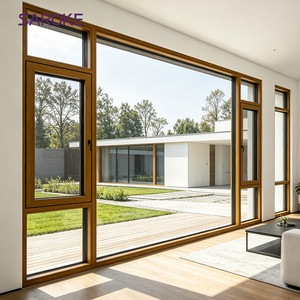
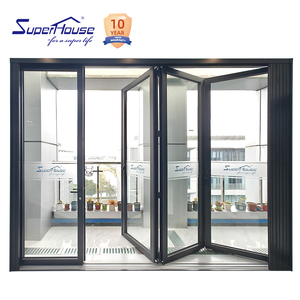
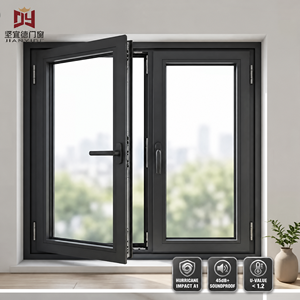
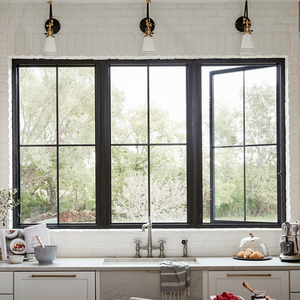
The Industrial Engine Behind High-End Global Clad Fenestration
As an industry-leading manufacturer headquartered in Foshan, Guangdong Dejiyoupin Doors and Windows Co., Ltd. (DERCHI) operates one of Asia's most advanced architectural door and window fabrication centers. With over a quarter of a century of focused technical evolution, our vertically integrated OEM infrastructure spans deep profile extrusion tooling, multi-axis computerized CNC milling, robotic corner crimping, and automated electrostatic powder coating.
Our structural engineering philosophy centers on resolving real-world architectural challenges: eliminating thermal bridging, preventing galvanic corrosion, dampening urban acoustic transfer, and withstanding extreme wind loads. Having served as a dedicated supplier for multi-unit high-rises, coastal luxury villas, and commercial complexes across Oceania, North America, and Europe, our bespoke aluminum clad systems offer the structural fortitude of heavy-wall extruded aluminum coupled with the timeless elegance of interior architectural wood or thermal-break cores.

Material Science & Structural Anatomy of Aluminum Clad Doors
A rigorous engineering comparison between standard fenestration approaches and our proprietary exterior-clad composite architectures.
| Performance Vector | Commercial Extruded Aluminum Clad | Roll-Formed Aluminum Cladding | Standard Thermally Broken Aluminum |
|---|---|---|---|
| Profile Wall Thickness | 2.0mm – 3.2mm (Structural 6063-T6) | 0.6mm – 1.0mm (Vulnerable to denting) | 1.4mm – 2.0mm (Architectural non-clad) |
| Thermal Transmittance (U-Value) | 0.85 – 1.35 W/m²·K (Passive House Capable) | 1.80 – 2.40 W/m²·K (Thermal leakage risk) | 1.60 – 2.20 W/m²·K |
| Structural Wind Load (AS 2047) | N6 Rating (>4500 Pa Cyclonic Resistance) | N2 – N3 Rating (<2000 Pa) | N4 – N5 Rating (Up to 3000 Pa) |
| Cladding Fastening Mechanism | Floating Independent Nylon Fasteners | Adhesive / Mechanically Pin-Punched | Direct Extrusion Matrix |
| Differential Expansion Buffer | Integrated Isobaric Cavity (Zero Warping) | Rigid (Prone to delamination & buckling) | Uniform (Restricted by thermal bridge) |
| Corrosion Resistance Standards | AAMA 2605 / Qualicoat Seaside Class 3 | AAMA 2603 Standard Liquid Paint | Qualicoat Class 1 / Class 2 |
Floating Snap-On Extrusion System
Wood and aluminum exhibit vastly different thermal expansion coefficients (Aluminum expands at roughly 23×10⁻⁶/K, whereas timber expands across the grain at roughly 35×10⁻⁶/K). DERCHI utilizes proprietary high-strength polyamide clips that let exterior aluminum profiles float independently against the internal substrate, preventing seasonal warping, corner shear, and seal degradation.
Isobaric Cavity Drainage Dynamics
Water ingress prevention is not reliant solely on sealant beads. Our multi-chambered outer extrusion integrates an unsealed equalized pressure decompression zone. Rainwater driven by storm conditions loses kinetic energy within the expansion chamber and is evacuated outwards through concealed base weep channels under zero hydrostatic pressure.
Severe Marine C5-M Surface Treatment
Coastal projects face rapid pitting corrosion caused by airborne sodium chlorides. Every DERCHI exterior profile undergoes automated zirconium chemical conversion pre-treatment followed by fluorocarbon PVDF spray or super-durable AkzoNobel powder coating, certified to resist over 3,000 hours of continuous neutral salt spray (ASTM B117).
Emerging B2B Procurement Trends for Aluminum Clad Doors
How global architectural mandates, environmental regulations, and building information modeling are reshaping specification criteria for commercial developers and fabricators.
Embodied Carbon Mandates
Leading commercial developers in Oceania and Europe increasingly demand Environmental Product Declarations (EPD). Modern procurement favors primary billets smelted using renewable hydro-power and closed-loop scrap recycling, reducing life-cycle carbon expenditure in line with LEED v4.1 and Green Star ratings.
Ultra-Large Minimalist Sightlines
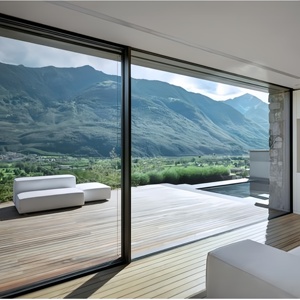
Architectural demand has transitioned rapidly from heavy frame sightlines to slim structural profiles capable of bearing oversized double- and triple-glazed units. Door leafs exceeding 3.5 meters in height and weights above 450 kilograms require custom heavy-duty continuous concealed pivot assemblies and stiffened structural mullions.
Smart Access & Automation Integration
Modern aluminum clad doors are no longer purely mechanical barriers. Global buyers specify factory-concealed wire routing conduits, electromagnetic multi-point lock actuators, biometric face-recognition interfaces, and seamless integration with commercial KNX/BACnet Building Management Systems (BMS).
Turnkey Virtual Pre-Verification
Procurement teams are mitigating cross-border risk via digital twins and detailed CAD shop-drawing submittals prior to manufacturing. Specifiers demand parametric Revit/BIM files, live assembly QC camera feeds, and automated 360-degree virtual factory audits to verify tooling tolerances before maritime loading.

Technological Evolutions Shaping Next-Gen Aluminum Cladding
The legacy technique of crimping sheet aluminum over softwood cores has been rendered obsolete by architectural failure rates in humid and high-solar climates. DERCHI has spearheaded three fundamental technological shifts in our Foshan manufacturing laboratories:
- Polyamide PA66 GF25 Structural Bars: By integrating German Technoform 25% glass fiber-reinforced polyamide thermal breaks, our structural clad profiles maintain mechanical tensile strength exceeding 120 N/mm² while dropping thermal conductivity to lambda = 0.3 W/(m·K).
- Automated Dual-Component Structural Silicone Glazing: Eliminating standard rubber glazing beads that crack under prolonged tropical UV exposure, our industrial lines utilize robotic Dow Corning silicone application for permanent glass-to-aluminum structural bonding.
- Precision Multi-Axis CNC Profile Milling: Hardware mortises, multipoint lock keepers, and drainage cavities are routed simultaneously on German 5-axis machining centers within +/- 0.05mm tolerances, eliminating on-site adjustment errors.
Global Compliance & Structural Validation

Frequently Asked Questions for Project Specifiers & Importers
Essential commercial, engineering, and logistical insights for general contractors, commercial distributors, and architectural design firms.
How do DERCHI aluminum clad doors achieve compliance with AS 2047 and NFRC standards?
What alloy and extrusion wall thickness do you specify for custom OEM orders?
Why did established European builders switch from German systems (like Schüco) to DERCHI?
What wood species and preservative treatments are integrated on the interior clad face?
How are door units packaged to ensure zero damage and quarantine compliance during ocean freight?
Can you manufacture completely bespoke extrusion profiles and custom architectural colors?
What engineering support is provided for local installers and certified site teams?
5-Stage Precision Project Execution Roadmap
From initial design intent to containerized delivery, our engineering workflow minimizes procurement risk at every operational milestone.
01. Specification & CAD Review
Our engineering bureau reviews your architectural elevations, wind pressure requirements, opening schedules, and glass performance criteria, generating preliminary shop drawings within 48 hours.
02. Prototyping & Lab Sign-Off
For custom profile series, physical corner prototypes and mockups are fabricated to verify gasket compression, corner crimping seal integrity, and structural hardware alignment prior to mass extrusion.
03. Precision CNC Production
Profiles are processed on high-speed CNC centers with continuous digital caliper inspections. Every sash is pre-hung in our factory jig to calibrate locks, concealed closers, and weatherstrips under working conditions.
Accelerate Your Project Timeline with Factory-Direct Engineering
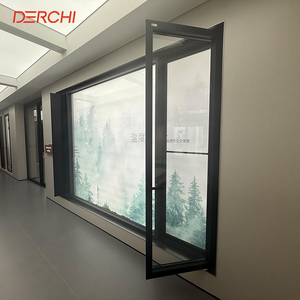
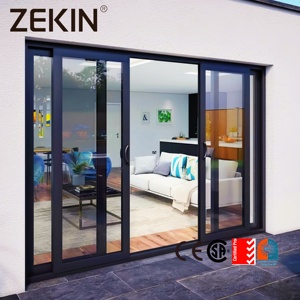
Whether you require custom aluminum clad pivot doors for an exclusive villa, high-volume sliding assemblies for a master-planned community, or hurricane-proof fenestration tested to AS 2047 and NFRC standards — DERCHI brings 25+ years of tier-1 manufacturing expertise directly to your schedule.