Engineered Aluminum Alloy Windows & Architectural Doors
High-tensile 6063-T5 aluminum extrusions, multi-cavity thermal barriers, acoustic safety laminates, and German structural hardware manufactured to AS 2047, CE, and Miami-Dade NOA standards.
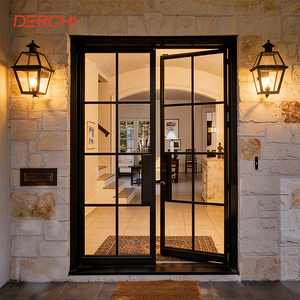
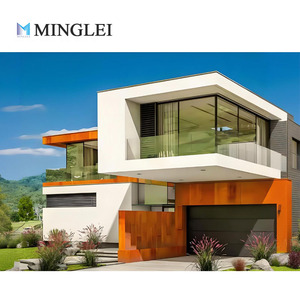
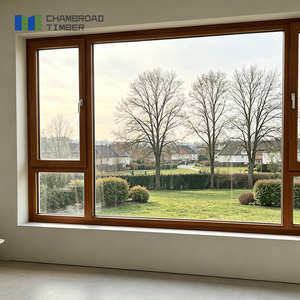
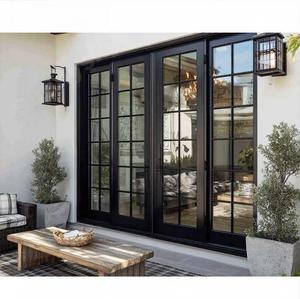
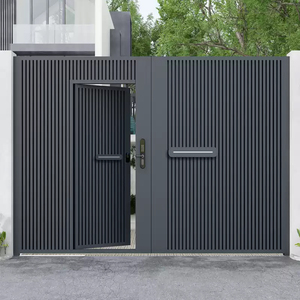
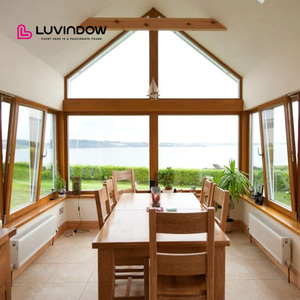
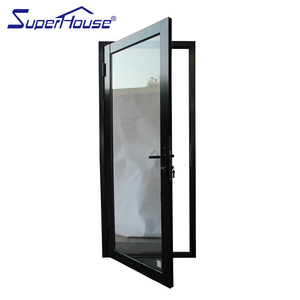
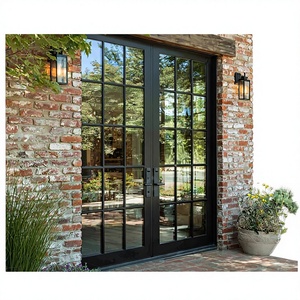
In modern commercial architecture and high-performance residential building envelopes, selecting a custom OEM aluminum alloy windows exporter is no longer merely a procurement exercise in unit pricing. It is a critical engineering decision that dictates structural integrity, life-cycle thermal dynamics, air-water-structural resilience under extreme cyclonic stress, and total compliance with stringent international building codes including AS 2047, AS 1288, AAMA/WDMA/CSA 101/I.S.2/A440, EN 14351-1, and Miami-Dade County NOA protocols.
1. Engineering Foundations: Aluminum Alloy 6063-T5/T6 Profile Extrusion & Metallurgy
The core of high-performance architectural windows lies within profile metallurgy. Leading OEM aluminum alloy window exporters utilize prime architectural billet—specifically virgin aluminum alloy 6063 homogenized and heat-treated to T5 or T6 temper designations, rather than low-grade scrap-recycled melts which exhibit crystalline inclusions and reduced tensile properties. Alloy 6063 delivers the optimum balance between tensile yield strength (minimum 160 MPa for T5, 215 MPa for T6) and exceptional surface finish receptivity required for architectural anodizing and marine-grade electrostatic fluorocarbon (PVDF) coatings.
In our Foshan smart manufacturing base, multi-die precision extrusion presses produce profile wall thicknesses calibrated from 1.4 mm for standard residential casements up to 3.0 mm for heavy-duty commercial curtain wall infills and high-load sliding spans. Each profile geometry is finite-element modeled (FEA) to eliminate shear failure points, optimize internal drainage pathways, and integrate polyamide 66 reinforced with 25% short glass fiber (PA66-GF25) thermal break strips. This precision extrusion engineering guarantees that our fenestration assemblies achieve dimensional tolerances far tighter than standard ISO 2768-m specifications.
| Performance Parameter | OEM Engineering Standard | Test Standard / Benchmark | Specifier Benefit |
|---|---|---|---|
| Alloy Designation & Temper | Primary Architectural 6063-T5 / 6063-T6 | ASTM B221 / EN 755-2 / GB 5237 | Superior structural deflection resistance & crisp corner miters |
| Thermal Barrier System | Polyamide PA66-GF25 (Isobaric Multi-Cavity) | DIN EN 14024 / ASTM C1363 | Drastic reduction of U-values down to 0.82 W/m²·K (Passive House) |
| Structural Wind Load (Cyclonic) | Serviceability & Ultimate Limit: up to 4500 Pa (N6) | AS 2047 / AS 4055 / TAS 202 (Miami NOA) | Tested for coastal typhoon zones and severe oceanfront exposures |
| Water Penetration Resistance | Static / Dynamic pressure up to 700 Pa | ASTM E331 / AS 4420.5 / EN 12208 (Class 9A) | Zero water ingress under simultaneous hurricane driving rain |
| Acoustic Decibel Attenuation | STC 38 to 45 dB / OITC 32 to 38 dB | ASTM E90 / ISO 717-1 / AS 1191 | Deep acoustic silence in airport and dense metropolitan corridors |
| Surface Coating Resilience | AAMA 2605 Fluorocarbon (PVDF 3-Coat) / Anodized 25μm | Qualicoat Class 2 & 3 / AAMA 2604/2605 | 30-year resistance against severe coastal salt spray and high-UV fading |
2. Product Recommendations: Tailored OEM Fenestration for Global Typologies
Every international commercial project operates under distinct climatic, geographic, and statutory constraints. A seasoned OEM aluminum alloy window exporter must deliver modular systems that balance structural load limits, optical clarity, solar heat gain coefficients (SHGC), and ease of installation. We classify and recommend our core configurations according to project typology:
Thermal Break Casement & Awning Windows
Multi-point lock security, EPDM vulcanized co-extruded gaskets, and concealed friction hinges. Recommended for mid-to-high rise residences demanding strict acoustic and weather tightness.
Minimalist Slimline Sliding Systems
Ultra-slim interlocking stiles (down to 20mm sightlines) equipped with 316 stainless steel heavy-duty rollers capable of carrying 450kg panels for expansive panoramic villa openings.
European Tilt-and-Turn Systems
Dual-function perimeter hardware offering micro-ventilation in tilt mode and wide egress clearance in turn mode. Engineered specifically for high-efficiency commercial facades.
Miami-Dade Impact Patio & Entry Doors
Laminated SentryGlas (SGP) or 1.52mm PVB interlayer glazing embedded within reinforced alloy frames designed to survive large missile impacts and cyclic pressure oscillations.
3. Future Procurement Trends in Custom OEM Window Manufacturing
The international supply chain for architectural aluminum fenestration is undergoing tectonic shifts driven by regulatory decarbonization, building automation, and digitized quality assurance. Commercial importers and project procurement managers must align with exporters who anticipate these evolving global vectors:
Embodied Carbon Transparency & Green Aluminum
Tier-1 contractors across North America, Europe, and Australia increasingly mandate Environmental Product Declarations (EPD). Modern OEM exporters are adopting low-carbon certified smelters powered by renewable hydroelectric energy, keeping carbon intensity below 4.0 kg CO₂e per kg of primary aluminum.
BIM Integration & Parametric CAD Schedules
Traditional PDF takeoffs are obsolete. Sophisticated exporters provide native Autodesk Revit BIM models with accurate Level of Development (LOD 350-400), embedding thermal properties, operational clearances, and structural anchor schedules directly into the digital digital twin.
Smart Sensor & Mechatronic Concealment
Fenestration profiles are transforming into intelligent building envelopes. Future procurement emphasizes micro-actuators concealed inside the frame rebate, magnetic reed status sensors, and automated motorized sash controls fully interfaced with BACnet and KNX building automation protocols.
4. Technological Evolution of Aluminum Fenestration Engineering
From a developmental perspective, aluminum alloy window fabrication has moved beyond manual miter-saws and pneumatic crimping. Industrial 4.0 CNC machining centers allow five-axis simultaneous milling of hinge mortises, drainage weeps, and multi-point lock receivers with microscopic accuracy (±0.05 mm). This technological jump eliminates structural play, uneven gasket compression, and air leakage that historically afflicted imported fenestration.
Furthermore, glazing integration has progressed to structurally bonded warm-edge configurations. By utilizing structural silicone glazing (SSG) in combination with warm-edge composite spacers (such as Technoform or Swisspacer) and argon gas cavity filling (≥90% concentration), contemporary aluminum alloy windows completely eliminate edge-condensation cold bridges. The result is total fenestration assemblies meeting whole-window U-factors (Uw) below 1.1 W/m²·K without excessive profile bulk.
5. Enterprise Manufacturing Advantages: Why Partner with Our Foshan Facilities
Headquartered in the epicenter of the world's aluminum extrusion manufacturing hub in Foshan, Guangdong (Guangdong Dejiyoupin Doors and Windows Co., Ltd. / DERCHI), our production complex represents one of China's top-tier window and door manufacturing organizations. Spanning an expansive 180,000 square meter modernized factory base, we have engineered and exported custom architectural window and door solutions to over 60 countries across Australasia, North America, Europe, and the Middle East.
AS 2047, CE & Miami NOA Compliance
Every window line is pre-engineered and independently validated to pass extreme physical testing, including N6 ultimate limit state structural wind pressure, cyclonic water tightness, air infiltration, and TAS-201/202/203 missile impact standards.
Complimentary CAD & Shop Drawing Engineering
Our dedicated bilingual engineering team provides complete 2D/3D CAD shop drawings, structural anchor calculation sheets, wind load deflection calculations, and glass thermal stress analyses customized precisely to your architectural schedule prior to billet extrusion.
Export-Grade Heavy Duty Plywood Packaging
We eliminate transit damage via fumigated solid-ply crating, corner edge protectors, waterproof plastic wrapping, and internal cushioning buffers engineered specifically for ocean container transport (FCL & LCL) arriving directly at your job site without scratches or glass micro-fracturing.
Need Custom OEM Engineering Drawings & Factory-Direct Quotations?
Our senior fenestration project engineers are online to review your architectural window schedules, provide shop drawings, and deliver full container export pricing tailored to your port of delivery.
Send an Inquiry6. B2B Procurement FAQ: Critical Questions for Importing Aluminum Windows
International fenestration procurement entails technical verification, warranty liability, and logistical coordination. Below are answers to the essential inquiries posed by general contractors, developers, and commercial distributors: