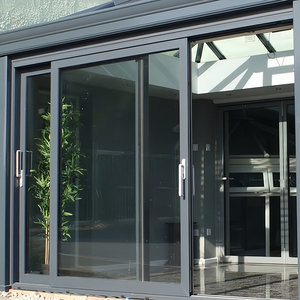
Engineered Aluminium Heavy Door Specifications
Tested for dynamic structural wind pressure, coastal saltwater oxidation immunity, and multi-point security integrity. Built exclusively for commercial and luxury residential architectures.
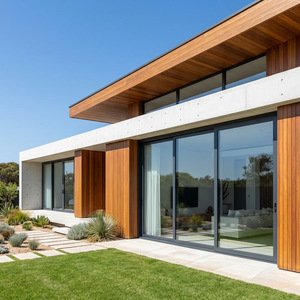
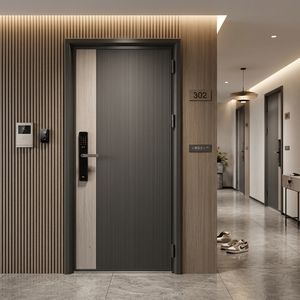
180,000m²
Modern Manufacturing Base
AS 2047 (N6)
Certified Cyclonic Rating
3.0mm+
Architectural Wall Profile
100+
Global Patents & Certifications
Procurement Intelligence
Engineering the Modern Entrance: Material Science, Thermal Deflection, and Load Dynamics
A technical guide for facade engineers, commercial general contractors, and tier-1 procurement executives.
In modern architectural design, the boundary between an exterior facade and an entry portal has transformed. Heavy aluminium doors are no longer simple movable barriers; they are precision mechanical systems subjected to extreme dynamic wind loads, severe thermal expansion deltas, and intense building movement cycles. Selecting an established custom OEM aluminium heavy door manufacturer requires moving beyond superficial aesthetic inspections to verify core structural metallurgic standards, alloy thermal isolation engineering, and heavy-duty load-bearing pivot integrations.
Primary failure points in standard commercial aluminium doors typically emerge from structural flexure under high wind loads, localized thermal bridging, and hardware deflection induced by excessive panel weights. When door leaf dimensions exceed 3000mm in height or 1500mm in width, panel mass routinely exceeds 250kg to 450kg—particularly when integrating acoustic acoustic-laminated or multi-pane Low-E insulated glass units (IGUs). Under such loads, conventional aluminium extrusions with wall thicknesses under 2.0mm experience torsional distortion, resulting in perimeter seal failures, air infiltration, and catastrophic latch misalignment. Professional OEM manufacturers resolve this through precision-extruded 6063-T6 or 6005-T5 architectural aluminium profiles featuring nominal wall thicknesses of 2.5mm to 3.5mm, reinforced internal multi-chamber webbing, and high-shear polyamide (PA66 GF25) thermal barrier strips.
Oversized Pivot Mechanics & Floor-Spring Integration
Global procurement data reveals an accelerating shift toward oversized single-panel pivot doors exceeding 1800mm × 3600mm. These setups eliminate conventional side hinges, transferring continuous compressive loads directly into sub-floor hydraulic German or Italian pivot assemblies capable of supporting loads up to 600kg without panel sag.
Polyamide Thermal Barriers & High Energy Codes
With stringently enforced building energy mandates (such as Australia's NCC 2022/2025 updates and ASHRAE 90.1), heavy commercial entry systems now specify multi-cavity thermal break extrusions. Integrating 25% glass fiber reinforced polyamide (PA66 GF25) guarantees total U-values (Uw) lower than 1.6 W/m²K even in extreme tropical or sub-zero climates.
Extreme Wind Performance & Cyclonic AS 2047 Testing
Coastal and typhoon-prone developments demand third-party verified ultimate limit state (ULS) and serviceability limit state (SLS) dynamic wind pressure ratings. Engineering door leaves to AS 2047 N6 categories ensures continuous resistance against structural gusts surpassing 4500 Pa without plastic profile deformation.
Technical Evaluation Matrix
OEM Heavy Aluminium Door vs. Standard Commercial Systems
A side-by-side engineering breakdown illustrating structural, mechanical, and surface finishing differentiators.
| Performance Vector | Standard Commercial Doors | DERCHI Heavy OEM Aluminium Systems | Engineering Impact / Project Longevity |
|---|---|---|---|
| Aluminium Alloy & Temper | Recycled billet 6063-T5 (1.4mm - 1.8mm) | Virgin 6063-T6 or 6005-T5 (2.5mm - 3.5mm) | Prevents frame torsion under 300kg+ double glazed panels; 200% higher yield strength. |
| Thermal Isolation Technology | Non-thermal break or basic resin pour-and-debridge | Multi-cavity PA66 GF25 technoform thermal breaks | Eliminates internal surface condensation; achieves stringent compliance with international green codes. |
| Structural Wind Load (AS 2047) | N2 - N3 Rating (~1500 Pa ULS) | Tested N6 Rating (Exceeding 4500 Pa ULS) | Essential for exposed coastal villas, commercial mid-rises, and cyclone-prone oceanfront corridors. |
| Hardware & Pivot Tolerance | Butt hinges (Load limit ~120kg) | Integrated concealed floor box hydraulic pivot (Up to 600kg) | Effortless opening dynamics; micro-adjustable in 3 axes to prevent floor drag over decades. |
| Marine Surface Protection | Standard architectural powder coating (40-60µm) | AkzoNobel / PPG Fluorocarbon (PVDF 3-Coat >70µm) | Surpasses 3,000-hour neutral salt spray tests; complete resistance against chalking and coastal UV blister. |
Strategic Sourcing Analysis
Future Procurement Trends in Heavy Architectural Fenestration
Anticipating international regulatory changes, smart hardware automation, and factory-direct supply-chain integration.
As building developers and facade consultants navigate evolving global building codes, heavy door procurement strategies are undergoing four major paradigm shifts. Recognizing these vectors enables developers to de-risk procurement schedules and prevent post-handover liability:
1. Shift to End-to-End OEM/ODM Customization: Specifiers are shifting away from rigid off-the-shelf distributor inventories toward full-scale customization. OEM manufacturers capable of producing custom tooling, customized extrusions, specific anodized color-matching, and precision CNC-machined lock pockets directly from architectural CAD/BIM models significantly shorten construction timelines by eliminating costly on-site modifications.
2. Mechatronic Access Integration: The convergence of high-strength structural profiles with motorized multipoint access control is now standard. Modern entry packages demand pre-channeled wiring raceways, integrated magnetic door status sensors, and motorized multi-point mechanical latches compatible with building management systems (BMS), facial recognition access, and mobile biometrics, all while retaining manual key override integrity.
3. Direct Mill-to-Site Crating & Logistical Security: Heavy architectural doors are vulnerable to micro-impacts, deflection, and atmospheric moisture during transoceanic shipping. Leading manufacturers employ timber steel-banded crating, desiccant-loaded vacuum sealing, and shock-indicator sensors to ensure high-end PVDF finishes and delicate motorized mechanisms reach project jobsites without micro-abrasions or frame misalignment.
Manufacturing Authority
Get a Quote
Guangdong Dejiyoupin Doors and Windows Co., Ltd. (DERCHI)
Ranked among China's top 10 premium architectural fenestration manufacturers, DERCHI operates a premier 180,000m² manufacturing facility in Foshan. With more than 25 years of specialized R&D, our vertically integrated plant controls every stage of production—from raw alloy billet extrusion and automated multi-axis CNC milling to advanced fluorocarbon surface finishing and multi-stage QC load testing.
Rigorous AS 2047 Structural Compliance: Tested to N6 cyclonic wind load resistance, zero water penetration, and air infiltration metrics.
In-House CAD/BIM Engineering Support: Dedicated technical drafting teams generate custom shop drawings matching complex project schedules.
End-to-End Quality Traceability: Over 600 skilled technicians executing multi-stage audits under ISO 9001, CE, and RoHS certifications.

Procurement Knowledge Base
Frequently Asked Questions on Heavy Aluminium Doors
Comprehensive engineering, customization, and export logistics guidance for overseas contractors.
What specific alloy and wall thickness standards are used for heavy aluminium pivot doors?
For structural exterior heavy doors, we exclusively process 6063-T6 or 6005-T5 virgin aluminium billets. Profile cross-sections feature wall thicknesses ranging from 2.5mm to 3.5mm depending on load assessments. Unlike standard interior doors, our heavy series integrates reinforced internal webs, thick corner keys with epoxy crimping, and stainless-steel internal tie-rods that sustain lateral rigidity under intense wind pressure and heavy double or triple glass loads.
How does DERCHI verify compliances such as AS 2047, NFRC, or local building codes?
Our systems are tested by accredited third-party laboratories to meet Australian Standard AS 2047 (reaching cyclonic N6 wind pressure ratings), AS 1288 (safety glazing), and relevant international criteria including CE and UL standards. Every project shipment includes full laboratory test certificates, mill test reports (MTR), and comprehensive glass performance datasheets (U-factor, SHGC, VLT) directly for local certifiers and councils.
Can your production accommodate oversized pivot and multi-stacking configurations?
Yes. Our plant specializes in bespoke architectural manufacturing. We build single-leaf pivot panels up to 2000mm in width and 4000mm in height, as well as multi-panel lift-slide and cavity-stacking configurations. Complete shop drawings in CAD/BIM format are produced by our engineers and sent for your approval before metal extrusion cuts and machining begin.
What surface finishes are recommended for oceanfront and high-corrosion environments?
For installations within 1 km of the shoreline, we mandate high-performance fluorocarbon (PVDF) 3-coat spray finishes (such as PPG Duranar or AkzoNobel Interpon D3000) or 25µm architectural anodizing. These surface treatments withstand over 3,000 to 4,000 hours of continuous salt-spray testing without blistering, color shift, or edge lifting, significantly outperforming standard electrostatic architectural powders.
What are the lead times and logistical crating protocols for export deliveries?
Standard production timelines for customized heavy door runs are typically 25 to 35 business days following final CAD sign-off. Shipping involves custom IPPC-certified fumigated plywood crating with internal high-density EVA shock padding, corner protectors, and sealed moisture-barrier bagging. We regularly coordinate Full Container Load (FCL) and Less than Container Load (LCL) shipments to Sydney, Melbourne, Brisbane, Auckland, major North American ports, and Pacific destinations.
Ready to Engineer Your Custom Architectural Door Package?
Connect directly with our engineering team for free CAD shop drawings, structural wind load calculations, and comprehensive OEM factory quotes for your project schedule.
Get a Quote