Engineered Aluminum Glass Swing Doors & Fenestration Solutions
Explore our certified catalog of high-performance architectural hinged, swing, pivot, and heavy-duty structural entrance door assemblies manufactured in accordance with strict international building codes.
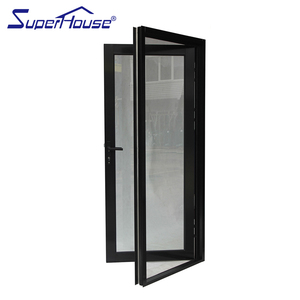
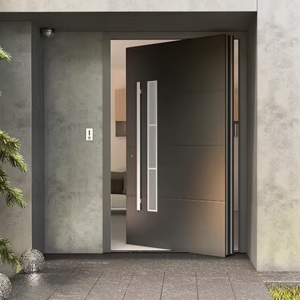
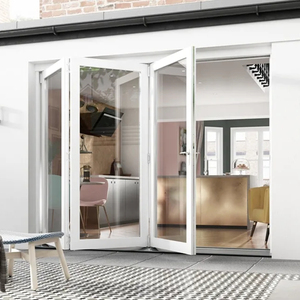
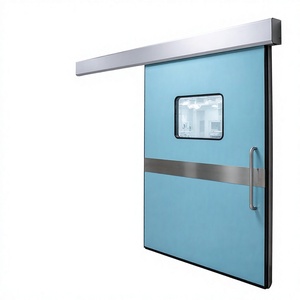
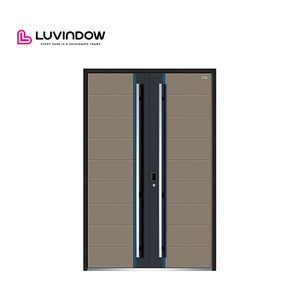
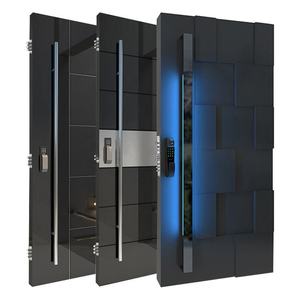
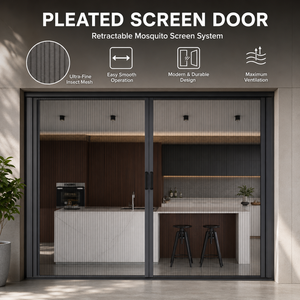
Request Complete OEM Technical Drawings & Architectural Binders
Access our comprehensive 240-page technical dossier containing DWG/BIM Revit models, thermal transmittance simulation matrices (U-factor & SHGC), wind deflection calculations, and custom extrusion die capabilities.
Engineering Anatomy of Heavy-Duty Aluminum Glass Swing Doors
A comprehensive examination of structural mechanics, alloy chemistry, thermal barriers, and air-water-structural performance standards required for modern commercial and high-end residential fenestration.
In modern architectural engineering, the hinged swing door is subject to higher cyclic fatigue, concentrated hinge load shear stress, and atmospheric pressure dynamics than virtually any other envelope component. When designing and manufacturing Custom OEM Aluminium Glass Swing Doors, structural stability depends heavily on extrusion metallurgical integrity. Our production utilizes high-purity architectural 6063-T6 and structural 6061-T6 aluminum alloys. By tightly controlling magnesium-to-silicide ratios during billet casting and homogenizing at precise temperature profiles, we achieve tensile yields exceeding 215 MPa and ultimate tensile strengths above 245 MPa. This metallurgical discipline prevents profile twisting, sagging, and latch misalignment under sustained cyclic use, even when accommodating triple-glazed laminated impact glass panes weighing up to 280 kilograms per leaf.
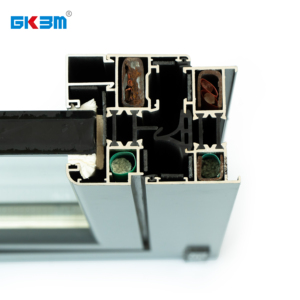
Thermal separation within the aluminum swing door leaf and peripheral jamb profiles is achieved through crimped polyamide PA66 GF25 thermal break strips reinforced with 25% transverse glass fiber matrix. Unlike rolled resin-poured thermal barriers that suffer shear failure during seasonal freeze-thaw cycles, glass-fiber-reinforced polyamide exhibits identical linear expansion coefficients to aluminum (2.3 × 10⁻⁵ K⁻¹), preventing inner-outer frame delamination across thermal differentials ranging from -40°C to +85°C. When paired with multi-cavity EPDM co-extruded foam gaskets and continuous dual-corner vulcanized vulcanized joint boots, our thermal break hinged door systems deliver holistic system thermal performance as low as Uw 1.1 W/(m²·K), effortlessly exceeding energy rating benchmarks mandated by ASHRAE 90.1, IECC, and European EN ISO 10077-1 standards.
| Performance Characteristic | Testing Standard / Specification | Certified Performance Value | Engineering Benefit |
|---|---|---|---|
| Structural Wind Load Deflection | ASTM E330 / AS 2047 / EN 12211 | Serviceability: 3500 Pa / Ultimate: 5250 Pa (N6 Level) | Zero permanent frame deflection during cyclonic gale events |
| Water Penetration Resistance | ASTM E331 / AAMA 501.1 / EN 12208 | Static: 720 Pa (15 psf) / Dynamic Pressure Verified | Positive drainage via concealed multi-chamber sub-sill weep channels |
| Air Infiltration Control | ASTM E283 / EN 12207 / AS 2047 | < 0.1 m³/(h·m) at 100 Pa (Class 4 / Extra Low) | Drastically eliminates HVAC energy leakage and acoustic bridging |
| Acoustic Attenuation (Rw / STC) | ISO 10140-2 / ASTM E90 | STC 42 dB – 48 dB (with acoustic PVB laminate glass) | Isolates high-frequency urban traffic and low-frequency airport noise |
| Mechanical Cycle Durability | EN 1191 / ANSI/BHMA A156.1 | Class 8: 1,000,000 continuous open/close cycles | Rated for continuous high-throughput hotel lobbies and cleanrooms |
| Surface Corrosion Resistance | AAMA 2605 / Qualicoat Seaside Class 3 | 4,000 Hours Salt Spray (Fluoropolymer PVDF 70% Kynar) | Total protection against marine micro-climates and harsh saline exposure |
Future Global Sourcing & Supply Chain Trends
Critical market shifts and regulatory frameworks dictating the procurement of custom aluminum swing doors over the next decade.
Low-Carbon Green Billet Sourcing
Global decarbonization initiatives, including the EU Carbon Border Adjustment Mechanism (CBAM) and LEED v4.1 embodied carbon limits, are forcing procurement leaders to mandate primary aluminum smelted via hydroelectric or renewable power. OEM contracts now specify third-party Environmental Product Declarations (EPDs) demonstrating less than 4.0 kg CO₂e per kilogram of virgin aluminum.
BIM-to-CNC Parametric Manufacturing
Traditional PDF architectural drawings are being replaced by native Industry Foundation Classes (IFC) and Revit models fed straight into 5-axis CNC machining centers. This end-to-end digital twin pipeline cuts fabrication lead times by 35%, eliminates shop-drawing misinterpretations, and guarantees tolerance controls within ±0.3 mm across complex customized transom-sidelight swing assemblies.
Unified Fenestration Compliance
Tier-1 commercial developers no longer accept uncertified regional imports. Sourcing policies require multi-jurisdictional compliance spanning North American Miami-Dade NOA hurricane impact, Florida Product Approval, Australian AS 2047 N6 wind resistance, and European CE / EN 14351-1 standards under a consolidated OEM quality tracking chain.
Evolutionary Trajectories in Aluminum Swing Door Design
From passive barriers to intelligent, thermally regenerative architectural systems—how next-generation swing doors are evolving.
Concealed Multi-Point Mechatronic Locking
Seamlessly embedded within the rebate extrusion, motorized European security hardware automatically latches at three to seven vertical anchoring points upon leaf closure, coupling seamlessly with smart home BACnet, biometric access, and building management networks without exposed wiring.
Vacuum Insulated Glass (VIG) Integration
Replacing bulky 44 mm triple-glazed units with slim 12.3 mm tempered vacuum glass assemblies achieving center-of-glass Ug ratings of 0.45 W/(m²·K). This radical reduction in panel mass relieves mechanical stress on heavy-duty hinges while maintaining ultra-slim, minimalist architectural sightlines.
Hyper-Durable Fluorocarbon Finishes
Adoption of 3-coat/2-bake 70% PVDF fluoropolymer resins complying with AAMA 2605-20. Engineered to withstand intense equatorial UV indexes, coastal salt spray crystallization, and chemical cleanroom disinfection protocols without chalking, color shifts, or gloss degradation for over 30 years.
Zero-Barrier Accessible Thresholds
Engineered ADA-compliant and barrier-free drop-down magnetic and mechanical automatic bottom seals. These mechanisms sink flush into the subfloor when open, but elevate instantaneously during closure to provide uninterrupted 600 Pa water dam protection without requiring raised frame steps.
Enterprise OEM / ODM Manufacturing Infrastructure
Combining heavy-duty extrusion processing, robotic surface coating, precision glass tempering, and certified factory assembly under an integrated quality management system.
Full-Cycle In-House Tooling & Die Extrusion
Unlike assembly shops that rely on open-market extrusions, our facility in Foshan operates internal mold tooling shops and 16 extrusion press lines ranging from 800 to 4,500 metric tons. This gives project specifiers total control over wall thicknesses (1.6 mm to 3.5 mm), internal reinforcement webs, and bespoke hinge rebate channels designed specifically for project engineering tolerances.
Accredited Quality Laboratory & Rigorous QA
Operating under certified ISO 9001 and ISO 14001 systems, every batch undergoes four tiers of non-destructive and destructive testing: alloy optical emission spectrometry (OES), ultrasonic weld seam testing, computerized four-sided corner crimp shear load analysis, and air-water-structural chamber trials matching ASTM E283/E330/E331 and Australian AS 2047 protocols.
Oceania & Global Sea Freight Crating
Export door systems are pre-assembled, cycle-tested, and tagged with barcoded QR installation links before packaging in fumigated, steel-banded, marine-grade plywood crates wrapped in vapor-corrosion-inhibiting (VCI) films. Our export logistics network regularly handles FCL and LCL container transit to Sydney, Melbourne, Brisbane, Auckland, Fiji, and international seaports.
Frequently Asked Questions on OEM Aluminum Swing Doors
Authoritative technical, commercial, and logistic guidance for architects, general contractors, developers, and fenestration importers.
What are the key engineering criteria when specifying aluminum glass swing doors for coastal or cyclone-prone regions?
How does your factory ensure profile alignment and prevent sagging on heavy triple-glazed swing door leaves?
What documentation and shop drawings are delivered prior to OEM mass manufacturing?
Can your factory supply custom panic hardware, magnetic access control, and fire-rated swing door assemblies?
What are the minimum order quantities (MOQ), standard lead times, and factory warranties?
Connect Directly with Our Senior Engineering Staff
Send your door schedules, project elevation drawings, or custom extrusion concepts for a comprehensive preliminary estimate, structural sizing, and compliance assessment within 24 hours.