Patio & Sliding
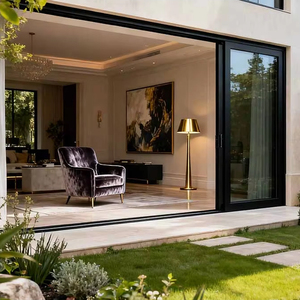
Tested for extreme weather cycles, acoustic excellence, and seamless architectural entry design across residential and commercial estates.
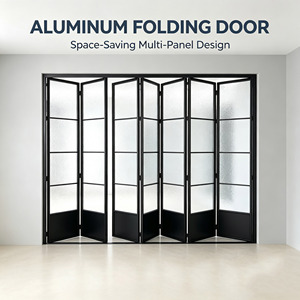
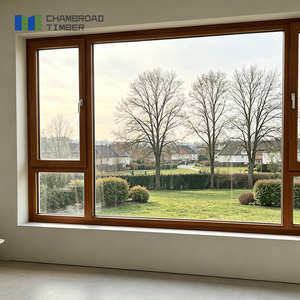

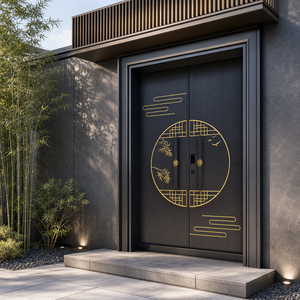
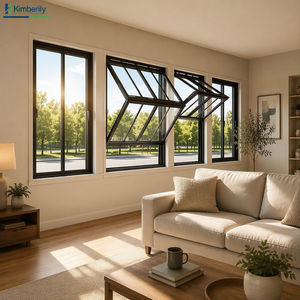
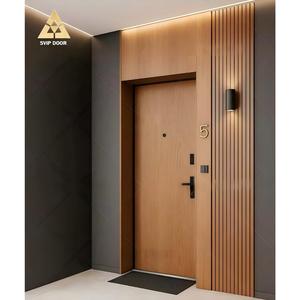
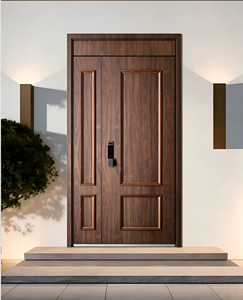
Modern luxury architecture has transformed the conventional threshold from a basic egress point into a grand structural statement. The specification of custom OEM aluminium glass pivot front doors is not merely an aesthetic consideration—it is an intricate structural engineering discipline. Unlike traditional side-hung hinges that distribute door mass across a vertical jamb, an architectural pivot system redistributes immense mechanical loads directly into the building substrate through heavy-duty concealed floor pivots and reinforced overhead transoms. For global developers, architects, and facade contractors sourcing directly from China's primary manufacturing hubs, balancing expansive glass vistas with stringent thermal separation, acoustic attenuation, and wind-load resistance requires deep technical collaboration with specialized OEM factories.
The centerpiece of any oversized glass pivot door is its mechanical rotational bearing. A door leaf exceeding 1,500mm in width and 3,200mm in height can easily present dead loads surpassing 350 to 500 kilograms. Top-tier manufacturers integrate engineered hydraulic floor springs (such as systems compliant with EN 1154 standards or German-origin FritsJurgens / Dorma kinematics) capable of supporting extreme weights while ensuring fluid, featherlight operation.
Custom OEM engineering focuses on finite element analysis (FEA) around pivot stress points. Because an offset pivot sits typically between 150mm and 250mm from the vertical frame, the door system creates unique perimeter clearance tolerances. Heavy extrusions of 6063-T6 or 6061-T6 architectural aluminium with wall thicknesses ranging from 2.5mm to 3.5mm are precision CNC-machined to house concealed overhead closers, adjustable dampeners, and heavy-duty corner keys. The resultant assembly resists cyclic shear loads, thermal bowing (bimetallic warping), and dynamic deflection caused by localized wind gusts.
One of the historic pain points of large-format glass pivot entry doors has been pneumatic and hydrologic sealing. Because a pivot door swings inward and outward simultaneously across its threshold line, conventional continuous rebate stops cannot be deployed natively at the pivot axis. OEM manufacturers solve this through multi-tier technical sealing configurations:
Operating from our 180,000 m² integrated production base in Foshan, Guangdong, Guangdong Dejiyoupin Doors and Windows Co., Ltd. (DERCHI) leads high-end entrance and fenestration manufacturing with end-to-end quality governance.
In-house computerized 5-axis profile milling ensures micrometric joinery tolerances, structural corner crimping, and perfect concealed hinge mortising.
Fluorocarbon PVDF, architectural anodizing, and Class-2 Qualicoat powder coatings engineered specifically for harsh coastal salt-spray and UV exposure.
Dedicated parametric architectural engineering teams provide custom structural calculations, static analysis, and CAD drafting aligned with local council schedules.
Export-grade timber crating meeting international phytosanitary quarantine measures, shipped direct to Australasia, North America, and Europe with full customs tracking.
As commercial lobbies, expansive coastal villas, and high-end modern compounds demand grander entrances, international procurement strategies for custom aluminium pivot doors are shifting rapidly toward specialized engineering models:
Developers are consolidating opening schedules toward single massive panels (upwards of 2,000mm width × 4,000mm height) rather than double doors, demanding higher rigidity alloy profiles to eliminate leaf flexing under hurricane-velocity gusts.
Modern architectural entry points require seamless concealment of motorized multi-point electronic locking systems, motorized opening actuators, dynamic facial recognition access, and integration with home automation networks.
Standard monolithic glass has been completely superseded by triple-glazed or laminated Low-E units infused with argon gas, structural SentryGlas (SGP) interlayers for blast/impact resistance, and electrochromic privacy glass modules.
The next decade of fenestration production is centered on carbon neutrality, structural thermal continuity, and advanced robotics. OEM factories are adopting low-carbon secondary aluminium alloys processed via hydroelectric smelting, dramatically cutting embodied carbon metrics in compliance with European CBAM regulations and LEED Platinum specifications.
Furthermore, the physical profile of the pivot door is merging with structural curtain wall facades. Ultra-slim sightlines—reducing visible frame reveals down to 18mm through aerospace-grade structural adhesives and carbon-fiber stiffeners—allow architects to achieve an almost uninterrupted planar glass envelope. Smart self-adjusting bottom seals driven by micro-sensors are currently in prototyping phases, ensuring airtight closures regardless of structural building settling over decades of use.
Essential answers for architects, project estimators, and builders specifying factory-direct OEM aluminium glass pivot doors.