Precision Architectural Aluminum Doors for Global Projects
Modern commercial developments, institutional complexes, and luxury residential estates demand exterior and interior fenestration systems that withstand severe mechanical fatigue, extreme wind loading, and corrosive atmospheric microclimates while fulfilling rigorous carbon footprint mandates. As the premier global fabrication hub, China's advanced manufacturing infrastructure bridges precision metallurgical extrusion, state-of-the-art thermal break design, and automated continuous surface finishing. This engineering whitepaper outlines the structural parameters, testing certifications, life-cycle durability, and international procurement standards essential for commercial developers, structural engineers, facade consultants, and wholesale importers.
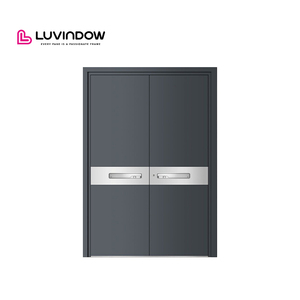
Fireproof Secure 3D Carving Aluminum Front Entry Doors for North American Residential Builder Projects
- Multi-layer fire-retardant ceramic core
- Precision CNC 3D architectural relief
- AAMA 2605 fluorocarbon weatherability
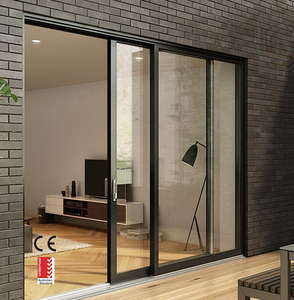
Residential House Commercial Heavy Duty Thermal Break Aluminum Sliding Door with Mosquito Net
- Polyamide PA66 GF25 thermal isolators
- Heavy-load 400kg stainless running gears
- High-tensile 304 insect barrier screen
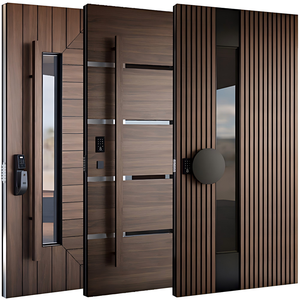
Factory Customization Apartment Security Main Door with Finger Print Secure Solid Wood Aluminum Front Entry Doors
- Semi-conductor semiconductor sensor locks
- Hybrid aluminum exterior + hardwood interior
- Multi-point perimeter interlocking bolts
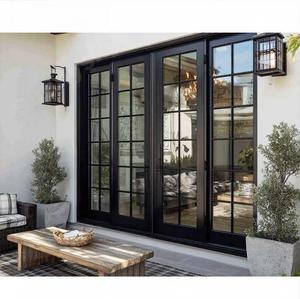
Sunnysky Factory Wholesale Residential Outdoor Main Entrance Doors Commercial Exterior Aluminum Double Glazed French Swing Door
- Argon gas-filled low-E insulated glass units
- Continuous heavy-gauge EPDM gaskets
- Concealed European rebated multi-point locks
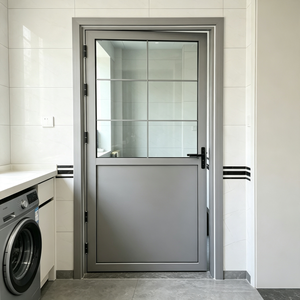
High Quality Minimalist Narrow Frame Half Glass Panel Aluminum Alloy Interior Door For Bathroom Kitchen
- Ultra-slim 16mm architectural sightline
- Toughened safety glass (SGCC/EN 12150)
- Dampened soft-close concealed hardware
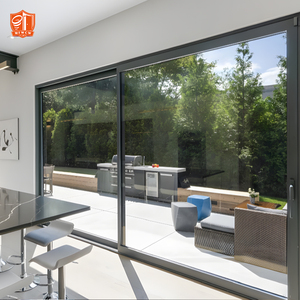
Commercial Grade Heavy Duty Lift and Slide Door Large Span Aluminum Sliding Door for Restaurant Patio
- Over-dimensioned panel load up to 600kg
- Continuous zero-threshold accessibility
- Engineered for high-traffic commercial facades
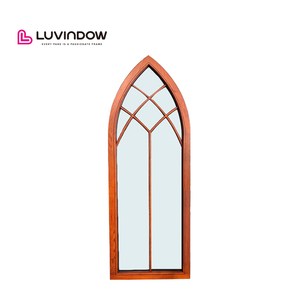
Modern House Designs Wooden Aluminium Casement Arch Window Custom Special Shape Glass Windows
- CNC stretch-bent radius engineering
- Alu-clad timber with micro-climate venting
- High acoustic STC 42 decibel damping
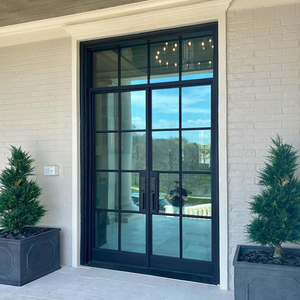
European Standard Iron Doors Interior Aluminium Steel Framed Swing Glass Door Crittall Style Wrought Iron Entrance French Doors
- Slender geometric astragal glazing bars
- High-adhesion electrostatic matte finish
- Magnetic precision latching mechanisms
Guangdong Dejiyoupin Doors and Windows Co., Ltd. (DERCHI)
Headquartered in the premier global architectural hardware and extrusion cluster of Foshan, Guangdong, DERCHI represents twenty-five years of engineering leadership in high-specification aluminum, cast aluminum, stainless steel, and structural glass entrance systems. Controlling every tier of the production pipeline—from billet smelting and profile extrusion to automated CNC multi-axis milling, powder coating, and robotic glass assembly—our facilities supply institutional projects, high-volume residential developers, and architectural contractors across Oceania, North America, Europe, and the Middle East.
By operating under comprehensive ISO 9001 quality management protocols and maintaining rigorous in-house R&D mechanical test labs, our aluminum door assemblies achieve compliance with the most stringent global fenestration benchmarks. Every shipping container leaving our factory represents verified dimensional tolerances within ±0.5mm, traceable metallurgy, and project-specific shop drawings reviewed by licensed facade engineers.

Global Compliance & Regulatory Conformance Portfolio
Tested and certified to Australian Standard AS 2047 (N6 Cyclonic Rating), European CE (EN 14351-1), North American AAMA/WDMA/CSA, ISO 9001, and UL Fire Retardant Classifications.

Metallurgical Chemistry, Thermal Barriers & Surface Physics
Architectural aluminum fenestration longevity is governed by alloy purity, mechanical extrusion temper, thermal barrier compound stability, and coating thickness. DERCHI adheres to strict industrial metallurgical formulations to eliminate intergranular corrosion and stress-cracking in high-salinity or variable temperature climates.
| Performance Parameter | Commercial Grade (6063-T5) | Structural Heavy-Duty (6063-T6 / 6061-T6) | Global Testing Protocol |
|---|---|---|---|
| Tensile Strength (Rm) | ≥ 160 MPa | ≥ 215 – 245 MPa | ASTM E8M / ISO 6892-1 |
| Yield Strength (Rp0.2) | ≥ 110 MPa | ≥ 170 – 205 MPa | ASTM E8M / EN 755-2 |
| Thermal Isolator Compound | Polyamide PA66 GF25 (25% Fiberglass) | Multi-Chamber Technoform PA66 GF25 Isolator | ISO 527 / DIN 53455 |
| Air Infiltration Rate | ≤ 1.5 m³/(h·m²) at 100 Pa | ≤ 0.3 m³/(h·m²) at 300 Pa (Class A4) | AS 2047 / ASTM E283 / EN 12207 |
| Water Penetration Resistance | ≥ 450 Pa (Static Chamber) | ≥ 900 Pa – 1200 Pa (N6 Cyclonic Level) | AS/NZS 4420.5 / ASTM E331 |
| Structural Wind Load (Deflection) | Serviceability: 1500 Pa (L/175) | Ultimate Limit State: > 4500 Pa (N6 Cyclonic) | AS 2047 / ASTM E330 / EN 12210 |
| Surface Coating Resilience | Qualicoat Class 1 Standard Polyester | PVDF Fluorocarbon (AAMA 2605 / Qualicoat Class 3) | ASTM B117 (Salt Spray > 4000 hrs) |
Polyamide Thermal Barriers
Unlike outdated PVC or polyurethane poured-and-debridged systems, DERCHI employs mechanically crimped German Technoform Polyamide PA66 reinforced with 25% glass fiber. This material matches aluminum's coefficient of linear thermal expansion (2.3 × 10⁻⁵ K⁻¹), preventing shearing stresses under diurnal thermal cycling between -30°C and +80°C.
This thermal break topology achieves overall frame U-factors down to 1.1 W/(m²·K), suppressing condensation risk and lowering building HVAC energy consumption by up to 34% in accordance with ASHRAE 90.1 and Australian NCC Section J requirements.
Fluorocarbon PVDF & Anodizing
Atmospheric exposure in oceanfront or high-density industrial zones quickly deteriorates sub-standard finishes. DERCHI applies three-coat continuous electrostatic Kynar 500 / Hylar 5000 PVDF resins complying with AAMA 2605 specifications, delivering superior resistance against chalking, gloss erosion, and intense ultraviolet radiation.
For coastal maritime conditions, we engineer Class 1 Anodic oxide coatings (thickness ≥ 25 microns) or Marine-Grade Qualicoat Seaside certified powder finishes verified through 4,000-hour acetic acid salt spray (AASS) testing with zero blistering.
High-Security Multipoint Hardware
Structural frame integrity is incomplete without robust hardware integration. Our doors incorporate German-engineered multi-point drive gear perimeter mechanisms (GU, Siegenia, Hoppe) coupled with stainless steel 304/316 mushroom cams and continuous anti-jemmy locking bars.
Meeting European RC3 / RC4 burglary resistance (EN 1627) and North American ASTM F588 forced-entry criteria, these assemblies support up to 600kg leaf weights in oversized pivot and lift-slide layouts, maintaining smooth single-hand operation over 100,000 mechanical duty cycles.
Product Evolution & Future Engineering Trends
The architectural fenestration sector is moving rapidly toward dematerialized sightlines, integrated building intelligence, and carbon-neutral envelopes. The following design paradigms will govern commercial procurement and developer specifications over the next decade.
Ultra-Slim Minimalist Architectural Profiles
Architects are driving demand for unobstructed sightlines that eliminate visual boundaries between building interiors and landscape views. The standard 65mm–80mm face widths are being replaced by ultra-narrow 16mm–21mm interlocking stiles engineered from high-tensile 6061-T6 structural aluminum.
To preserve structural moment of inertia (Ix ≥ 140 cm⁴) over opening heights exceeding 4.0 meters, DERCHI utilizes internal carbon-fiber composite reinforcements and structural silicone bonding (Dow Corning 995). This allows wind load deflections within strict L/250 limitations while accommodating triple-glazed acoustic laminates.
Monumental Motorized Pivot Door Engineering
Grand residential entrances and hotel lobbies are shifting from traditional hinged pairs to massive monolithic single-panel pivot doors spanning up to 2.5 meters in width and 5.0 meters in height. These oversized architectural panels weigh up to 800 kilograms, introducing significant eccentricity loads to building slabs.
Future systems feature concealed heavy-duty hydraulic floor pivots with adjustable closing brakes, 360-degree magnetic drop seals, and silent brushless DC motor drives. Integrated with building automation systems (KNX/Crestron), these monumental doors glide open via radar proximity sensors, facial biometrics, or smartphone credentials.
BIPV Photovoltaic Integration & Vacuum Insulated Glass
As Net Zero Energy Building (NZEB) mandates come into force across North America, the European Union, and Australasia, exterior door systems are transforming from passive thermal insulators into active power-generating building elements.
Next-generation aluminum door panels incorporate transparent cadmium telluride (CdTe) thin-film BIPV glazing and vacuum insulated glass (VIG) technology. Achieving an astonishing center-of-glass Ug value of 0.40 W/(m²·K) in a slim 8.3mm profile, these systems outperform standard triple-glazing while harvesting renewable clean electricity directly from solar exposure.
Unified IoT Access Automation & Multi-Spectral Sensors
Mechanical keys are disappearing from commercial and luxury residential specifications. Future-ready aluminum door systems require fully pre-wired concealed cable transfer loops, integrated electro-mechanical panic locks, and multi-spectral biometric readers.
DERCHI's modern systems embed 3D structured-light facial recognition cameras, anti-spoofing capacitive fingerprint sensors, and encrypted RFID modules flush into the extruded aluminum stiles. All data traffic connects via Matter and Zigbee protocols, permitting direct interface with home automation controllers, alarm networks, and remote facility management platforms.
Future Sourcing & Procurement Trends for Importers
Global procurement dynamics for aluminum fenestration products are evolving rapidly under pressure from trade tariffs, shipping volatility, and stringent sustainability standards. Commercial developers and wholesale distributors must modernize their purchasing workflows to protect operational margins.
Green Aluminum & EPD Certification
With the implementation of the EU's Carbon Border Adjustment Mechanism (CBAM) and green building rating systems (LEED v4.1, BREEAM), procurement managers must specify aluminum produced using hydroelectric or solar smelting with embodied carbon below 4.0 kg CO₂e per kg Al.
DERCHI provides third-party verified Environmental Product Declarations (EPD) and Aluminium Stewardship Initiative (ASI) chain-of-custody documentation, ensuring hassle-free municipal approvals and green financing compliance for institutional developers.
Direct BIM & CAD Integration
The era of manual paper door schedules and static PDF submittals is over. International builders increasingly require digital shop drawings delivered natively in Revit BIM (LOD 350 / 400) and parametric AutoCAD formats to conduct automated clash detection before production releases.
Our dedicated engineering department generates comprehensive parametric CAD shop drawings and structural anchor calculation books within 48 to 72 hours of project enquiry, cutting design revision turnaround cycles by more than 60%.
FCL Container Optimization
Ocean freight rate fluctuations demand maximum volumetric container packaging efficiency. Importers are abandoning knocked-down (KD) field assembly in favor of pre-hung, factory-tested unitized systems packed in custom modular steel-reinforced crates.
DERCHI's computerized container staging models optimize 40-foot High Cube (HQ) sea freight layouts, incorporating heat-treated ISPM-15 export timber crating, desiccant moisture controls, and shock sensor monitoring to achieve zero transit damage across transoceanic shipping routes.
Frequently Asked Questions for Importers & Contractors
Direct technical answers from DERCHI's senior facade engineering team regarding structural testing, international code compliance, lead times, and factory QA/QC protocols.