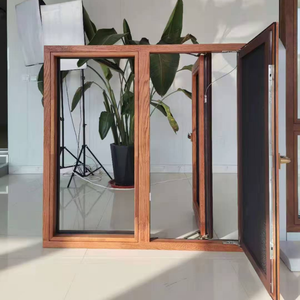
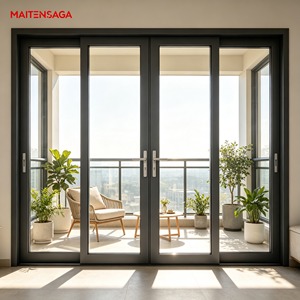
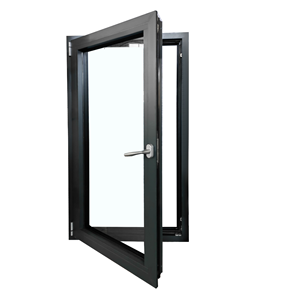
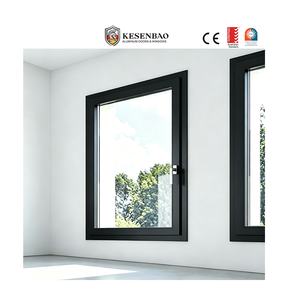
China Wholesale Aluminum Clad Casement Windows Factories & Exporter
Direct engineering-grade architectural solutions engineered for commercial contractors, facade consultants, and high-end residential developers worldwide.
Precision Engineered Range
Featured Aluminum Clad & Thermal Casement Systems
Constructed with high-precision 6063-T6 virgin aluminum extrusion alloy, multi-cavity PA66 polyamide insulation strips, and engineered mortise-and-tenon interior wood cladding, our certified systems meet strict international AAMA, NFRC, CE, and AS 2047 fenestration standards.
Engineering Principles of Aluminum Clad Casement Fenestration
Modern architectural fenestration requires solving the differential coefficient of thermal expansion between exterior structural metals and organic interior timber substrates. When specifying aluminum clad casement windows for Tier-1 commercial projects or ultra-luxury developments, procurement teams must look past basic aesthetic profiles and evaluate cross-sectional structural mechanics, polymer thermal barrier geometry, and compression sealing kinetics.
Extrusion Metallurgy & Corner Inversion
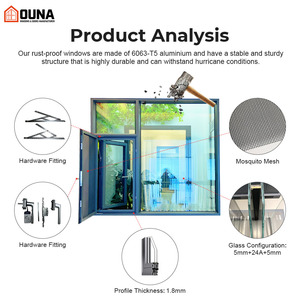
We utilize prime 6063-T6 architectural grade aluminum extrusions with minimum wall thicknesses of 1.8mm to 2.2mm, far exceeding generic 1.4mm residential profiles. Corner joints are reinforced with pneumatic cast-aluminum corner keys, double-pin crimping, and high-strength two-component polyurethane joint adhesive (injected corner sealing) to prevent micro-fractures under dynamic wind load deflection.
Thermal Barrier Multi-Cavity Design
Unlike continuous uninsulated metal assemblies that suffer severe condensation and heat flux, our profiles incorporate 24mm to 34mm PA66 GF25 (25% glass fiber reinforced polyamide) thermal breaks. Engineered multi-cavity chambers filled with continuous aerogel or foamed polyolefin isolate thermal transfer, yielding overall frame U-values as low as 0.85 W/(m²·K).
Floating Clad Coupling Architecture
Aluminum and solid timber possess drastically different thermal expansion coefficients. Our exterior aluminum shell is affixed to the interior sustainably harvested North American red oak, larch, or black walnut through specialized polyamide sliding clips. This dynamic friction-fit mounting allows individual thermal elongation and contraction without frame warping, oil canning, or timber splitting.
Standard compression casements rely on perimeter sliding friction. Our export-grade casements implement co-extruded continuous vulcanized EPDM (Ethylene Propylene Diene Monomer) rubber gaskets operating on a triple-sealed barrier principle: outer rainscreen deflector, middle isobaric decompression chamber, and continuous acoustic air seal. Coupled with German ROTO, Siegenia, or G-U perimeter gear transmissions with mushroom-head anti-lift pins, our windows lock at 4 to 8 distributed points along the perimeter, maintaining airtight compression at over 600 Pa test pressure.
Global Market Intelligence
Strategic Procurement Trends for 2025–2030
International developers, engineering contractors, and window importers are shifting away from fragmented trading agents toward direct-from-tier-1-manufacturer relationships in China. Below are the macro trends driving supply chain specifications across North America, Australasia, Europe, and the Middle East.
Decarbonization
Passivhaus Standard & Low-Carbon Ingot Sourcing
Global building codes (such as Title 24 in California, the National Construction Code in Australia, and the EU Energy Performance of Buildings Directive) mandate whole-window U-factors below 1.1 W/(m²·K). Procurement contracts now require low-carbon hydroelectric aluminum smelting certification (Scope 1 and 2 tracking) alongside Warm Edge TGI/Technoform spacer bars and Argon/Krypton gas chambers.
Prefab Integration
Modular Offsite & Integrated Flange Adaptations
With labor shortages impacting on-site construction in North America and Australasia, contractors require factory-pre-assembled casement units featuring integrated nail fins, sub-sills, sub-heads, and pre-applied perimeter waterproofing membranes. Wholesale shipments must arrive job-site-ready for direct crane-lift installation into light-gauge steel or mass timber framing modules.
Supply Chain Transparency
Digital QA/QC & Full Traceability Testing
Specifiers no longer accept generic factory certificates. Tier-1 buyers demand third-party test verification from accredited laboratories (NATA, NFRC, Intertek, or TÜV Rheinland) with batch-traceable thermal stress test reports, helium leak spectrometry for IGU gas-fill retention, and continuous 50,000-cycle hardware fatigue validation.
B2B Supply Economics
Consolidation & Direct Factory Partnership Optimization
Intermediary import markups of 80% to 150% in destination markets are driving enterprise contractors to establish direct original equipment manufacturer (OEM) and custom project supply contracts with specialized Chinese fenestration plants. By partnering directly with facilities possessing in-house R&D, precision 5-axis CNC processing centers, automated powder-coating lines, and English-speaking architectural engineering desks, B2B buyers achieve 30%–45% procurement cost reduction while preserving 100% custom detailing and scheduling flexibility.
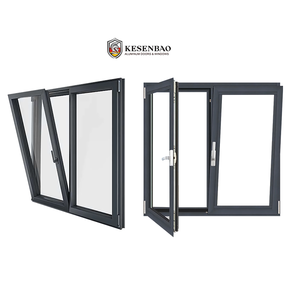
Casement windows represent the most structurally resilient operable fenestration typology because atmospheric wind pressure directly compresses the operable sash against the frame gaskets, dramatically increasing weather resistance compared to sliding or hung units. Recent advancements are pushing the boundaries of aesthetics and performance.
Coplanar Flush & Ultra-Slim Sightlines
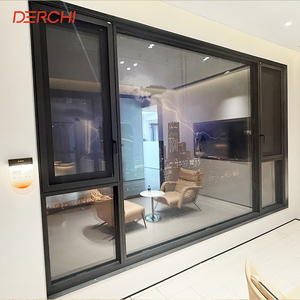
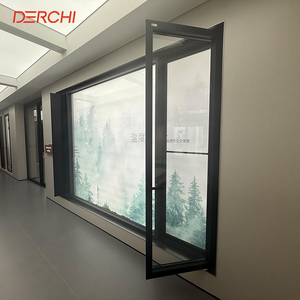
Traditional casement windows exhibit heavy step-downs between operable sashes and stationary frames. Next-generation designs utilize coplanar flush alignments where exterior aluminum and interior timber sit entirely on a single visual plane, reducing visible sightlines down to 42mm while maintaining high structural moment of inertia (Ix > 120 cm⁴).
Structural Silicone Glazing (SSG) Bonding
Transitioning from mechanical bead retention to robotic 2-component structural silicone bonding bonds the insulated glass unit directly into the aluminum frame. The structural glass pane acts as an active shear-load bearing diaphragm, preventing sash sagging in oversized casements (up to 3.2m height) and doubling acoustic damping.
Smart Home Automation & Concealed Micro-Actuators
Integration with commercial Building Management Systems (BMS) through KNX, Zigbee, or dry contact triggers. Concealed 24V linear chain actuators are machined internally inside the polyamide break channel, eliminating visible hardware while offering automatic climate regulation, wind/rain sensor closure, and natural nighttime purge ventilation.
Manufacturing Strength & Credentials
Why Global Importers & Contractors Trust DERCHI
Guangdong Dejiyoupin Doors and Windows Co., Ltd. (DERCHI) operates one of China's most sophisticated architectural fenestration and facade manufacturing campuses in Foshan, Guangdong. Backed by 25+ years of specialized fabrication, we provide turn-key fenestration engineering for high-profile residential, commercial, and hospitality projects globally.
180,000
m² Production Campus
25+
Years Engineering Heritage
600+
Skilled Technical Staff
100+
Patents & Global Certs
AS 2047 N6 Wind Load Certified
Tested and certified to the highest Australian standard rating (N6 Cyclonic, 4500Pa ultimate strength and 700Pa water ingress resistance), making our systems ideal for cyclonic coastal zones in Australia, New Zealand, Florida, and the Caribbean.
Full In-House Engineering & CAD
Our dedicated R&D engineering department produces complimentary architectural shop drawings, structural wind-pressure calculations, BIM models, and thermal simulations within 48 hours of project receipt.
CE, NFRC & ISO 9001 Audited
Rigorous quality management verified from raw ingot metallurgy to final shrink-wrapped timber crating. Every batch is traceable with digital QC passports containing photographic reports before ocean dispatch.
Marine-Grade Coastal Finishes
Certified AkzoNobel and PPG fluorocarbon PVDF coatings (exceeding AAMA 2605 specifications) and Qualicoat Seaside Class 2 anodized finishes protect against salt air spray, preventing corrosion for 25+ years.
Heavy-Duty Fumigated Export Packaging
Windows are packed with protective peel-off foil, corner corner-guards, moisture-barrier wrapping, and individually loaded into fully enclosed, fumigated ISPM-15 plywood crates designed for safe sea freight container unloading.
Global Time-Zone Project Management
Our fluent English-speaking structural facade specialists coordinate directly across Australian (AEST/AWST), North American (EST/PST), and European business hours, providing real-time technical consultation and live video factory inspections.
Procurement Due Diligence
Frequently Asked Questions by Importers & Contractors
Direct answers to core compliance, shipping, warranty, and engineering questions frequently encountered during international fenestration bidding.
Q1: How do your aluminum clad windows meet local building code structural inspections?
Every project order is paired with an engineering certification dossier. This includes verified laboratory test certificates (AS 2047, NFRC, or CE), structural wind load deflection calculations matched to your local topographic wind zone (ultimate and serviceability limit states), and glass stamp certifications conforming to AS 1288, ANSI Z97.1, or EN 12150 safety standards.
Q2: What is the standard factory lead time and minimum order quantity (MOQ)?
Because every commercial or luxury residential project requires bespoke sizing, finishes, and glazing schedules, our standard lead time is 25 to 35 business days following final CAD shop drawing sign-off and color chip approval. We support flexible MOQs starting from a single 20GP container or consolidated LCL project shipments for custom villas.
Q3: How do you manage timber moisture stability for export to diverse climates?
Our interior solid timber components (oak, pine, walnut, larch) undergo automated kiln drying and radio-frequency vacuum conditioning to stabilize internal moisture levels between 8% and 12% before machining. The wood is subsequently treated with four layers of non-toxic, microporous water-based environmental primers and polyurethane topcoats from German Remmers, preventing swelling, rot, or mold growth.
Q4: Can you pre-integrate insect screens, security mesh, and integrated blinds?
Yes. We offer fully integrated solutions including internal 304 marine-grade stainless steel security mesh screens (cut-proof and mosquito-proof), roll-up motorized micro-pleated screens, and magnetic or motorized Venetian louvers hermetically sealed inside the insulated glass unit (IGU), eliminating dusting and maintenance requirements.
Q5: What warranty protection is provided for international wholesale buyers?
We provide a comprehensive written manufacturer's warranty: 10 years on aluminum extrusions and structural integrity, 10 years on insulated glass seal failure (condensation within the IGU airspace), 5 years on surface coatings (fluorocarbon PVDF / Qualicoat), and 5 years on functional mechanical hardware (hinges, multi-point transmissions, and operators), backed by immediate air-freighted replacement components.
Q6: How do you assist contractors with installation and onsite glazing verification?
Each window frame is delivered with detailed shop-drawing labeling corresponding directly to the contractor's floor plan window schedule. We supply full system installation manuals showing perimeter flashings, sub-head/sub-sill anchorage, shim locations, and vapor-permeable tape detailing. Our engineering team also hosts 1-on-1 video conferences with your onsite framing crews.
Send us your window schedules, architectural elevations, or structural specifications. Our technical engineering desk will review your requirements and provide comprehensive CAD shop drawings, thermal calculations, and competitive factory-direct wholesale pricing within 24 hours.