Engineered Systems & Architectural Product Recommendations
Explore our export-ready fenestration portfolio engineered for back entrances, patios, utility breezeways, service access corridors, and high-performance residential barriers.
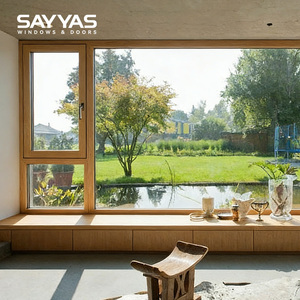
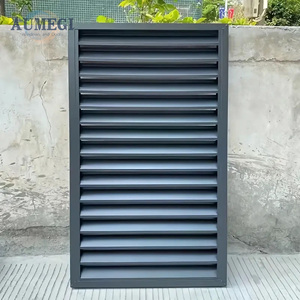
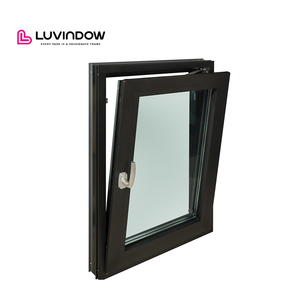
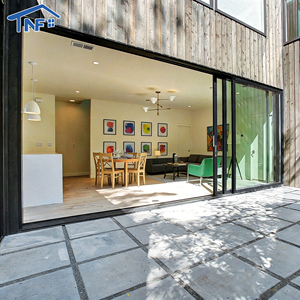
Specifying Aluminum Back Doors: Extrusion Chemistry, Thermal Efficiency, and Security Thresholds
In high-performance residential and commercial construction, the back entrance is historically one of the most vulnerable building envelope junctures. Unlike front focal entryways, aluminum back doors—encompassing kitchen service entries, patio sliders, laundry access doors, and basement walkouts—bear severe exposure to microclimatic variations, differential moisture conditions, security compromise vectors, and continuous duty cycles. As global building regulations enforce rigorous thermal transmittance benchmarks, international developers increasingly turn to specialized China wholesale aluminum back door manufacturers to deliver customized, certified, and cost-optimized architectural openings.
Modern exterior aluminum doors utilize high-tensile 6063-T5 or 6063-T6 architectural grade aluminum alloy. These extrusions undergo strict homogenizing heat treatments that optimize magnesium and silicon intermetallic phases, providing outstanding flexural strength and precise surface consistency for architectural coatings. Structural wall thickness is engineered between 1.8mm and 2.5mm depending on project span requirements, delivering structural resilience capable of withstanding cyclonic wind pressures and sustained operating forces without torsion or rail sag.
Crucially, aluminum possesses a thermal conductivity of approximately 205 W/(m·K), which necessitates advanced polyamide thermal break technology (PA66 GF25) reinforced with 25% glass fiber. This composite structural barrier bifurcates inner and outer aluminum extrusions, curtailing linear thermal bridging, eliminating winter surface condensation, and allowing finished fenestration assemblies to meet strict U-factor targets below 1.4 W/(m²·K). When integrated with double or triple insulated glazing units (IGUs) featuring argon gas filling, warm-edge silicone matrix spacers, and soft-coat Low-E layers, aluminum back doors achieve an optimal thermal envelope boundary compatible with ASHRAE 90.1, Australia NCC Volume One/Two, and European EnEV standards.
| Specification Metric | Standard Residential Grade | DERCHI Engineered Thermal Break | Heavy Duty Coastal / Cyclone Spec |
|---|---|---|---|
| Extrusion Alloy & Temper | 6063-T5 (1.4 mm wall) | 6063-T6 Architectural (1.8 mm - 2.0 mm) | 6060 / 6063-T6 (2.2 mm - 3.0 mm Reinforced) |
| Thermal Barrier Core | Non-Thermal or Pour & Debridge | PA66 GF25 Technoform Polyamide Strip | Multi-Chamber Polyamide + Aerogel Fill |
| Overall U-Factor (W/m²·K) | 3.8 - 4.5 W/(m²·K) | 1.4 - 1.8 W/(m²·K) | 0.9 - 1.2 W/(m²·K) (Triple Glazed) |
| Water Tightness Rating | Class 4A (150 Pa) | Class 9A (600 Pa) / AS 2047 450 Pa | Exceeds 700 Pa Cyclonic Resistance |
| Locking Security Tier | Single-point Latch Bolt | 3-Point Euro-groove Hook Bolt | 5-Point Motorized Multipoint Deadbolt |
| Surface Coating Spec | Standard Polyester Powder (40µm) | AkzoNobel Interpon D2525 (60-80µm) | Fluorocarbon PVDF 3-Coat (AAMA 2605) |
Future Sourcing & Technological Trends in Aluminum Back Doors
How macro decarbonization regulations, automated hardware integration, and supply-chain digitization are revolutionizing wholesale architectural exports through 2030.
1. Ultra-Low Carbon Aluminum Billets & EPD Auditing
Global procurement frameworks—specifically in the EU, North America, and Australasia—are standardizing Environmental Product Declarations (EPD). Tier-1 Chinese manufacturers are actively migrating to renewable hydro-powered smelting processes, lowering virgin aluminum embodied carbon footprint from 16 kg CO₂/kg to under 4 kg CO₂/kg aluminum, allowing developers to attain LEED Platinum and BREEAM certifications seamlessly.
2. Concealed Multi-Point Mechatronic Locking
The conventional rear entrance handle set is rapidly being replaced by motorized flush-mounted multi-point deadbolts. With integrated dry contacts for smart home automation (BACnet, KNX, Zigbee, and Matter protocols), future back doors support remote telemetry, biometric verification, and automated perimeter lockdowns without sacrificing manual emergency egress mandates.
3. Zero-Threshold Barrier-Free Transitions
Architectural continuity between rear living spaces, patios, and outdoor decks has made flush thresholds essential. Advanced concealed sub-floor drainage boxes, magnetic pop-up weather seals, and capillary siphon breakers prevent water backflow under high dynamic wind pressures while complying fully with ADA (Americans with Disabilities Act) accessibility parameters.
4. Slim-Sightline Structural Glazing Dynamics
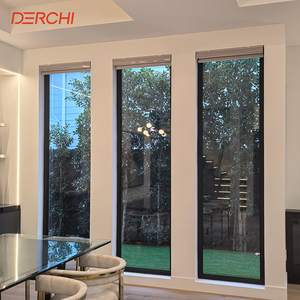
Back entries are increasingly engineered as floor-to-ceiling vision ports. Frame profiles have evolved from bulky 100mm faces to ultra-slim 35mm-45mm architectural interlocks. By utilizing structural silicone bonding (SSG) directly between the glass perimeter and thermal break frame, shear rigidity is enhanced, enabling expansive single sashes exceeding 3.2 meters in height.
5. Modular Prefabrication & Pre-Hung Systems
To counteract skyrocketing on-site union labor costs across destination markets, wholesale orders now dictate 100% factory pre-hung assemblies. Back doors are dispatched fully integrated with frames, sub-sill flashing profiles, sub-head channels, perimeter sealing membranes, and pre-calibrated multi-point hardware, reducing on-site installation intervals by over 65%.
Guangdong Dejiyoupin Doors and Windows Co., Ltd. (DERCHI)
Headquartered in the premier manufacturing hub of Foshan, Guangdong, DERCHI is globally acknowledged among China's top 10 premium architectural fenestration powerhouses. Operating across an integrated modern production facility of 180,000 m² with more than 600 highly trained technical specialists, our operations synthesize R&D innovation, precision CNC profile machining, robotic extrusion joining, multi-layer fluorocarbon surface coating, and exhaustive pre-shipment quality auditing under one institutional roof.

Seamless B2B project coordination: Free CAD shop drawings, Revit BIM objects, structural wind pressure calculations, and container consolidation services directly from Foshan port to your commercial staging yard.
Why Global Importers & General Contractors Select DERCHI
Precision-engineered quality assurance tailored to meet rigorous international statutory approvals without margin-eroding supplier intermediaries.
Rigorous Code Compliance
Full laboratory certification under AS 2047 (achieving N6 extreme wind pressure compliance), NFRC thermal ratings, CE structural validation, and ISO 9001 traceable manufacturing protocols ensure seamless building certifier sign-offs in Australia, New Zealand, the Americas, and Europe.
One-Stop Architectural Port
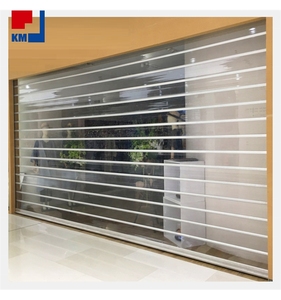
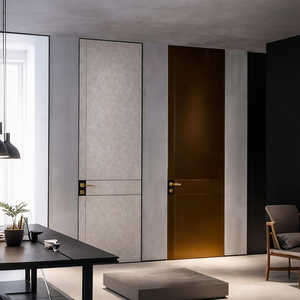
Consolidate your entire door schedule within a single manufacturing flow: thermal-break back doors, oversized pivot entries, interior frameless architectural doors, automatic roller shutters, and curtain walling systems—saving up to 35% on global LCL freight overhead.
Marine & Coastal Surface Armor
Equipped with automated vertical powder coating lines utilizing AkzoNobel Interpon D2525 fluorocarbon and AAMA 2605 compliant PVDF coatings, our door frames withstand 3,000 hours of continuous neutral salt spray testing (ASTM B117), ideal for harsh oceanic frontages.
Real-Time Engineering Support
Bilingual structural fenestration engineers operate across coordinated AEST, NZST, GMT, and EST time slots. Our in-house engineering team generates comprehensive CAD shop drawings, section details, anchor schedules, and custom hardware routings within 24 to 48 hours.
Frequently Asked Questions on Importing Aluminum Back Doors
Direct answers addressing technical specifications, logistics protection, custom tolerances, and import biosecurity.
What specific structural and thermal certifications accompany DERCHI aluminum back doors?
How does your factory protect aluminum door finishes and IGUs during maritime freight?
Can aluminum back doors be engineered to match existing residential fenestration profiles?
What are the standard Minimum Order Quantities (MOQ) and production lead times for wholesale export?
Which hardware brands are integrated, and can clients nominate their proprietary locking systems?
How does DERCHI ensure Australian and New Zealand biosecurity compliance (DAFF / MPI)?
Request an Engineering Estimate & CAD Package
Submit your fenestration schedule, architectural elevation drawings, or bill of quantities. Our technical sales engineers respond within 24 hours with itemized pricing, structural section diagrams, and thermal compliance certificates.