Architectural Fenestration Directory
Engineered Aluminum Alloy & Fiberglass Fenestration Systems
Guangdong Dejiyoupin Doors and Windows Co., Ltd. (DERCHI) leads high-precision door fabrication in Foshan, China. We manufacture structural 6063-T6 aluminum profiles, high-tensile fiberglass (FRP/GRP) screen compositions, and fire-resistant composite assemblies tailored to global building codes (AS 2047, CE, ASTM, ISO 9001).
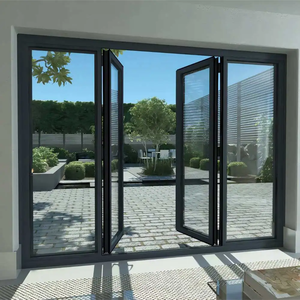
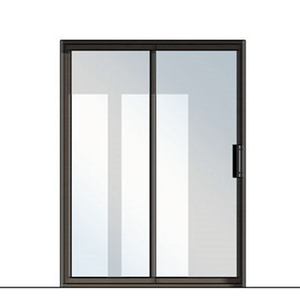
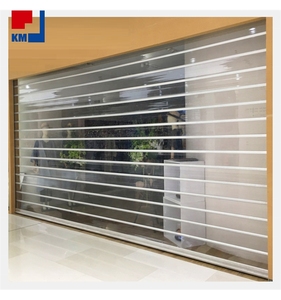
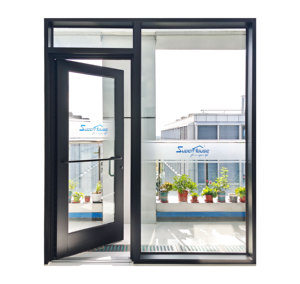
180,000m²
Integrated Factory Base
25+ Yrs
Extrusion & Joinery Mastery
600+
Skilled Technical Personnel
100+
Patents & Global Certifications
Material Science & Structural Architecture: Aluminium vs. Fibre Composites
In modern architectural envelope construction, the phrase "Aluminium Fibre Door" refers to a hybrid structural system combining high-tensile primary-billet 6063-T6 aluminum alloy profiles with high-modulus woven continuous E-glass fiber mesh or pultruded fiber-reinforced polymer (FRP) core panels. This combination solves thermal bridge failures, galvanic oxidation, and dimensional warping common in single-material doors.
Standard architectural timber absorbs ambient humidity, resulting in hygroscopic expansion, hinge bind, and perimeter air leaks. Unreinforced uPVC frames suffer from heat deflection, bowing outward when surface temperatures exceed 45°C. By contrast, DERCHI's proprietary aluminium-fiberglass systems use a multi-cavity aluminum frame reinforced with structural polyamide PA66-GF25 (25% glass fiber reinforced nylon) thermal break barriers, combined with micro-thin PVC-coated fiberglass mesh netting or high-density composite acoustic panels.
6063-T6 Structural Framework
Extruded from 99.7% virgin aluminum ingots. Wall thickness ranges from 1.6mm to 3.0mm, yielding ultimate tensile strength ≥ 205 MPa and yield strength ≥ 170 MPa, resisting severe wind shear.
High-Tensile Woven Fiber Core
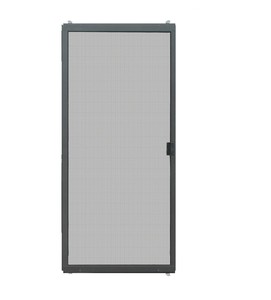
Flame-retardant continuous filament fiberglass mesh (18×16 mesh density) treated with plasticizing polymers for puncture resistance, UV stability, and optical clarity without sagging.
Isothermal Barrier Engineering
Multi-chamber polyamide PA66-GF25 thermal struts crimped inside extrusion cavities eliminate internal condensation and lower the door assembly U-factor down to 1.4 W/(m²·K).
Surface treatments are executed through computerized vertical powder coating or fluorocarbon (PVDF) lines using PPG, AkzoNobel, and Tiger Drylac resins. This provides saltwater salt-spray endurance exceeding 3,000 continuous hours under ASTM B117 standards. For interior applications, our vacuum-assisted heat-transfer sublimation bonds natural timber grain finishes into the conversion layer, delivering authentic wood aesthetics with zero rot, zero termite attraction, and class-zero flame spread ratings.
Engineering Comparison: Aluminium-Fibre Systems vs. Alternative Door Types
Specifying fenestration systems for commercial developments, hospitality projects, and luxury coastal residences requires balancing structural integrity, weight distribution, maintenance schedules, and lifecycle costs. Below is an engineering comparison matrix showing performance across primary material assemblies.
| Performance Criterion | DERCHI Aluminium-Fiber Composite | Solid Hardwood Joinery | Standard uPVC Framing | Structural Rolled Steel |
|---|---|---|---|---|
| Wind Pressure Rating (AS 2047 / ASTM E330) | N6 / Rating 4500 Pa+ | Limited (2000 Pa) | Moderate (1800–2400 Pa) | Extreme (5000 Pa+) |
| Thermal Conductivity (U-Value W/m²·K) | 1.3 – 1.8 (Thermally Broken) | 1.6 – 2.1 | 1.4 – 1.9 | 3.5 – 5.8 (Severe Thermal Bridging) |
| Coastal Salt-Spray Resistance (ASTM B117) | 3,000+ Hours (Marine Qualicoat) | Decomposes / Peels | Chalks under UV exposure | Corrodes without zinc baths |
| Dimensional Stability (-20°C to +75°C) | Linear Expansion < 0.02% | Expands/Contracts 1.8–3.2% | Expands up to 0.8% (Bowing) | Linear Expansion < 0.03% |
| Operating Lifecycle (Mechanical Testing) | 100,000+ Cycles (German Hardware) | 30,000 Cycles (Hinge Sag) | 40,000 Cycles (Track Deflection) | 80,000 Cycles (Hinges Require Grease) |
| Weight-to-Strength Index | Optimal (Structural & Light) | Heavy (High Foundation Load) | Light but Structurally Weak | Excessively Heavy |
This comparison shows why international specifiers are moving away from traditional wood and raw steel toward hybrid aluminium-fiber systems. The lighter structural weight reduces load on concealed pivots and European multipoint track rollers while offering high resistance against cyclone wind pressures and salt air corrosion.
Guangdong Dejiyoupin (DERCHI): Foshan Manufacturing Supremacy
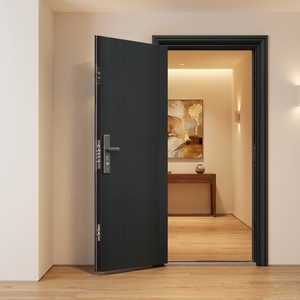
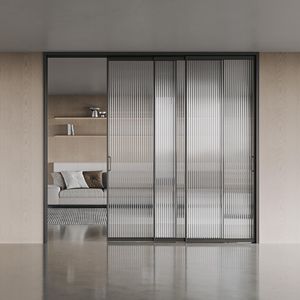
Headquartered in Foshan, Guangdong—the core of China’s advanced aluminum extrusion industry—Guangdong Dejiyoupin Doors and Windows Co., Ltd. (DERCHI) operates an integrated industrial manufacturing base covering more than 180,000 square meters. For over 25 years, our technical workforce has engineered entry systems, panoramic sliding portals, commercial fire barriers, and fiberglass composite screens for projects across Australia, New Zealand, the United States, Canada, Europe, and the Middle East.
Full Vertical Production Control
By keeping aluminum billet casting, precision extrusion die cutting, automated CNC corner crimping, glass tempering, and dust-free assembly lines in-house, we eliminate subcontractor delays and maintain tight dimensional tolerances (±0.5mm).
Australian AS 2047 & N6 Wind Rating
DERCHI systems are independently tested to meet AS 2047, AS 1288, and CE standards, achieving documented N6 extreme wind ratings, watertightness up to 700 Pa, and UL 30/60-minute commercial fire ratings.
Dedicated Engineering Desk
Our bilingual fenestration engineers work directly within client timezones (AEST, NZST, EST). We provide complete CAD shop drawings, BIM families, static wind-load calculations, and custom extrusion tooling for unique project specifications.
Because every building envelope involves unique structural considerations, we do not simply supply off-the-shelf components. We analyze local wind-load exposures, coastal salt-air risks, and seismic ratings to calculate the exact glass thickness (single, double, or triple IGU laminated low-E), aluminum wall structure, and hardware configuration needed for each door schedule.
Future Sourcing & Procurement Trends: 2025–2030
The global architectural fenestration sector is experiencing significant changes driven by decarbonization targets, stricter energy conservation mandates, and demand for slim-line minimalism. Commercial importers, developers, and wholesale buyers should account for four primary trends shaping aluminum and composite fiberglass door sourcing through 2030:
Ultra-Narrow Sightline Portals
Architects are specifying concealed perimeter outer-frames with visible face widths under 20mm. This requires higher-tensile 6063-T6 alloy combined with reinforced composite stiles to support oversized IGUs up to 600 kg.
Low-Carbon Green Billet Smelting
Western border adjustment mechanisms (such as the EU CBAM) are increasing demand for certified low-carbon aluminum billets smelted with renewable hydro energy, requiring verified factory carbon accounting.
Smart Mechatronic Multi-Point Locking
Mechanical latches are transitioning to concealed motorized multi-point systems compatible with biometric, RFID, and smart-home automation protocols, integrated directly within the extrusion thermal cavity.
Developers who partner with technical manufacturers like DERCHI gain an advantage by securing assemblies that comply with evolving building regulations well in advance of regional enforcement dates.
Wholesale Procurement & Engineering FAQ
Key technical, logistic, and commercial questions answered by our engineering and export compliance team for international buyers:
What minimum order quantity (MOQ) applies to custom profiles?
For catalog extrusion systems with standard powder coating (Black, White, Charcoal, Anodized Silver), our MOQ is 1 set for mockups or residential projects. For custom die-extrusion designs or bespoke architectural finishes, MOQ is typically 50 m² or one 20ft container.
How do you prevent glass and frame damage during ocean transit?
Every assembly undergoes a 4-tier packaging protocol: high-adhesion protective PE film on all exposed metal, EPE foam cushioning, reinforced corner caps, and fully enclosed, fumigated ISPM-15 compliant plywood crates suitable for FCL or LCL freight.
Can DERCHI supply structural shop drawings for council approvals?
Yes. Our in-house engineering office provides complete structural CAD shop drawings, elevation profiles, threshold connection details, and static wind calculation certificates to support builder submittals to local certifiers.
What glass specifications and configurations are available?
We supply AS 2208 and CE marked tempered, laminated, low-iron ultra-clear, ceramic fritted, and double/triple Insulated Glass Units (IGU). Cavities feature warm-edge spacers filled with 90%+ Argon gas for thermal and acoustic performance.
What surface finishes are recommended for direct oceanfront sites?
For installations within 500 meters of breaking surf, we specify Class 2 Qualicoat powder coatings or 3-coat 70% Kynar 500 PVDF fluorocarbon coatings, paired with grade 316 stainless steel hinges, pivot spindles, and locking hardware.
What are standard production lead times from approved drawings?
Standard architectural catalog doors require 25 to 30 operational days following final shop drawing sign-off and deposit receipt. Fully customized extrusion dies or bespoke cast-aluminum panel systems take approximately 35 to 45 operational days.