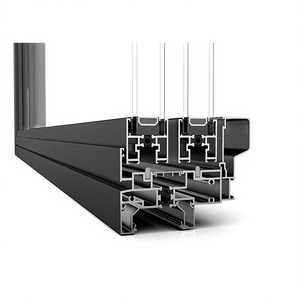
Export-Grade Door Systems
Featured Aluminum Jali, Screen & Glazed Systems
Engineered for extreme structural resistance, coastal salinity, and high-velocity cyclonic environments. Compare our heavy-duty aluminum profiles and decorative lattice frameworks tailored for high-end residential and commercial architecture.
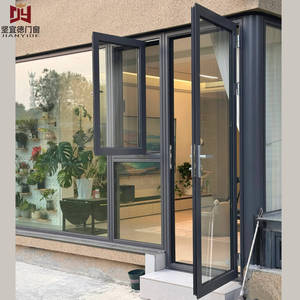
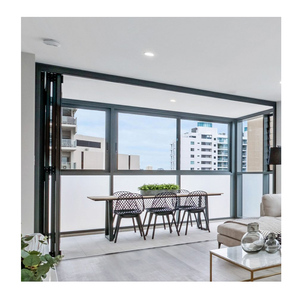
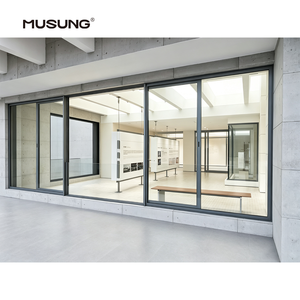
Technical Whitepaper
The Engineering Evolution of Aluminum Jali Doors
Originally conceived as ornamental perforated stone or timber latticework (Mashrabiya or Jali) across South Asia and the Middle East, the modern Aluminum Jali Door has transformed into a high-performance, multi-layered building envelope system combining intrusion defense, solar shielding, ventilation, and structural integrity.
Alloy Metallurgy: 6063-T6 vs Cast Aluminum
Traditional steel jali grills suffer from rapid oxidation in coastal climates, while timber screens warp under humidity cycles. DERCHI manufactures aluminum jali doors using primary billet 6063-T6 and 6061-T6 aluminum alloys. For ornate motifs, high-density vacuum-assisted die-cast aluminum panels deliver high shear strength without micro-porosity defects.
Extruded frames maintain minimum 2.0mm to 3.0mm structural wall thicknesses to anchor high-torque multi-point locks and resist crowbar deformation under UL 972 and EN 1627 RC3 forced-entry criteria.
Multi-Leaf Composite Layering Technology
The contemporary aluminum jali door is no longer a standalone screen; it is an engineered tri-layer thermal and security system:
1. Exterior Decorative Armor: CNC laser-cut aluminum plate (4mm-8mm) or cast aluminum lattice.
2. High-Tensile Security Infill: High-grade 304 or 316 marine-grade stainless steel woven wire mesh (0.8mm-1.0mm strand diameter) providing knife-shear resistance and micro-insect protection.
3. Thermal Glazing Layer: Independent low-E insulated glass units (IGU) equipped with EPDM gaskets and thermal break polyamides.
Passive Thermal Dynamics & Airflow Management
By engineering the open-area porosity index (perforation ratio) between 38% and 52%, DERCHI aluminum jali configurations reduce direct solar heat gain coefficients (SHGC) by up to 64% while maintaining continuous cross-ventilation.
This aerodynamic dissipation lowers indoor cooling loads in tropical and equatorial regions (GCC, Australia, Southeast Asia, Pacific Islands) while diffusing turbulent wind pressures before reaching inner glazing seals.
180,000m²
Foshan Production Base
25+
Years Engineering Expertise
600+
Certified Technicians
100+
Patents & Global Certs
Procurement Specification Matrix
Engineering Comparison: Screen & Door Configurations
To assist project engineers, facade consultants, and general contractors in value engineering, evaluate the structural tradeoffs between common jali and security screen assemblies.
| Performance Parameter | DERCHI Cast Aluminum Jali | CNC Laser-Cut 6061 Plate | Woven 316 SS Mesh Jali | Conventional Mild Steel Grill |
|---|---|---|---|---|
| Alloy / Material Base | A356 / ZL101 Cast Aluminum Alloy | 6061-T6 Aircraft Grade Billet | AISI 316 Marine SS (0.9mm strand) | Q235 Carbon Steel Tubing |
| Corrosion Resistance (Salt Spray) | ASTM B117 > 3,000 hrs | ASTM B117 > 3,500 hrs | ASTM B117 > 4,000 hrs | Fails < 240 hrs (Pitting Rust) |
| Impact Resistance (Joule) | > 120 J (High Rigid Modulus) | > 150 J (Ductile Energy Absorption) | > 100 J (Tensile Deflection) | > 110 J (Prone to Weld Shear) |
| Forced Entry Grade | EN 1627 RC3 / AS 5039 Level 1 | EN 1627 RC3 / AS 5039 Level 1 | AS 5039 Passed (Knife Shear) | Unrated Commercial Grade |
| Acoustic Damping (Rw) | 32 dB - 36 dB (Dual Seal) | 30 dB - 35 dB | 22 dB (Screen Only) | < 15 dB (Resonant Vibration) |
| Architectural Customization | Deep 3D Sculptured Profiles | Parametric Geometric Vectors | Linear Uniform Mesh | Rigid Geometric Bars Only |
Strategic Sourcing Intelligence
Future Procurement & Technological Trends (2025–2030)
International facade contractors, property developers, and volume importers must account for shifting regulatory mandates and material science breakthroughs when specifying aluminum jali systems.
1. Decarbonized Aluminum & EPD Auditing
Global developers are enforcing strict Embodied Carbon Cap limits. Procurement frameworks require Environmental Product Declarations (EPD) verifying hydro-powered electrolytic aluminum smelting with carbon footprints below 4.0 kg CO2e per kg Al. DERCHI operates closed-loop scrap recovery systems, reducing embodied emissions across billet extrusion cycles.
2. Smart Biometric & IoT Hardware Integration
Mechanical keys are rapidly phasing out in luxury multi-dwelling units. Aluminum jali doors are increasingly specified with hidden conduit profiles to house smart solenoid drop-bolts, facial recognition biometric scanners, motorized pivot drives, and integration with KNX/Zigbee building automation systems.
3. Ultra-Fluorocarbon (PVDF) Coastal Coatings
Salt fog and high solar ultraviolet indices along oceanic coastal belts (such as Queensland, Florida, Dubai, and the Caribbean) trigger chalking and micro-cracking in standard polyester powders. Sourcing standards are moving toward AAMA 2605 certified, 3-coat fluoropolymer (PVDF) finishes that guarantee color retention and gloss stability exceeding 20 years.
Enterprise Advantage
Why Global Specifiers Partner with DERCHI
Headquartered in Foshan, Guangdong Dejiyoupin Doors and Windows Co., Ltd. is ranked among China's top tier fenestration manufacturers. We bridge architectural creativity and rigorous production compliance.
Single-Point Manufacturing
From aluminum billet processing, die extrusion, CNC fretwork carving, and casting to automated powder coating and final assembly, everything is controlled in our 180,000m² facility. Zero outsourced subcontracting guarantees batch consistency.
Stringent Testing & AS2047
Our complete systems hold AS 2047 accreditation with an N6 structural wind rating, alongside CE, ISO 9001, and UL fire classifications. Full third-party test reports, NATA-recognized laboratory certificates, and structural calculations accompany shipments.
Free CAD & BIM Engineering
Our in-house facade engineers convert your architectural renderings into shop drawings, parametric CNC files, and BIM families within 48 hours. We reconcile structural opening variations to guarantee precision on-site fitment.
Export-Grade Crating & Global Logistics
All orders are crated with steel-reinforced, fumigation-free timber enclosures, cellular moisture desiccants, and edge-impact cushions. Direct FCL and LCL container services reach Sydney, Auckland, Long Beach, Jebel Ali, and European ports.
Procurement Clarity
Frequently Asked Questions by Commercial Buyers
Detailed technical answers to common queries regarding material selection, international compliance, customization capabilities, and logistics.
What structural wall thicknesses are utilized in DERCHI Aluminum Jali frames?
Unlike retail-grade aluminum doors which use thin 1.2mm–1.4mm profiles, DERCHI specifies heavy architectural profiles with structural wall thicknesses ranging from 2.0mm to 3.0mm in 6063-T6 or 6061-T6 aluminum alloys. This rigidity prevents frame sag on oversized pivot doors (up to 4.5 meters in height) and provides anchor depth for heavy multi-point security deadbolts.
Can the jali lattice patterns be custom-machined to match architectural CAD/Vector files?
Yes. We operate industrial 5-axis CNC laser cutters and high-tonnage vacuum die-casting machinery. Clients can upload DWG, DXF, or PDF drawings to produce geometric Islamic arabesques, modern minimalist parametric perforations, colonial bar grids, or organic floral motifs. Our engineering team validates the structural integrity and open-area air resistance of your design before production.
How does the composite Aluminum Jali Door handle water and air infiltration under stormy conditions?
Our dual-layer systems integrate an outer decorative jali mesh that serves as a rainscreen and wind disperser, backed by an independent inner casement or sliding glass leaf sealed with continuous vulcanized EPDM rubber gaskets. This configuration is tested under AS 2047, achieving zero water leakage at pressure differentials exceeding 450 Pa and handling cyclical wind pressures up to the N6 classification.
What surface treatment guarantees that the aluminum will not corrode in direct coastal environments?
For projects within 1,000 meters of the coastline, we specify AkzoNobel or PPG certified PVDF (polyvinylidene fluoride) fluoropolymer coatings or 25-micron architectural anodization. These finishes pass 3,000 to 5,000 hours of neutral salt spray testing (ASTM B117) without film blistering, flaking, or cathodic corrosion, backed by a written 15- to 20-year performance warranty.
What is the typical production lead time and international crating protocol?
Standard custom project lead times range from 25 to 35 business days following CAD shop drawing approval. For shipping, every door is protected in protective film, cushioned with high-density EPE foam around frame extrusions, and secured inside moisture-sealed, fully enclosed plywood crates meeting ISPM-15 international phytosanitary quarantine protocols.
Initiate Your Engineering Quote & Specification Review
Consult directly with our Foshan fenestration engineering group. Receive structural profiles, acoustic evaluations, CAD shop drawings, and wholesale direct export pricing for your project.
Get a Quote