Featured Architectural & High-Performance Product Series
Precision-manufactured in our Foshan smart manufacturing hub. Fully certified to international fenestration standards including AS 2047, CE EN 14351-1, and NFRC requirements.
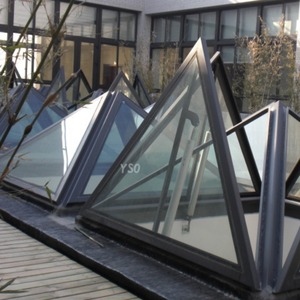
Automatic Vertical Fire Control Aluminum Frame Exhaust Smoke Roof Skylight With Anti-Theft Feature
- Motorized pneumatic & electric actuators
- EN 12101-2 Fire exhaust & anti-theft rated
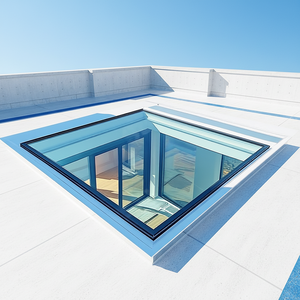
Sunnysky Customized Modern Aluminum Frame Automatic Skylight Roof Windows Soundproof Double Glazing
- Rw + Ctr up to 44 dB sound insulation
- Argon gas filled tempered laminated glass
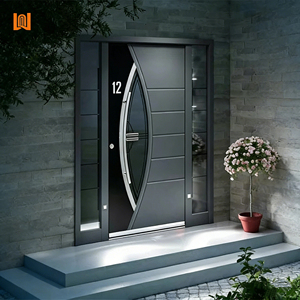
Modern Style Main Entrance Door Aluminum Double Glazed Glass Front Entry Doors Bulletproof Security
- Multi-point security perimeter hardware
- Reinforced 6063-T6 architectural alloy
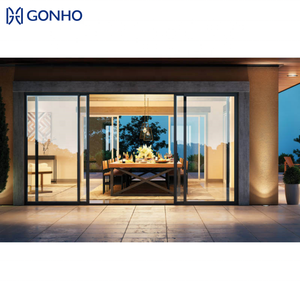
Big Glasses Standing Bulletproof Double Glazing Energy Efficient Aluminum Sliding Door and Window
- Ultra-slim sightlines & high solar control
- AS 2047 Cyclone & impact rated glass
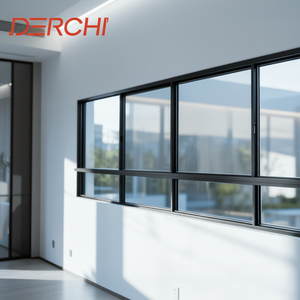
DERCHI European Standard CE Certified Aluminum Horizontal Sliding Window Double Glazed Tempered Glass
- Polyamide PA66 thermal barrier system
- CE EN 14351-1 audited factory compliance
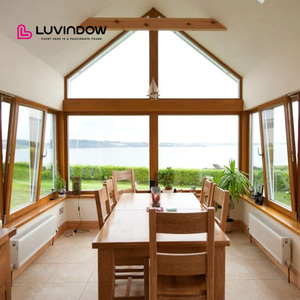
Modern Slim Profile Aluminum Clad Wood Window Horizontal Opening Soundproof Child Safe Design
- FAS Grade North American Oak & 6063 Alu
- Passive House level thermal coefficient
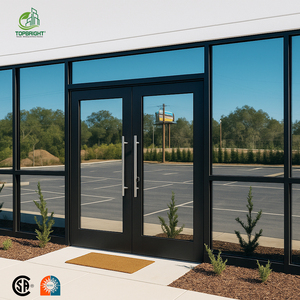
Topbright Modern Commercial Hotel Storefront Door Soundproof Double Glass Exterior Security Foldable
- Heavy-duty bottom roller carriage systems
- 100,000+ continuous cycle operational life
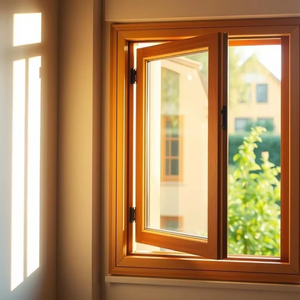
Prima High End Powder Coated Anthracite Grey Aluminium Casement Window for Modern Luxury Home
- Qualicoat Class 2 architectural finish
- Concealed multi-point tilt-turn gearboxes
The Mechanics of High-Performance Aluminium Tilt and Turn Fenestration
In modern architectural building envelopes, the Aluminium Tilt and Turn Window represents the pinnacle of multi-functional fenestration engineering. Engineered predominantly around German and European dual-action kinematic hardware, these assemblies provide two distinct operation modes via a single ergonomic handle: the tilt position (which disengages the upper scissor-stay hardware to create an engineered top-hopper opening for draught-free, climate-controlled micro-ventilation and enhanced security) and the turn position (which engages heavy-duty side hinges to swing inward a full 90 to 180 degrees for rapid air changes, fire egress compliance, and safe interior glass maintenance in high-rise facades).
Leading Chinese exporters and system fabricators have advanced far beyond low-cost extrusion commoditization. Today, Tier-1 Chinese manufacturers like DERCHI (Guangdong Dejiyoupin Doors and Windows Co., Ltd.) operate fully integrated industrial campuses in Foshan, leveraging German-engineered Elumatec 5-axis CNC machining centers, robotic corner-crimping cells, and automated multi-cavity thermal break insertion lines. By integrating virgin 6063-T6 or 6060-T66 architectural aluminium extrusions with reinforced Polyamide (PA66 GF25) thermal barriers, modern systems effortlessly exceed stringent international green building ratings—including ASHRAE 90.1, Australia's NCC Section J, and European Passivhaus certifications.
A critical determinant of procurement success for international developers, commercial facade contractors, and glazing consultants is the architectural integration of hardware tolerances, gasket vulcanization, and structural glass engineering. Tilt and turn assemblies endure extreme cantilevered dead loads when opened in turn mode, necessitating precision corner bracket injection, high tensile steel corner drives, and multi-point perimeter locking cams that compress triple-seal vulcanized EPDM gaskets against continuous rebate chambers. The resulting barrier delivers extraordinary acoustic decoupling and impervious water-tightness under cyclonic wind forces.
| Series Configuration | Profile Depth | Thermal Barrier (PA66 GF25) | Glazing Pocket Spec | Thermal Transmittance (Uw) | Acoustic Decoupling (Rw+Ctr) | Compliance Rating |
|---|---|---|---|---|---|---|
| DERCHI TTW-65 Standard | 65 mm | 24 mm Multi-Cavity | 28 mm (5+18Ar+5 Low-E) | 1.60 W/(m²·K) | 35 dB (-2; -4) | CE / AS 2047 N4 |
| DERCHI TTW-75 Architectural | 75 mm | 34 mm Low-Conductivity | 36 mm (6+16Ar+6 Low-E) | 1.25 W/(m²·K) | 39 dB (-1; -3) | AS 2047 N6 / CW-PG50 |
| DERCHI TTW-85 Passivhaus | 85 mm | 39 mm Aerogel Injected | 48 mm Triple Low-E Warm Edge | 0.79 W/(m²·K) | 44 dB (-2; -5) | PHI Certified / AAMA |
| DERCHI TTW-100 Clad-Wood | 100 mm Structural | Multi-Chamber + FAS Oak | 42 mm Argon Laminated | 0.88 W/(m²·K) | 46 dB (-1; -4) | CE / AS/NZS 4666 |
Strategic Global Sourcing Trends in Architectural Windows
Analyzing structural shifts in B2B cross-border supply chains, carbon border adjustments (CBAM), parametric BIM synchronization, and factory consolidation.
Decarbonization & Low-Carbon Aluminium Billets
With the European Union's Carbon Border Adjustment Mechanism (CBAM) and strict global ESG mandates, institutional developers are prioritizing suppliers utilizing hydro-powered and recycled aluminium billets. Chinese tier-1 exporters are proactively providing verified Environmental Product Declarations (EPDs), auditing the cradle-to-gate embodied carbon of thermal profiles below 4.0 kg CO2e per kg of primary aluminium alloy.
Parametric BIM & Pre-Fabricated Shop Integration
Sourcing friction has shifted from unit cost negotiation to engineering integration. Progressive procurement teams demand direct API integration with Revit, ArchiCAD, and BIM 360 platforms. Advanced Chinese exporters deliver fully resolved IFC and DWG parametric models that include exact anchor point calculations, thermal bridge isotherm simulations, and flashing drainage details prior to production release.
Consolidated Fenestration & Door Packages
The practice of splitting window, entry pivot door, curtain wall, and garage door contracts across disjointed vendors is rapidly declining. Sourcing managers achieve 15–22% logistics savings and eliminate finish discrepancy risks by consolidating multi-system packages with large-scale Chinese manufacturers capable of extruding, powder-coating, and testing full-scope building envelope packages under one QA roof.
Technological Advancements in Modern Tilt and Turn Profiles
How next-generation structural mechanics, micro-aeration, and mechatronic smart drives are redefining the performance envelope.
Concealed Hardware & Ultra-Slim Sightlines
Traditional bulky external hinges are being replaced by high-strength, fully concealed pivot stays capable of supporting sashes up to 300 kg. This enables completely flush interior finishes and ultra-slim frame sightlines down to 55 mm, maximizing day-lighting aperture without degrading sash perimeter clamping pressure or air permeability ratings (EN 12207 Class 4).
Mechatronic Actuators & Smart Building Integration
Automated building management systems (BMS) are demanding motorized concealed actuators within the euro-groove chamber. Modern Chinese tilt-turn solutions integrate discreet 24V DC mechatronic drives that execute automated night-cooling purges, wind/rain sensor retraction, and fire exhaust venting while retaining full manual override handle operability.
Warm-Edge Multi-Chamber Aerogel Composites
To eliminate edge-seal condensation and achieve strict Passivhaus criteria (Uw ≤ 0.8 W/m²·K), profiles are incorporating polyolefin foam insulation blocks and silica aerogel inserts within the extrusion cavities. Paired with structural silicone glazing (SSG) and TPS (Thermo Plastic Spacer) warm-edge glass units, thermal bridges are completely mitigated.
Why Global Specifiers Partner with DERCHI
Headquartered in the premier architectural aluminium hub of Foshan, Guangdong, Guangdong Dejiyoupin Doors and Windows Co., Ltd. (DERCHI) represents over 25 years of specialized fenestration manufacturing excellence. Operating across an expansive 180,000 square meter intelligent industrial park staffed by over 600 master fabricators, mechanical engineers, and export specialists, DERCHI consistently leads China's top tier of export-grade architectural manufacturers.
Every tilt and turn window assembly is governed by an exhaustive quality management protocol audited under ISO 9001 guidelines. Our in-house research, testing, and development center subjects profile sections to rigorous cyclic loading, salt spray corrosion testing (exceeding 4,000 hours for coastal fluorocarbon and Qualicoat Seaside Class 2 architectural coatings), and specialized water infiltration rigs calibrated to AS 2047 and ASTM requirements.
We maintain dedicated engineering project teams operating aligned with AEST, NZST, and North American business hours, delivering full parametric CAD shop drawing submittals, glass deflection calculations, and export-grade fumigated plywood crating engineered specifically to withstand ocean transit moisture and dynamic freight stresses.

Frequently Asked Questions by Global Importers & Contractors
Direct technical engineering guidance covering building code compliance, structural tolerances, logistics mitigation, and testing documentation.
Our systems undergo exhaustive physical prototype testing in NATA-accredited testing laboratories to evaluate air infiltration (AS 4420.4), water penetration resistance under static pressure up to 600–900 Pa (AS 4420.5), deflection under ultimate limit state wind pressures reaching cyclonic N6 ratings (up to 4,500 Pa), and operating force compliance. All project deliveries include formally certified test certificates and structural calculation schedules acceptable to Australian and New Zealand building certifiers.
We offer dual hardware supply tracks based on project budget and specification: premium German-engineered systems (Siegenia, Roto Frank, Hoppe, or Sobinco) as well as top-tier customized Chinese architectural hardware (such as CMECH or Kin Long). All mechanisms feature multi-point anti-lift mushroom cam locking points, child-safety restrictors, and corrosion-resistant surface coatings (Grade 5 EN 1670) validated across 25,000+ mechanical open-tilt-close cycle tests.
For projects situated within 1 km of saltwater shorelines, we apply AkzoNobel Interpon D2525 or PPG Duranar PVDF fluorocarbon coatings meeting AAMA 2605 and Qualicoat Seaside Class 2 criteria. This multi-stage chemical pretreatment, chromate-free conversion, and electrostatically sprayed 3-coat thermal bake process provides film thickness exceeding 60–80 microns, resisting aggressive chloride corrosion, blistering, and severe solar UV chalking for 20+ years.
Oversized sashes (exceeding 1.8 m in height or 150 kg in unit dead weight) incorporate our patented diagonal glass-to-sash bridging system (known as heel-and-toe glass blocking) combined with cast stainless steel heavy-duty scissor arms. Structural silicone sealant chemically bonds the insulated glass unit (IGU) to the inner sash rebate, transforming the rigid glass panel into a structural shear diaphragm that permanently halts corner deflection or frame sagging over decades of heavy service.
Windows are individually wrapped in 0.5 mm scratch-resistant protective film, corner-guarded with rigid composite protectors, and placed inside custom-engineered, fully enclosed fumigated plywood crates (ISPM 15 compliant). Industrial silica gel desiccant bags are sealed inside vapor-barrier inner wraps to absorb relative humidity fluctuations across tropical shipping lanes, preventing chemical etching of Low-E glass coatings during long ocean crossings.
Following receipt of structural opening schedules or tender drawings, our engineering department provides comprehensive CAD/BIM shop drawings within 3 to 5 business days for sign-off. Upon sample and drawing confirmation, mass production lead times generally range between 25 and 35 calendar days depending on custom extrusion dies or unique RAL powder-coat requirements. We support both FCL (Full Container Load) and consolidated LCL freight handling.
Plan Your Next Commercial or Residential Project with DERCHI
Engage directly with our senior fenestration engineers to receive custom structural load calculations, thermal performance simulations (Uw/SHGC), free CAD shop drawings, and competitive factory-direct export proposals.