High-Integrity Fire Containment Meets Architectural Vision
Modern commercial complexes, luxury high-rises, and institutional facilities demand fire door assemblies that integrate structural integrity (E), thermal insulation (I), acoustic attenuation, and barrier-free ingress without sacrificing visual elegance.
Engineered Fire Door Solutions for Commercial & Residential Projects
Fully tested and validated aluminium fire door systems precision-engineered for international tenders, high-traffic commercial applications, and luxury architectural developments.
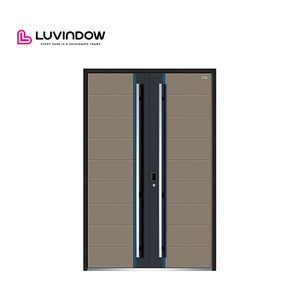
Commercial Fireproof Aluminum Entrance Doors
Designed for premium retail storefronts, office lobbies, and corporate headquarters. Engineered with heavy-duty thermal break aluminium profiles and mineral insulation cores.
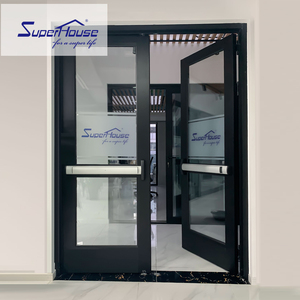
Fire Rated 30/60/90/120M Safety Emergency Exit Door
High-capacity escape route doors combining fireproof safety glazing with multi-point panic release systems to satisfy strict commercial code requirements.
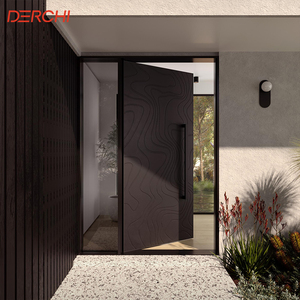
Commercial Fire Rated Security Entrance Door
Dual-certified architectural door system uniting anti-burglary multi-point deadlock mechanisms with certified fire barrier insulation for institutional exteriors.
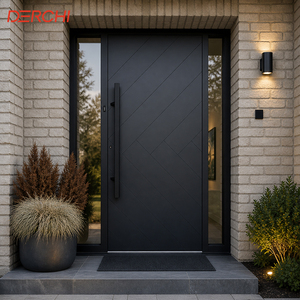
Fire Rated Exterior Security Front Door
Heavy-duty exterior front doors designed for harsh coastal and urban weathering, tested for wind resistance, air impermeability, and continuous thermal barrier protection.
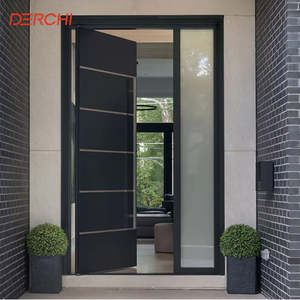
Luxury Aluminum Pivot Doors with Fire Prevention
Oversized grand entrance pivot systems incorporating German concealed hydraulic pivot hinges and perimeter intumescent seals that activate automatically in thermal flashover.
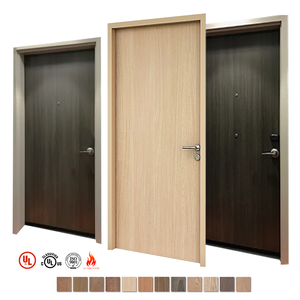
20-180mins Hotel Interior Fire Rated Room Entry Doors
UL-certified pre-hung aluminium-subframe door sets tailored for high-end hospitality chains. Seamlessly matches smart RFID locks and features intumescent drop seals.
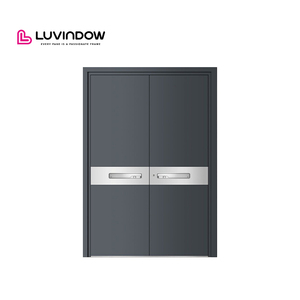
Fireproof 3D Carving Residential Entry Doors
Exquisite cast aluminium artistic sculpting bonded to an insulated fire retardant silicate sandwich core. Engineered for North American and Australasian custom villa estates.
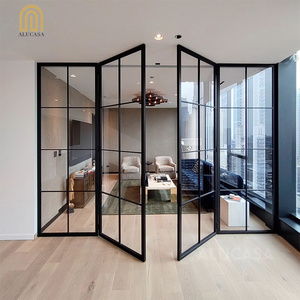
Crittall-Style Fire-Rated Glass Interior French Doors
Ultra-narrow thermal break profiles with multi-layered nano-silicon fireproof glazing. Achieves modern minimalist interior aesthetics while compartmentalizing fire zones.
How Engineered Aluminium Exceeds Extreme Fire Testing Criteria
While standard aluminium softens at approximately 550°C to 660°C, top-tier Chinese fire door manufacturers employ proprietary thermodynamic barriers, composite filling materials, and reinforced ceramic chambers to maintain structural integrity under flashover conditions exceeding 1000°C.
Alloy Metallurgy (6063-T6 / 6061-T6)
We utilize prime aerospace-grade billet alloys with high magnesium and silicon control, yielding ultimate tensile strengths exceeding 240 MPa. Critical stress points feature internal stainless steel reinforcement tie-bars that prevent thermal bowing during positive-pressure flame impingement.
- Wall thickness: 2.0 mm to 3.5 mm structural profile specs
- Stainless steel AISI 304/316 concealed corner brackets
- Multi-chamber thermodynamic heat dissipation cavity
Mineral Silicate & Ceramic Cores
The leaf cavities are high-density filled with non-combustible Class A1 hydrophobic expanded perlite, ceramic fiber boards, and micro-porous silica matrices. When attacked by severe fire, bound crystalline water releases endothermically to drastically lower unexposed surface temperatures.
- Zero toxic gas and zero smoke optical obscuration
- Core thermal conductivity ≤ 0.042 W/(m·K)
- Exceptional acoustic damping properties (Rw 38–44 dB)
Nano-Polymer Intumescent Sealing
Concealed perimeter channel tracks house expandable graphite-based intumescent seals. At 180°C to 200°C, these seals expand up to 25 to 30 times their initial volume, hermetically blocking superheated gas, lethal carbon monoxide, and radiant flash plumes across door frame clearances.
- Tested up to 300 kPa continuous positive pressure
- Concealed threshold automatic drop seals for cold smoke
- UL 1784 air leakage standard compliant (< 3.0 cfm/sq ft)
International Fire Rating Classification Standards Compared
Specifying fire door assemblies across jurisdictional borders requires exact alignment between Integrity (E), Thermal Insulation (I), and Radiation Attenuation (W). Below is the technical compliance harmonization for DERCHI fire-rated door assemblies.
| Jurisdiction & Standard | Primary Classification | Test Methodology & Criteria | Core Performance Focus | Typical Export Applications |
|---|---|---|---|---|
| North America UL 10B / UL 10C / NFPA 252 |
20, 60, 90, 180 Minutes (Fire Protection Rating) | Positive pressure furnace test followed immediately by high-velocity fire hose stream impact. | Integrity against flame pass-through; structural survival under thermal shock and physical water impact. | US, Canada, Latin American commercial multi-residential towers, hotels, and universities. |
| European Union / UK BS EN 1634-1 / EN 13501-2 |
E30 / EI30 / EI60 / EI90 / EI120 | Furnace heating curve (ISO 834) evaluating Integrity (E) and Thermal Insulation (I ΔT ≤ 140°C). | Strict surface temperature insulation thresholds preventing radiant auto-ignition of escape corridors. | UK, EU, and Middle East architectural master projects, airports, and healthcare centers. |
| Australia & New Zealand AS 1530.4 / AS 2047 / NCC |
FRL -/60/30 up to -/120/120 | Standard time-temperature exposure combined with cyclic wind load (AS 2047 N6 rating) & weatherability. | Combined fire containment and severe coastal cyclone wind-pressure resistance. | Sydney, Melbourne, Auckland, Queensland high-density residential and oceanfront complexes. |
| International Marine / Offshore IMO FTP Code / SOLAS |
Class A-60 / B-15 / B-30 | Hydrocarbon fire curve (fast ramp-up to 950°C in 5 min) with gas-tight door frame gaskets. | Rapid offshore oil and vessel containment with marine-grade 316 stainless or anodized alloys. | Maritime passenger vessels, luxury mega-yachts, and offshore energy infrastructure. |
Future Procurement Trends for Aluminium Fire Doors (2026–2030)
Global supply chain disruptions, changing building safety regulations, and aggressive decarbonization mandates are reshaping how real estate developers and general contractors source from Chinese factories.
Direct Factory Integration
Procurement teams are skipping export broker middlemen to collaborate directly with mega-scale Foshan manufacturers. Direct access to in-house CAD/BIM engineers shortens project revision lead times by over 45%.
LOD 400 BIM Deliverables
Top international tier-1 contractors now mandate Building Information Modeling (BIM) files prior to contract awards. Chinese leaders provide full Revit parametric family objects with thermal, fire, and structural metadata.
Circular Low-Carbon Billet
ESG certification (LEED v4 and BREEAM) requires traceable, low-carbon aluminium extrusions derived from hydroelectric-powered smelting, cutting embedded carbon footprint to under 4.0 kg CO2/kg Al.
Pre-Hung Modular Assembly
To slash expensive on-site unionized carpenter labor costs in Australia, the US, and Europe, factories now ship complete pre-hung, factory-shimmed assemblies ready for rapid 20-minute installation drop-ins.
Emerging Technologies in Fire-Rated Door Manufacturing
Pioneering Chinese factories are investing heavily in material sciences, smart hardware integration, and minimalist design to break the historical tradeoff between fire safety and architectural beauty.
Ultra-Narrow Crittall Sightlines
Traditionally, fire doors required bulky, obstructive steel framing. Next-gen systems utilize high-tensile internal matrix web designs that achieve an ultra-slim 22 mm face sightline while successfully passing 60-minute fire integrity and insulation (EI60) endurance tests.
- Matches high-end industrial and heritage French door styling
- Multi-layer clear intumescent nano-silicon interlayer glass
- No visible external clamping beads or screws
Heavy Pivot Fire Engineering
Architects love grand oversized pivot doors (up to 3.5m high and 1.8m wide), but pivot geometry creates hazardous expansion gaps during fire incidents. Patented multi-axis concealed floor springs and thermally actuated drop bolts now secure pivot leaves automatically upon smoke detection.
- Load ratings supporting up to 500 kg door leaf weight
- Concealed automated mechanical or magnetic hold-open
- Direct relay interface with central fire alarm controllers
IoT Smart Lock Fire Escape Integration
Modern hospitality and commercial access control demands touchless RFID, biometric facial scanning, and encrypted mobile credentials. Advanced fire door leaves embed fire-shielded wiring channels and fail-safe electromagnetic latch mortises that release instantly during building power cuts or fire alarms.
- Certified to ANSI/BHMA Grade 1 cycle longevity
- Fire-protected battery backup modules integrated in sub-frame
- Real-time door status monitoring via BACnet & Modbus
Guangdong Dejiyoupin Doors & Windows Co., Ltd. (DERCHI)
Recognized as one of China's Top 10 premium architectural fenestration and security door brands, DERCHI operates a massive 180,000 m² state-of-the-art production base in Foshan, Guangdong. For over a quarter of a century, we have bridged rigorous engineering rigor with bespoke architectural customization for luxury villas, government projects, five-star resorts, and international commercial complexes.
By keeping aluminum precision extrusion processing, fluorocarbon spray coating, mineral core lamination, hardware CNC routing, and multi-stage testing in-house, we eliminate external subcontracting variables and deliver guaranteed uncompromised fire safety performance.

Frequently Asked Questions on Aluminium Fire Door Procurement
Clear, definitive engineering answers addressing compliance testing, structural metallurgy, logistics safety, and international code approvals.
Can aluminium doors truly achieve certified fire insulation (EI) ratings rather than just fire integrity (E)?
Yes, absolutely. While standard untreated aluminium has a melting threshold around 660°C, certified aluminium fire door systems use multi-chambered thermal break profiles filled with dense endothermic ceramic boards or expanded perlite. By decoupling the fire-exposed face from the non-exposed face and using multi-layered nano-silicon intumescent fire glass, our assemblies limit the unexposed surface temperature rise to ≤ 140°C over ambient temperatures, easily satisfying EI30, EI60, EI90, and EI120 requirements under BS EN 1634-1.
What is the core distinction between UL 10C (US) and EN 1634-1 (Europe) fire testing methodologies?
The primary technical difference centers on pressure regimes, temperature measurement criteria, and the compulsory Hose Stream Test. UL 10C imposes positive furnace pressure in the upper two-thirds of the door assembly and mandates that immediately following fire exposure (e.g., 60 or 90 minutes), the red-hot door must withstand an aggressive 30 to 45 psi fire hose blast without breaching. In contrast, EN 1634-1 focuses heavily on thermodynamic surface insulation (I value) and radiant heat flux limits (W value) without a hose stream impact.
How does Australian Standard AS 1530.4 interact with AS 2047 structural and weatherproofing requirements?
Under the National Construction Code (NCC) of Australia, exterior doors on mid- and high-rise developments must meet both fire resistance level (FRL) ratings under AS 1530.4 and window/door structural performance under AS 2047. DERCHI fire doors are engineered to achieve an N6 wind rating (capable of resisting ultimate serviceability wind pressures > 4000 Pa) while preserving certified FRL ratings (such as -/60/30 or -/120/120) with specialized coastal silicone weather seals.
How does the factory prevent door leaves from warping or bowing during the initial 15-minute thermal flashover?
Thermal bowing occurs when the fire-exposed side of a door expands rapidly while the unexposed side remains cold. DERCHI neutralizes this differential expansion through internal floating anchoring channels and heavy-gauge stainless steel tie rods (AISI 304). These allow the structural composite leaf to expand within guided expansion slots without flexing out of the frame stop perimeter, preserving the integrity of the active intumescent perimeter seals.
Can custom architectural finishes like PVDF, fluorocarbon, or woodgrain transfer affect fire compliance?
No, provided they are applied to certified dry film thicknesses. We utilize thermosetting fluorocarbon (PVDF) coatings and non-combustible architectural powder coats that comply with ASTM E84 Class A flame spread indices (flame spread ≤ 25, smoke developed ≤ 50). These finishes will not support flame travel or flash ignition, ensuring custom aesthetics match code compliance.
What export packaging measures prevent delicate fire glass and internal cores from moisture degradation during oceanic transit?
Ocean freight poses severe threats from maritime humidity, salt spray, and vibration harmonics. Every DERCHI fire door is sealed in a heavy polyethylene vacuum wrap containing silica desiccant bags, corner-protected with high-density EVA shock foams, and bolted inside heavy-gauge, ISPM-15 compliant fully enclosed plywood crates. Glass panels feature impact-resistant cork spacers that prevent micro-fracturing across rough sea journeys.
What documentation and inspection protocols are provided to satisfy local city building inspectors and certifiers?
Every shipment is accompanied by a full compliance dossier: traceable factory batch inspection test certificates, mill certificates for all structural aluminium profiles, independent accredited laboratory test reports (Intertek, Warringtonfire, or National Fire Testing Centers), fire labels permanently stamped into the door leaf and frame, and as-built CAD shop drawings cross-referenced against your project door schedule.
Can foreign architects and procurement managers conduct live virtual factory audits prior to deposit transfer?
Yes, we encourage it. We offer high-definition 360-degree interactive factory VR tours alongside real-time video conferences led by our English-speaking engineering staff. Overseas clients can inspect our automated profile cutting, robotic powder coating lines, corner swaging stations, core lamination presses, and packaging protocols from their home office.
Accelerate Your Project Specification & Tender Approvals
Connect with our senior facade and fire safety engineers today. Send your architectural door schedules, elevation drawings, or wind load requirements for a complimentary CAD shop drawing set and formal B2B project quotation within 24 hours.