Featured Architectural Aluminium Entrance Systems
Explore our precision-engineered luxury pivot, security, cast aluminium, and glass entrance doors designed for high-end residential, hotel lobby, and modern commercial facade developments.
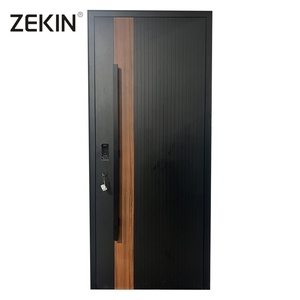
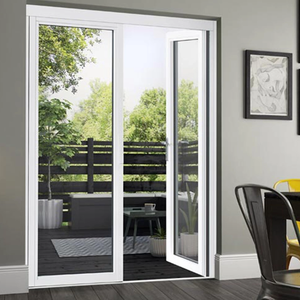
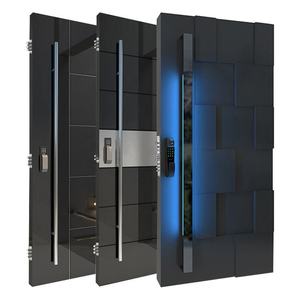
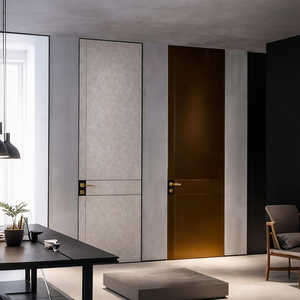
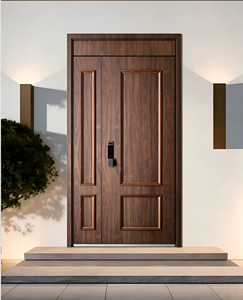
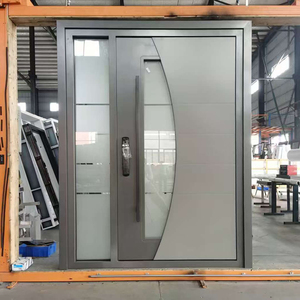
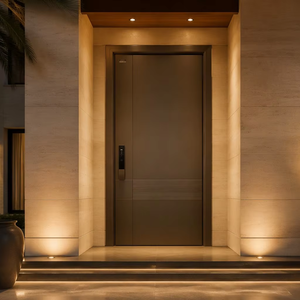
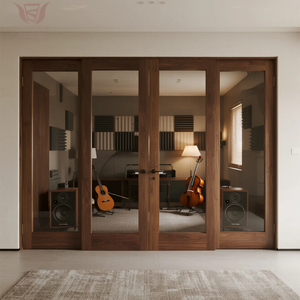
1. Structural Metallurgy & Material Engineering in Fancy Aluminium Doors
In contemporary luxury architecture, the main entrance door is no longer merely a physical barrier; it represents a primary structural statement, an thermal envelope barrier, and an advanced security interface. China's premier architectural aluminium door manufacturers have driven a technological paradigm shift—replacing traditional timber and standard low-gauge hollow steel with ultra-precise extruded 6063-T6 and 6060-T66 aluminium alloys alongside solid cast aluminium monolithic panels.
The technical superiority of high-end aluminium fancy doors lies in their structural strength-to-weight ratio, extreme dimensional stability across ambient temperature fluctuations, and total resistance to organic degradation such as warping, rot, and electrochemical oxidation. When procuring fancy aluminium doors from Chinese factories, engineering specifiers must scrutinize the mechanical profile parameters, wall thickness, thermal break assembly, and surface chemistry finish.
6063-T6 Aerospace Alloy
Extruded aluminium profiles manufactured to artificial aging T6 temperament deliver tensile strength exceed 205 MPa, yielding superior flexural resistance for grand oversized pivot panels.
PA66-GF25 Thermal Breaks
Polyamide 66 reinforced with 25% glass fiber creates an impermeable thermal barrier, drastically cutting thermal transmittance (U-Factor ≤ 1.2 W/m²K) and eliminating internal condensation.
Fluorocarbon PVDF Finishes
Triple-coat PPG/AkzoNobel fluorocarbon electrostatic spraying delivers 30-year resistance against aggressive coastal salt spray (C4/C5 marine standards) and extreme UV degradation.
Technical Benchmark Matrix: Cast Aluminium vs. Extruded Aluminium Fancy Doors
Understanding the fundamental structural differences between cast aluminium entrance panels and multi-chamber extruded profiles is vital for commercial buyers, architectural firms, and project developers when selecting door schedules.
| Engineering Criteria | Solid Cast Aluminium Doors | Extruded Thermal Break Doors | Standard OEM Hollow Metal Doors |
|---|---|---|---|
| Core Panel Thickness | 8.0mm - 12.0mm Solid Cast Plate | 2.5mm - 4.0mm Multi-chamber Profile | 0.8mm - 1.2mm Single Steel/Alu Sheet |
| Wind Pressure Resistance | Extreme Hurricane (N6 Rating / > 5.0 kPa) | High Cyclone Rating (3.5 - 4.5 kPa) | Standard Low-Rise (1.2 - 1.8 kPa) |
| Acoustic Insulation (STC) | 42 dB to 48 dB Sound Reduction | 35 dB to 42 dB (With Argon Double Glass) | 22 dB to 28 dB (Minimal Dampening) |
| Burglar & Impact Security | EN 1627 Class RC4 / Anti-Drill Solid Core | EN 1627 Class RC3 / Multi-Point Lock | Basic Single Latch / Low Resistance |
| Design Versatility | 3D Sculpted Relief, Historic & Royal Crests | Minimalist Sightlines, Flush Hidden Frames | Standard Stamped Flat Patterns |
| Expected Service Life | 50+ Years (Indestructible Core) | 30 - 45 Years | 8 - 12 Years (Rust/Dent Prone) |
2. Global Sourcing & Procurement Trends for Aluminium Fancy Doors (2025–2030)
The global luxury architectural entrance door market is undergoing rapid evolution. Key procurement hubs across North America, Europe, Australia, and the Middle East are shifting away from localized, artisanal production to direct factory procurement from specialized Chinese manufacturing clusters, primarily centered in Foshan, Guangdong. This shift is driven by four major technological trends:
Trend 1: Smart Access Integration & Motorized Heavy-Duty Pivot Hardware
Modern luxury villas and flagship commercial lobbies increasingly specify oversized monolithic pivot doors reaching heights of up to 6.0 meters and widths of 2.5 meters, weighing upwards of 600 kg. Standard butt hinges are physically incapable of supporting these loads. Top Chinese factories now integrate fully concealed hydraulic floor pivots with 3D micro-adjustability, paired with motorized multi-point locking systems compatible with facial recognition, biometric fingerprint scanning, and smart building automation protocols (KNX, Zigbee, Control4).
Trend 2: Seamless Concealed Frames & Hybrid Material Fusion
Architects are driving demand for "invisible" frameless profiles where the aluminium door frame is entirely embedded within the structural drywalls. Furthermore, fancy doors are incorporating high-end tactile material infills—such as hand-stitched marine-grade Italian leather, sintered porcelain slate slabs, real wood veneer laminates, and laser-carved cast brass inserts—all bonded to structural aluminium cores using aerospace-grade polyurethane structural adhesives.
Trend 3: Strict International Environmental & Thermal Compliance
Stringent building codes, such as Australia's AS 2047 / AS 1288 standards, European CE EN 14351-1 certification, and North American NFRC thermal standards, require imported doors to undergo rigorous laboratory testing. Leading Chinese exporters provide verified third-party laboratory test reports for air infiltration, water penetration resistance (up to 700 Pa), and structural deflection under maximum design wind loads.
3. Enterprise Superiority: Guangdong Dejiyoupin Doors and Windows Co., Ltd. (DERCHI)
When selecting a top China aluminium fancy door manufacturer, factory scale, R&D expertise, vertical integration, and quality assurance frameworks are the critical factors that separate world-class suppliers from low-tier trading intermediaries. **Guangdong Dejiyoupin Doors and Windows Co., Ltd.** (Operating globally as **DERCHI**) stands as an industry benchmark in high-end architectural door and window manufacturing.
180,000m² State-of-the-Art Smart Manufacturing Base
Located in Foshan, Guangdong—the world's capital for aluminium extrusion and architectural hardware—DERCHI operates an integrated manufacturing campus equipped with German 5-axis CNC machining centers, automated robotic welding stations, electrostatic powder coating lines, and an in-house destructive performance testing laboratory.
- 25+ Years of Specialized Manufacturing: Dedicated exclusively to luxury entrance systems, pivot doors, and architectural curtain walls.
- 600+ Skilled Technicians & Engineers: Full internal engineering team offering free CAD shop drawings and 3D BIM modeling for project specifiers.
- 100+ Global Certifications & Patents: Fully certified to ISO9001, CE, AS2047 (N6 Wind Rating), UL Fire-Rated, FCC, and RoHS standards.

Comprehensive Quality Assurance & Ocean Freight Risk Mitigation
Shipping custom, high-value fancy aluminium doors internationally presents logistically complex challenges. DERCHI enforces an end-to-end 5-stage Quality Control (QC) protocol to guarantee pristine condition upon arrival at job sites worldwide:
1. Raw MaterialSpectrometry
Every batch of incoming aluminium alloy ingots and extruded bars undergoes chemical alloy composition testing to verify exact magnesium and silicon ratios prior to machining.
2. 5-Axis CNC Precision
Hardware lock mortises, hinge recesses, and drainage slots are milled to tolerances under ±0.1mm, ensuring zero binding and flawless operational ergonomics.
3. Pre-Shipment Assembly
100% of custom doors are fully assembled in-factory, tested for latch engagement, perimeter seal compression, and pivot balance before photo/video customer sign-off.

Export-Grade Fumigated Solid Wooden Crating
To eliminate sea freight damage caused by container movement, moisture, and rough handling, DERCHI packs every fancy door unit using a multi-layer protective shield: PE protective film -> Corner guard protectors -> Air bubble cushion wrapping -> Sealed waterproof membrane -> Fully enclosed plywood/fumigated wooden crate with steel banding.
4. B2B Procurement Technical FAQ
Direct answers to critical questions asked by architectural specifiers, general contractors, and overseas importers when sourcing fancy aluminium doors from China.
Request a Custom Engineering Quote & Free CAD Drawings
Partner directly with China's leading luxury aluminium fancy door manufacturer. Submit your architectural door schedule or elevation drawings today for direct factory pricing, structural feasibility review, and technical consultation within 24 hours.