Featured Rear Doors & Architectural Exterior Systems
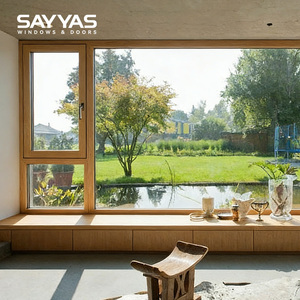
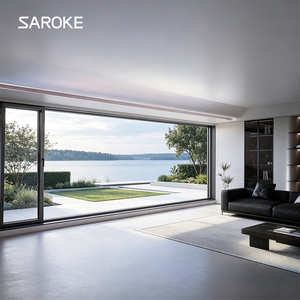
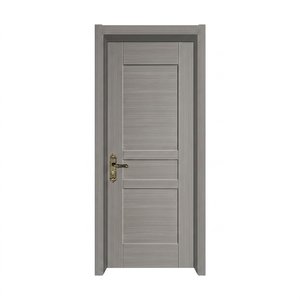
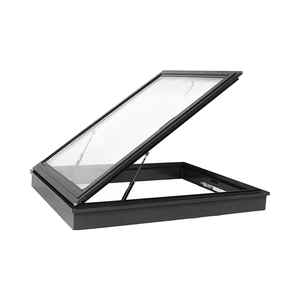
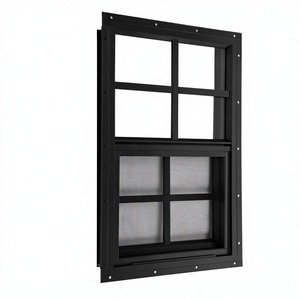
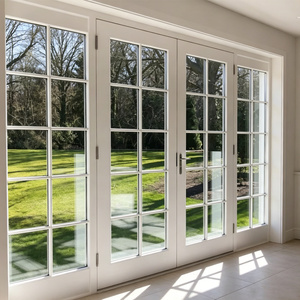
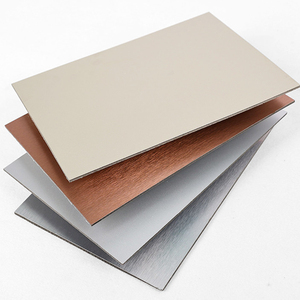
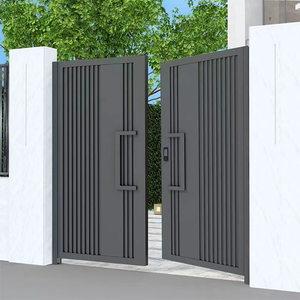
Precision fabricated in our Foshan smart plant, these systems represent our primary export lines for residential villas, modern courtyards, coastal estates, and multi-unit engineering applications.
Engineering Taxonomy: Why Aluminium Back Doors Dominate Global Fenestration
Rear exterior doors—whether functioning as secondary utility access, kitchen garden portals, or patio transitions—endure higher environmental friction and thermal cycling than sheltered front entries. Understanding profile metallurgies, barrier engineering, and security kinematics is critical for institutional specifiers.
6063-T6 Extrusion Metallurgy
Unlike secondary timber or uPVC alternatives that warp under direct solar UV and thermal expansion, China Tier-1 manufacturers utilize primary billet 6063-T6 architectural aluminium alloy. With tensile strengths exceeding 205 MPa and yield strengths over 170 MPa, profiles maintain structural squareness across 25+ years of daily cyclic loading.
PA66-GF25 Polyamide Thermal Breaks
Condensation on interior back doors causes drywall degradation and mold spores. Modern thermal barrier systems incorporate 24mm to 34mm precision-extruded Polyamide PA66 reinforced with 25% glass fiber. This matches the thermal expansion coefficient of aluminium while slashing thermal transmission to Uw ≤ 1.3 W/(m²·K).
Burglar-Resistant Kinematic Locks
According to police entry statistics in North America and Australasia, over 67% of forced residential entries target unmonitored rear back doors. DERCHI integrates German-engineered multi-point deadbolts with anti-lift shootbolts, hardened manganese anti-drill plates, and high-tensile 304 stainless steel strikers achieving RC3 burglary ratings.
| Performance Vector | Architectural Thermal Break Aluminium | Unplasticized PVC (uPVC) | Engineered Hardwood / Solid Timber |
|---|---|---|---|
| Structural Wind Load (AS 2047 / ASTM E330) | N6 Classification (>4500 Pa) | N2 - N3 Classification (≤2000 Pa) | N3 - N4 Classification (≤3000 Pa) |
| Dimensional Stability (Thermal Expansion) | 23.1 × 10⁻⁶ /K (Zero hygroscopic expansion) | 60.0 × 10⁻⁶ /K (High thermal distortion) | Hygroscopic swell / warp up to 8% |
| Thermal Transmittance (U-Value) | 0.8 – 1.4 W/(m²·K) with Warm Edge & VIG | 1.2 – 1.8 W/(m²·K) | 1.5 – 2.2 W/(m²·K) |
| Marine Air & Salt Spray Resistance | >3,000 Hours (AAMA 2605 / Qualicoat Class 2) | Surface chalking & embrittlement | Rot, fungal decay & delamination |
| Sightline Width (Frame Slimness) | 45mm – 65mm Ultra-slim sightlines | 85mm – 120mm Bulky sightlines | 90mm – 140mm Heavy framing |
Future Procurement Trends in Aluminium Back Doors (2025–2030)
International building standards are converging toward carbon neutrality, aggressive building envelope airtightness, and extreme climate resilience. Commercial importers and general contractors must align with emerging global procurement directives.
1. Tightening Energy Codes & Whole-Building Fenestration Packages
Regulatory upgrades like Australia's NCC 2022 7-star NatHERS, the US IECC 2024, and the EU EPBD require back doors to meet identical thermal criteria to front entries. Sourcing strategies are moving away from piecemeal buying toward bundled whole-house container shipments where back doors, front pivots, and sliding curtain walls share unified glass coatings and extrusions.
2. Digital Twin BIM Integration & Prehung Modular Kits
Developers are eliminating high domestic carpentry costs by purchasing prehung, factory-calibrated aluminium back door cassettes. Shipped complete with CNC-machined sub-frames, integrated brick ties, perimeter flashing, and factory-hung leaves, job-site installation times drop from 4 hours to 35 minutes per opening.
3. Smart Access Automation with Passive Thresholds
The modern rear entrance requires zero-barrier living without compromising driving rain protection. Sourcing demand has surged for hidden sub-floor magnetic drop-seals and smart biometric mortises that sync directly with whole-home Zigbee or Matter automation networks, eliminating manual keys for family and utility personnel.
Architectural Evolution: The Next Generation of Rear Entry Systems
How Foshan's premier manufacturing ecosystem is revolutionizing visual minimalism, low-carbon materials, and high-performance glass technologies.
Vacuum Insulated Glass (VIG)
By eliminating the heavy triple-pane requirement in favor of slim 8.3mm tempered Vacuum Insulated Glass, aluminium back doors achieve Center-of-Glass U-values of 0.45 W/(m²·K). This slashes sash weight by 45%, reducing hinge wear, enhancing pivot longevity, and permitting massive glazed panels up to 3000mm in height.
Marine-Grade PVDF & Qualicoat Class 3
Back doors installed along open coastlines face intense salinity. Advanced fluorocarbon PVDF (polyvinylidene fluoride) three-coat finishes provide 30-year resistance against gloss reduction, color fade, and filiform corrosion, meeting stringent AAMA 2605 criteria for waterfront villas in Sydney, Miami, and the Pacific Rim.
Hydro-Powered Low-Carbon Aluminium
Export compliance to Europe and Australasia increasingly mandates Environmental Product Declarations (EPD). Our Foshan extrusion lines employ low-carbon primary aluminium smelted via hydro and solar power, maintaining embedded carbon footprints below 4.0 kg CO2 per kg of billet, satisfying strict LEED and BREEAM certifications.

Guangdong Dejiyoupin Doors & Windows Co., Ltd. (DERCHI)
Recognized as an elite Tier-1 manufacturer in China's fenestration capital, DERCHI operates over 180,000 square meters of smart manufacturing facilities. For over a quarter-century, we have bridged architectural imagination and structural engineering for importers, developers, and builders across Oceania, North America, Europe, and the Middle East.
- End-to-End Vertical Control: Precision extrusion milling, powder-coating, thermal bar insertion, insulated glass unit (IGU) fabrication, and final assembly under one ISO 9001 quality-audited roof.
- Exhaustive International Validation: Tested and verified to AS 2047 (N6 wind load), CE EN 14351-1, UL 10C fire ratings, and AAMA standards.
- Dedicated Global Engineering Desk: English-fluent fenestration engineers providing free CAD shop drawings, wind-load deflection calculations, and real-time AEST/NZST/EST project collaboration.
- Heavy Export Crating Protection: Certified ISPM 15 heat-treated closed plywood crating with corner impact guards and anti-moisture desiccant packaging for damage-free sea logistics.
Zero-Risk Export Compliance with Third-Party Validated Testing
When procuring architectural back doors from China, non-compliant profiles cause severe customs holdups and failed occupancy audits. DERCHI provides comprehensive test documentation with every project schedule, allowing local building certifiers and structural engineers to sign off with total confidence.
Our doors achieve water penetration resistance exceeding 450 Pa, air infiltration under 0.1 L/(s·m²), and cyclonic positive/negative wind pressures exceeding 4,500 Pa (N6), verifying full structural survivability during severe storm events.


Frequently Asked Questions for Commercial Buyers & Importers
Detailed answers addressing engineering parameters, minimum orders, sea containerization, and warranty governance.
What distinguishes an engineered back door from a standard interior door?
How do you verify compliance with Australia's AS 2047 and AS 1288?
What is your production lead time and minimum order quantity (MOQ)?
How do you prevent transit damage during long-distance ocean freight?
Can you customize finishes to match existing architectural fenestration?
What warranties do you provide on profiles, glass, and hardware?
Initiate Your Door Specification or Sourcing Inquiry
Send us your door schedule, architectural elevations, or structural CAD files. Our senior fenestration engineers will provide shop drawings, thermal calculations, and factory-direct pricing within 24 hours.