High-Performance Architectural Aluminum Exterior Doors
Constructed from primary 6063-T6 virgin aluminum billets, engineered multi-chamber polyamide thermal barriers (PA66 GF25), and structural hardware rated for extreme cycles, commercial durability, and severe cyclone ratings.
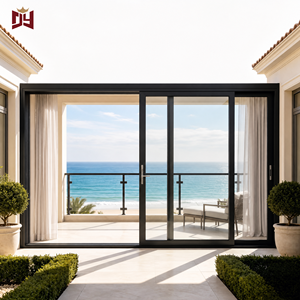
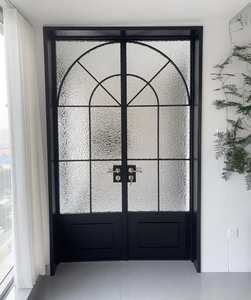
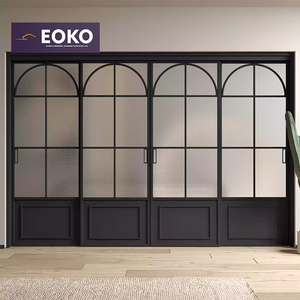
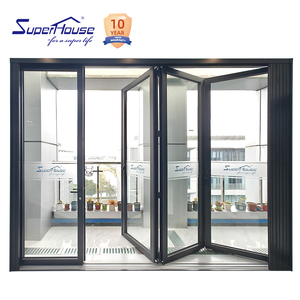
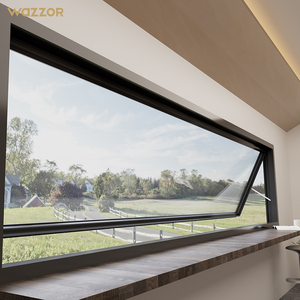
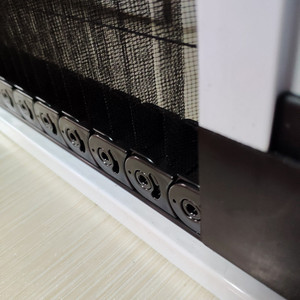
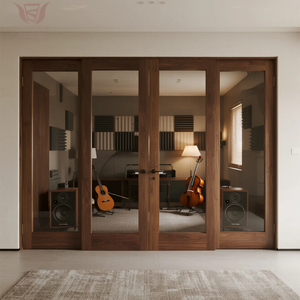
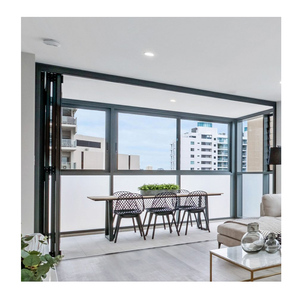
Direct Manufacturing Competence: Foshan Production Ecosystem
Operating from our massive 180,000 square meter industrial base in Foshan, Guangdong—the heart of global structural aluminum processing—Guangdong Dejiyoupin Doors and Windows Co., Ltd. (DERCHI) sets the standard for high-tolerance architectural systems.
Full-Cycle Vertical Production
Unlike regional fabricators who outsource machining and thermal assembly, DERCHI controls profile extrusion alloy blending, precise 5-axis CNC mitering, computerized corner crimping, and automated silicone glazing under a unified ISO 9001 quality infrastructure. This eliminates tolerance compounding across oversized outside doors.
Certified Performance Verification
Our exterior door systems undergo physical testing at certified laboratories to meet demanding regional building standards. This includes AS 2047 (N6 cyclone rating for Australia & Oceania), CE marking according to EN 14351-1 for the European Union, and North American AAMA/WDMA/CSA 101/I.S.2/A440 structural thresholds with complete audit trails.
Engineering-First Project Support
Procuring custom exterior fenestration requires absolute dimensional control. Our in-house technical team provides complimentary parametric CAD shop drawings, structural wind-deflection engineering calculations, and BIM integration for architectural practices, developers, and commercial building contractors worldwide.
Technical Deep-Dive: Material Science of Heavy-Duty Outside Aluminum Doors
Exterior door systems represent the single most vulnerable structural element in any building envelope. They are continuously subjected to combined structural loads: static wind pressures, dynamic water ingress forces, significant differential temperature gradients between conditioned interior spaces and external environments, and solar UV radiation degradation.
As China's leading exterior door manufacturer, DERCHI constructs outside doors using high-purity 6063-T6 aluminum alloys. With a minimum wall thickness ranging from 2.0mm on residential French swing profiles to 3.5mm on heavy-duty commercial pivot and lift-and-slide stiles, our profiles provide high sectional modulus values ($I_x$ and $I_y$). This high structural strength prevents rail deflection under cyclical gust loads and prevents roller track binding over decades of heavy service.
Thermal decoupling is accomplished via continuous polyamide 66 reinforced with 25% glass fiber (PA66 GF25) thermal struts. By mechanically knurling and rolling these structural barrier bars into extruded profile pockets, our exterior doors achieve whole-door thermal transmittance values ($U_w$) down to 1.1 W/(m²·K) when glazed with triple argon-filled low-emissivity (Low-E) insulated glass units. This performance satisfies the strictest requirements of the Australian National Construction Code (NCC 2022 Section J), Title 24 of California, and European Passive House low-energy design standards.
Engineering Performance Metrics Comparison
Benchmarked laboratory metrics comparing standard market fabrications with DERCHI Heavy-Duty Outside Door Systems.
| Engineering Parameter | Standard Commercial Fabricator | DERCHI Engineered System | Compliance / Testing Standard |
|---|---|---|---|
| Alloy Metallurgy & Temper | Recycled 6063-T5 (Wall: 1.4mm - 1.6mm) | Primary Virgin Billet 6063-T6 (Wall: 2.0mm - 3.5mm) | GB/T 5237 / ASTM B221M |
| Thermal Barrier Core | PVC Extruded Strip or Non-Insulated | Polyamide PA66 GF25 Strut (24mm - 34mm Depth) | EN 14024 / ISO 10077-2 |
| Ultimate Structural Wind Pressure | 1800 Pa - 2200 Pa (Standard Service) | Up to 4500 Pa (N6 Cyclone Tested) | AS 2047 / ASTM E330 |
| Water Penetration Resistance | 300 Pa Static Test | 700 Pa - 1000 Pa Dynamic Raking Test | EN 12208 / AS 4420.5 |
| Acoustic Attenuation (STC / Rw) | STC 28 - 32 dB | STC 40 - 45 dB (Multi-point acoustic EPDM) | ISO 717-1 / ASTM E90 |
| Surface Coating Resilience | Standard 40μm Powder Coat (3-5 yr salt) | AkzoNobel Interpon / PPG PVDF Fluorocarbon (>3000 hr AAMA 2605) | Qualicoat Class 2 / AAMA 2605 |
Future Procurement Trends for Outside Aluminum Doors (2025–2030)
Global architectural demands are shifting toward factory-integrated intelligent systems, strict carbon accounting, and expansive structural spans. Here is how institutional buyers are adapting their supply chain specifications.
1. Shift to Factory-Direct Disintermediation
Commercial developers, tier-one builders, and architectural studios are increasingly bypassing multi-layered middle distributors in Australia, North America, and Europe. By partnering directly with China's advanced manufacturing sources like DERCHI, procurement teams eliminate 35% to 50% in middleman markup while gaining direct access to custom shop engineering, direct mill certifications, and accelerated lead times.
2. Ultra-Large Apertures & Flush Floor Transitions
Modern luxury villas and commercial hospitality lobbies demand massive, floor-to-ceiling glass openings with minimal profile interference. Current procurement specifications favor exterior pivot doors exceeding 3 meters in width and 5 meters in height, alongside barrier-free zero-threshold sliding tracks featuring concealed sub-sill trench drains engineered for torrential coastal rainfall.
3. Building Management (BMS) & Smart IoT Integration
Outside aluminum doors are transforming from static mechanical barriers into electrified, sensor-monitored perimeter assets. Sourcing tenders now routinely require factory-routed wire chases, German-engineered motorized multipoint locking gear (such as Siegenia or G-U), and integrated biometric, facial-recognition, and dry-contact relays compatible with commercial Control4, KNX, or Crestron systems.
Technological Evolution of Aluminum Exterior Door Engineering
Over the past decade, Chinese fenestration manufacturing has transitioned from labor-intensive manual assembly into high-precision, robotized engineering. This technological evolution addresses three major historical pain points in architectural door performance:
1. Corner Joint Mechanical Integrity: Traditional exterior doors frequently suffered from sealant failure and water infiltration at 45-degree miter joints. DERCHI utilizes automated dual-head crimping presses with heavy-duty cast aluminum corner chevrons and multi-component polyurethane structural bonding glues. The adhesive is pumped through dedicated injection ports to fill internal profile chambers, transforming the joint into a single structural monolith resistant to racking stress.
2. Multi-Stage Gasket Vulcanization: Traditional PVC or low-grade rubber seals oxidize, shrink, and harden after exposure to intense solar ultraviolet radiation. Modern DERCHI outside doors feature continuous co-extruded EPDM (Ethylene Propylene Diene Monomer) with vulcanized pre-molded corner boots. This continuous seal maintains its elasticity between -40°C and +120°C, preserving an airtight envelope throughout years of continuous exposure.
3. Advanced Surface Treatments for Extreme Microclimates: Coastal environments with salt spray and hot, humid tropical climates cause filiform corrosion under standard powder coatings. To deliver long-term protection, our automated vertical coating lines employ multi-stage chromate-free chemical pretreatment followed by genuine PVDF fluorocarbon coatings (70% Kynar 500 resin base) or Qualicoat Class 2 marine-grade powders. This finish system withstands over 3,000 hours of continuous acetic acid salt spray (AASS) exposure without blistering or loss of adhesion.
Frequently Asked Questions for B2B Outside Door Sourcing
Crucial compliance, shipping, and technical guidance for overseas developers, general contractors, and project specifiers.
Our door systems have undergone full physical type testing at accredited NATA-partnered independent laboratories. We provide comprehensive test reports verifying deflection limits under structural wind load (serviceability and ultimate limit states reaching N6 rating), air infiltration rates below 1.0 L/s·m², water penetration resistance up to 700 Pa, and operating force limits. Every project schedule is cross-referenced with your regional code requirements prior to production sign-off.
We eliminate site measurement errors by generating fully detailed 2D CAD shop drawings, connection detail sections, fixing-lug configurations, and sill pan flashing cross-sections for every door unit. Manufacturing does not commence until the client's structural engineer, architect, or lead builder formally signs off on the shop drawings and hardware schedule.
All products are packaged for long-distance marine transport. Doors and frames are individually wrapped in 0.2mm protective PE wrap, corner-shielded with high-density EPE foam buffers, strapped with industrial banding, and loaded into fumigation-free, fully enclosed marine plywood crates. Internal desiccants prevent moisture accumulation, and crates feature integrated bottom skid runners for safe forklift offloading at port or job site.
Standard bespoke production runs typically require 25 to 35 business days following final CAD sign-off and deposit confirmation. Specialized finishes, such as custom-matched PVDF colors or curved radius profile bending (e.g. Crittall arch styles), require approximately 35 to 45 business days. We coordinate full container load (FCL) or less-than-container load (LCL) consolidation directly from our Foshan facility to major global ports.