Precision Fenestration & Architectural Enclosure Showcase
Explore our laboratory-certified, high-performance aluminium tilt and turn series alongside precision commercial architectural systems, fabricated strictly in compliance with AS 2047, CE, and North American NAFS standards.
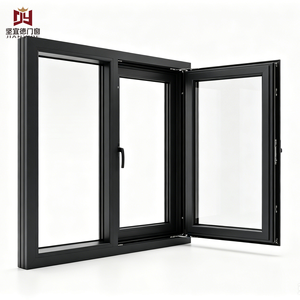
Aluminium System Casement Windows Energy Saving Double Safety Glass Aluminum Tilt And Turn Window
• Dual-Seal EPDM Continuous Gaskets
• Multi-Point Security Perimeter Locking
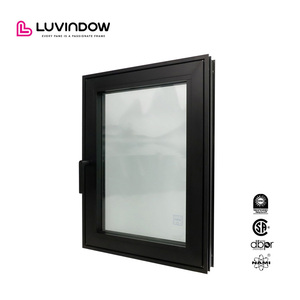
30% Discount Residential Energy Efficient Tilt Turn Windows Triple Glazed Extra Narrow Frame
• Concealed Micro-Hinge Geometry
• Ultra-Slim 45mm Sightline Profiles
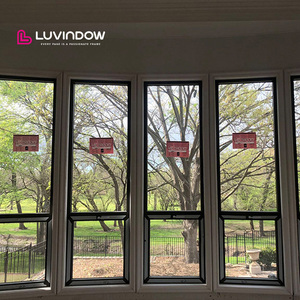
Energy Efficient Slim Frame Tilt Turn Windows Aluminum Modern Home Renovation Narrow Frame
• Draft-Free Top-Tilt Ventilation Mode
• Acoustic Rating up to STC 42 dB
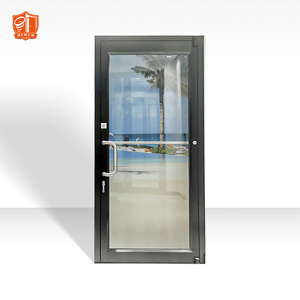
Modern Commercial Storefront Door Glass Swing Entry Aluminium Door
• 6063-T6 Structural Profile Rigidity
• Integrated Commercial Deadbolt Hardware
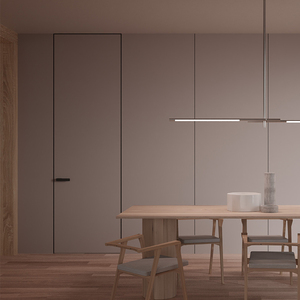
OEM European Style Acoustic Hidden Frame Aluminium Honeycomb Laminate Interior Door
• Zero-Frame Flush Architectural Jamb
• Magnetic Latch & Silent Drop Seal
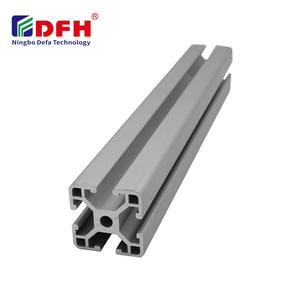
Factory Slot 6 30*30L Window Extrusion Door Aluminium Profile Anti-Corrosion Alloy
• Anodized / AkzoNobel Powder Coated
• Strict Dimensional Tolerance (+/- 0.1mm)
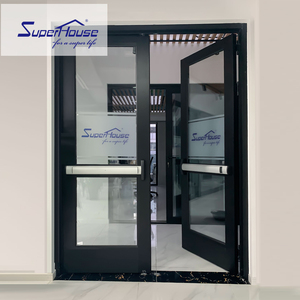
Modern Fire Rated 30/60/90/120 Mins Steel Aluminum Glass Commercial Safety Escape Door
• Intumescent Thermal Fire Glazing
• Heavy-Duty Panic Hardware Ready
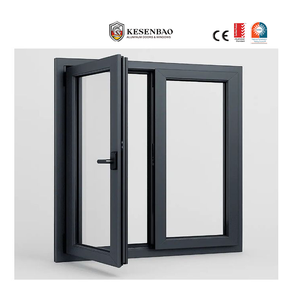
Australian Energy Efficiency Aluminium Awning Windows Soundproof Anti Theft Casement
• Multi-Point Friction Hinge Lock
• Integrated Stainless Security Mesh
The Engineering Architecture of Superior Aluminium Tilt Turn Windows
A comprehensive analysis of dual-action fenestration mechanics, thermodynamic barriers, structural alloy dynamics, and why tier-one commercial developers choose precision Chinese manufacturing hubs.
Originating in Central Europe, the aluminium tilt and turn window has rapidly evolved from a regional architectural feature into the global benchmark for high-performance building envelopes. Operating via an integrated single-handle multi-point gear drive, the window functions in two distinct modes: tilting inwards from the top for micro-ventilation, draft avoidance, and weather protection; or swinging open side-inwards like a traditional casement for 100% unimpeded clearance, emergency egress, and easy interior glass cleaning. Achieving this level of mechanical fluidity while maintaining absolute airtightness, watertightness, and thermal continuity requires advanced metallurgy, precision extrusion tolerances, and master-level hardware integration.
As international energy codes tighten—such as Australia's NCC 7-Star mandate, North America's Energy Star v7.0, and Europe’s stringent passive house protocols—the reliance on standard sliding or traditional outward-casement configurations is declining. Architects and façade consultants increasingly demand systems with continuous compression compression-gaskets, multi-chambered polyamide thermal breaks, and deep-pocket insulated glazing units (IGU). Guangdong Dejiyoupin Doors and Windows Co., Ltd. (DERCHI) stands at the pinnacle of this industry transformation, engineering robust architectural systems that bridge European hardware precision with world-class Chinese industrial manufacturing efficiency.
Polyamide 66 Thermal Breaks
Equipped with 24mm to 34mm fiberglass-reinforced Polyamide (PA66 GF25) thermal struts, our profiles completely isolate exterior aluminium surfaces from the interior frame, effectively eliminating thermal bridging and achieving frame U-values (Uf) as low as 1.2 W/m²K.
EPDM Triple-Seal Compression
Unlike felt or brush weatherstripping found in standard windows, our tilt turn assemblies feature three continuous tiers of automotive-grade vulcanized EPDM gaskets. These create hermetic compression seals against extreme hurricane air infiltration and high-velocity wind-driven rain.
German Concealed Hardware
Utilizing gear mechanisms engineered to support individual sash weights up to 300kg, DERCHI systems integrate high-load concealed hinges, mushroom-head perimeter locking cams, and anti-mishandling safety devices that ensure effortless, decades-long operation.
Built by Foshan's Top 10 Fenestration Manufacturer
With an expansive 180,000 square meter intelligent production base in Foshan, Guangdong, Guangdong Dejiyoupin Doors and Windows Co., Ltd. (DERCHI) represents the vanguard of modern industrial fenestration manufacturing.
Our vertically integrated facility encompasses advanced high-precision aluminium extrusion processing, multi-axis computerized CNC profile machining centers, dust-free automatic tempered and insulated glass fabrication lines, and Italian-engineered powder-coating stations. By enforcing end-to-end quality control across every production phase, we provide direct traceability, rigorous dimensional accuracy, and certified batch integrity for commercial projects worldwide.
- AS 2047 N6 Wind Certified
- ISO 9001 / CE / UL Verified
- 30+ Architectural Design Patents
- Free Professional CAD / BIM Support
- Dedicated Oceanic Logistics Hub
- Structural Cyclone-Ready Profiles

Future Global Procurement Trends in Aluminium Tilt Turn Windows
Market shifts show commercial developers and general contractors pivoting heavily toward high-performance system suppliers who provide verified carbon transparency, modular retrofitting, and hyper-customized structural profiles.
Passive House & Net-Zero Mandates
Global procurement teams are moving away from double-glazed units toward triple and quadruple-glazed IGUs with warm-edge spacers and Krypton/Argon fill. Window assemblies must deliver overall Uw values below 0.8 W/m²K to satisfy stringent building efficiency directives in Australasia, North America, and Europe.
Ultra-Narrow Architectural Sightlines
Contemporary aesthetics demand concealed sash engineering. The visible profile width is engineered down to minimal dimensions (sub-50mm visible face) while profile wall thickness remains at heavy-duty commercial thresholds (≥ 2.0mm) to allow maximum daylight penetration without compromising structural deflection standards.
Direct-from-Factory Containerization
International procurement is moving away from intermediary wholesale markups. Forward-thinking contractors partner directly with certified Chinese manufacturing facilities that execute custom shop drawings, coordinate third-party AS/NZS/AAMA laboratory testing, and pack units into export-grade steel crates.
Technical Matrix: DERCHI High-Performance Systems
Compare standard market commercial fenestration against DERCHI’s engineered structural tilt turn systems.
| Performance Characteristic | Standard Commercial Window | DERCHI Architectural Tilt & Turn | Engineering Benefit |
|---|---|---|---|
| Aluminium Alloy Profile | Recycled billet / 1.2-1.4mm wall | Virgin 6063-T6 / 1.8-2.5mm wall | Superior structural deflection (Wind load > 4500 Pa) |
| Thermal Insulation (U-Value) | Non-thermal break / ~3.8 W/m²K | Multi-Chamber PA66 / 0.8 - 1.4 W/m²K | Slashes HVAC operational energy loads by up to 45% |
| Weather Sealing Configuration | Dual brush or TPE slide-in fin | Triple continuous vulcanized EPDM | Zero water penetration up to 700 Pa cyclic pressure |
| Acoustic Attenuation (STC) | STC 26 - 30 dB (Standard IGU) | STC 38 - 45 dB (Laminated Acoustic) | Exceptional noise dampening near airports & highways |
| Hardware Load Rating | Surface hinges / up to 80 kg | Heavy-duty concealed / up to 300 kg | Allows massive architectural glass sizes without sash drop |
| Surface Coating Grade | Standard domestic spray | AkzoNobel Interpon / Qualicoat Seaside | Guaranteed 25+ years against coastal salt corrosion and UV |
Frequently Asked Questions: Sourcing Windows from China
Comprehensive engineering, logistics, and compliance answers for international architects, façade contractors, and builders.
How do DERCHI windows meet Australian and New Zealand Standards (AS 2047 / AS 1288)?
Our aluminium window systems have undergone rigorous laboratory physical performance testing matching AS 2047 criteria, including deflection, air infiltration, water penetration resistance, and ultimate structural testing up to the N6 classification. Fully documented test certificates and NATA-aligned lab reports are provided for council sign-off and certifier approval.
What surface finishes are recommended for harsh coastal or marine environments?
For coastal building envelopes exposed to salt spray and high humidity, we provide marine-grade Class 2 fluorocarbon (PVDF) triple-coatings or certified AkzoNobel architectural powder coatings rated to Qualicoat Seaside standards. Hardware systems are strictly upgraded to 316-grade stainless steel pivot assemblies to guarantee zero galvanic corrosion.
How does DERCHI ensure glass safety and international thermal compliance?
All glass units are processed in-house to certified safety standards (AS/NZS 2208, EN 12150, ANSI Z97.1). We engineer dual and triple IGUs incorporating Low-E coatings, warm-edge structural spacers, and 90%+ Argon gas fill, achieving custom solar heat gain coefficients (SHGC) and ultra-low U-values tailored to your site's specific thermal modeling.
What is the standard production lead time and international export packing method?
Standard fabrication runs between 25 to 35 calendar days following client sign-off on shop drawings. Every window sash and frame is wrapped in high-density PE protective wrap, secured with heavy-duty corner guards, and sealed into IPPC-certified fumigated composite timber crates or A-frame steel shipping racks, ensuring zero maritime transit damage.
Can you provide comprehensive shop drawings and custom profile integration?
Yes. Our in-house engineering team consists of seasoned fenestration facade specialists who convert architectural blueprints and window schedules into fully dimensioned 2D CAD and 3D BIM models. This ensures clear visibility on wall junctions, flashing integration, and sub-frame anchoring details prior to extrusion and assembly.
Why choose DERCHI over traditional European fabricators like Schüco?
While European legacy brands supply excellent systems, their multi-tiered distribution channels introduce prolonged lead times and significant markup costs. DERCHI fabricates with comparable German hardware mechanisms and matching extrusion accuracy within our 180,000m² manufacturing facility—delivering 30-40% direct cost advantages and streamlined ocean direct shipping.