Recommended High-Performance Architectural Door & Window Systems
Precision-engineered systems fabricated from virgin 6063-T5/T6 architectural aluminium alloys, thermally broken barrier assemblies, and advanced structural storm-impact protection.
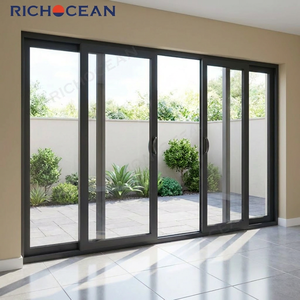
RICHOCEAN Hurricane Impact Black Aluminum Patio Sliding Doors Double Glazed Exterior Slide Door
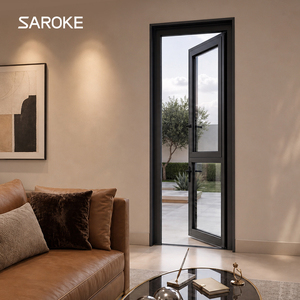
American Standard House Black Metal Patio Exterior Thermal Break Aluminum Doors and Windows
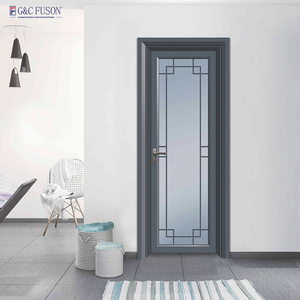
Fuson OEM French Villa Front Arch Shaped Exterior Aluminium Steel Iron Entry Main Casement Doors
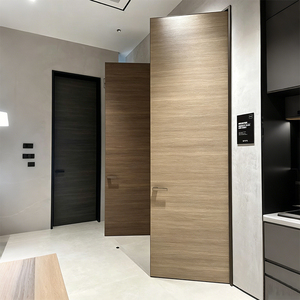
Foshan Manufacturer Modern Interior Aluminum Wooden Frame Swing Door Custom Solution
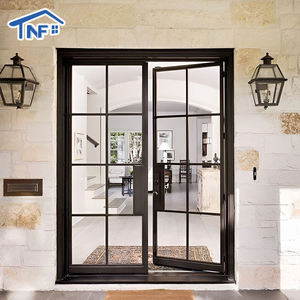
Factory Direct Sale Black Aluminum Frame Casement Entry Door Soundproof French Patio Doors
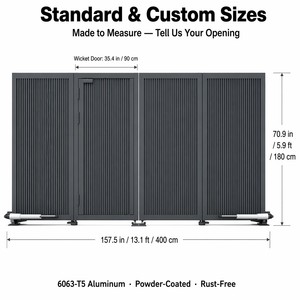
Custom Aluminum Driveway Gate Wicket Door Auto Swing Motor Louver Design Rust-Free 6063-T5
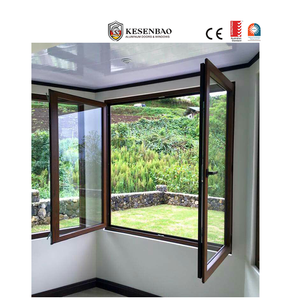
Double Glazed Aluminum Casement Windows Impact Energy Efficiency With Stainless Screens
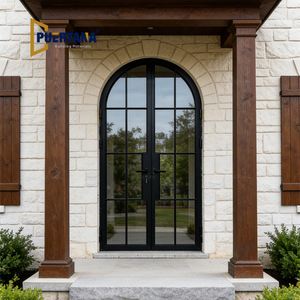
Thermally Broken Black Framed Steel Look Aluminum Glass French Door Crittall Style Heritage Doors
Executive Technical Whitepaper: The Strategic Architecture of Modern Aluminium Roller & Architectural Door Systems
In modern commercial, industrial, and high-end residential architecture, the envelope enclosure serves as the critical intersection between physical perimeter security, environmental isolation, thermal regulation, and structural resilience. Global real estate developers, EPC contractors, and architectural specifiers increasingly identify China's tier-one aluminium extrusion and door manufacturing sector—anchored prominently within the Foshan industrial cluster of Guangdong Province—as the pinnacle of value engineering and precision fabrication.
The shift from traditional mild steel roll-up shutters toward high-tensile extruded 6063-T5 and 6061-T6 aluminium alloy roller doors is driven by distinct metallurgical and environmental realities. Industrial roll-up assemblies fabricated from virgin aluminium billets provide an intrinsically self-passivating surface via aluminium oxide formation, eliminating galvanic degradation in severe C4 and C5 coastal marine environments. When combined with polyurethane-injected multi-chambered thermal slats or interlocking architectural profiles, high-performance aluminium roller shutters deliver unyielding resistance against cyclonic wind shear forces, unauthorized forced entry, acoustic transmission, and atmospheric air infiltration.
Structural Integrity & Wind Mitigation
Multi-wall extruded curtain slats engineered with reinforced interlocking end-locks withstand cyclic pressure differentials, satisfying high-wind N6 ratings and severe storm-debris impact tests.
Perimeter Deterrence & Anti-Lift
Patented automatic anti-lift bottom rails, high-torque tubular motor braking discs, and hardened steel anchoring pins eliminate manual jemmying and physical breach vectors.
Thermal & Acoustic Barrier
Foamed continuous core slat infills (CFC-free PU) coupled with nylon brush guide-channel seals achieve U-values below 1.4 W/m²K and suppress ambient environmental noise by over 28 dB.
Future Procurement & Technological Evolution Trends (2025–2030)
The commercial procurement landscape for architectural aluminium doors and industrial roller shutters is experiencing a paradigm shift. Buyers are moving away from evaluating products purely on transactional piece-rate pricing toward a holistic assessment of Life-Cycle Carbon Footprint, Building Management System (BMS) Interoperability, and Standardized International Compliance Testing.
1. Deep Integration of Industrial IoT & BMS Building Automation
Next-generation aluminium roller doors and automated entrance systems are no longer isolated mechanical barriers. Global procurement mandates increasingly require smart tubular and direct-drive side motors equipped with RS485 Modbus, BACnet, or Zigbee communication protocols. This enables predictive maintenance monitoring, real-time cycle tracking, remote thermal-load profiling, and instant tie-ins with fire-alarm deluge control systems for automatic smoke extraction or fire-containment sealing.
2. Stringent Building Envelope Energy Codes and Thermal Decoupling
With the international enforcement of zero-energy building standards (such as Title 24 in California, the National Construction Code in Australia, and the EU Energy Performance of Buildings Directive), traditional non-insulated roller grilles are being systematically replaced by thermally decoupled roller systems. Utilizing high-density glass-fiber reinforced polyamide (PA66 GF25) thermal break strips within the side guides and interlocking slat edges, manufacturers now prevent thermal bridging, eliminating internal condensation in chilled-storage logistics and sub-zero architectural entries.
3. Low-Carbon Metallurgy and Circular Supply Chains
Tier-one Chinese exporters are rapidly transitioning to hydroelectric-powered aluminium smelting billets featuring high recycled-content ratios (certified pre-consumer and post-consumer scrap blending). Providing third-party certified Environmental Product Declarations (EPDs) has evolved from an optional credential to an essential tender requirement for prime contractors seeking LEED Platinum and BREEAM Outstanding accreditations.
| Performance Characteristic | Standard Galvanized Steel Roller Shutter | High-Tensile Extruded Aluminium Roller Door | Thermally Broken Insulated Aluminium Door |
|---|---|---|---|
| Corrosion Resistance (Salt Spray Test) | 120–240 Hours (Zinc peel risk) | 1,000–3,000+ Hours (Fluorocarbon/Qualicoat) | 3,500+ Hours (Marine-grade AAMA 2605) |
| Curtain Mass & Motor Torque Load | Heavy (~12–18 kg/m²), high motor strain | Lightweight (~6–10 kg/m²), low wear | Optimized (~8–12 kg/m²), rapid duty-cycle |
| Thermal Transmittance (U-Value) | 5.8 W/m²K (Zero insulation) | 3.2–4.5 W/m²K (Single-wall cavity) | 1.2–1.8 W/m²K (Polyurethane thermal barrier) |
| Acoustic Attenuation (STC) | 16–18 dB | 22–26 dB | 30–35 dB (With brush edge seals) |
| Service Life Cycle Expectancy | 8–12 Years (Rust vulnerability) | 20–25+ Years | 25–30+ Years with minimum maintenance |
Enterprise Manufacturing Architecture: Guangdong Dejiyoupin Doors and Windows Co., Ltd. (DERCHI)
Founded in Foshan, Guangdong—the core of China's advanced metal processing capital—Guangdong Dejiyoupin Doors and Windows Co., Ltd. (DERCHI) operates as a distinguished tier-one manufacturer recognized among the Top 10 Door & Window brands in the nation. Backed by over 25 years of specialized extrusion, architectural fabrication, and international export leadership, DERCHI controls a massive 180,000 square meter state-of-the-art production hub powered by over 600 skilled technicians, metallurgists, and structural engineers.
Vertically Integrated In-House Production Ecosystem
Unlike trading intermediaries and regional assemblers, DERCHI exercises end-to-end quality governance across every phase of production. From raw primary aluminium alloy billet sorting, high-tonnage precision extrusion tooling, and specialized automated CNC horizontal and vertical profile machining centers to electrostatic vertical powder-coating and multi-stage crating, our unified operations ensure strict consistency and cost efficiency.
- Exceeding International Building Codes: Validated by rigorous multi-point test protocols yielding full compliance with Australia AS 2047 (N6 cyclone rating), North American AAMA/WDMA/CSA, CE EN 13241-1, and ISO 9001 certified quality management systems.
- Surface Treatment Excellence: AkzoNobel and PPG fluorocarbon PVDF coatings, certified Qualicoat Class 2 architectural powder coats, and 25-micron marine anodizing engineered to resist chalking, fading, and intense coastal UV degradation.
- Free Tailored Engineering Shop Drawings: Direct support from our in-house BIM and CAD drafting team, preparing precision shop drawings, wind load calculations, and structural anchors tailored to local building permits.
- Dedicated Time-Zone Engineering Support: Direct communication with certified bilingual sales engineers working synchronized AEST, NZST, GMT, and EST business schedules.


Standardized 5-Stage Project Execution & Quality Assurance Workflow
Navigating international procurement requires clarity, documented milestone tracking, and strict adherence to structural specifications. Our export methodology guarantees that commercial door and window systems arrive on site ready for seamless installation:
Stage 1: Architectural Intake & Wind Calculation
Clients submit window/door schedules, opening dimensions, architectural elevations, and regional exposure requirements (coastal setback, wind zone, terrain category). Our engineers run finite element analysis (FEA) to confirm profile deflection thresholds.
Stage 2: CAD Shop Drawings & Sample Approval
Prior to factory extrusion or cutting, full-scale 2D section details, 3D anchorage elevations, connection details, and physical colour/finish coupons are delivered for formal sign-off by the consulting facade engineer.
Stage 3: CNC Machining & In-Line Quality Control
Extruded lengths pass through multi-axis CNC routing for precision lock-case milling and hinge seating. Quality inspections examine coating thickness (micrometer test), adhesion (cross-hatch test), and motor run-in balancing before packaging.
Stage 4: Fumigation-Free Export Crating
Every curtain roll, guide channel, and architectural panel is vacuum-wrapped in protective film, edge-guarded with high-density EVA foam, and secured inside steel-reinforced, export-grade plywood crates suitable for FCL or LCL marine transport.
Stage 5: Port Logistics & Customs Clearance
Comprehensive commercial documentation—including Bill of Lading, Certificate of Origin, test reports, packing lists with barcode tracking, and customs-compliant invoices—is issued promptly to expedite clearance in ports globally.
Stage 6: On-Site Installation Guidance
Each unit ships with step-by-step schematics and video tutorials. DERCHI technical specialists remain available via live video-link to assist on-site contractors during leveling, motor calibration, and perimeter weathersealing.
Frequently Asked Questions: Global Procurement & Engineering Specifications
Detailed technical responses addressing the primary commercial, logistical, and structural questions raised by international procurement managers, facade consultants, and general contractors:
What specific aluminium alloy grade is utilized in high-wind roller doors?
We strictly utilize prime virgin 6063-T5 or 6061-T6 architectural aluminium alloy billets. Virgin 6063-T5 delivers superior extrusion smoothness, tensile strength (≥ 160 MPa), and yield strength (≥ 110 MPa), allowing complex multi-cavity interlocking slats that resist permanent deformation under cyclonic gust pressures.
How do DERCHI systems verify compliance with Australian AS 2047 standards?
Our fenestration and entrance profiles are tested by independent NATA-accredited laboratories for air infiltration, water penetration resistance (up to 450 Pa static pressure), structural deflection, and ultimate limit state cyclonic load testing, reaching an N6 wind classification suitable for high-exposure coastal developments.
What surface finishes are recommended for beachfront properties within 500m of the sea?
For salt-laden C5 marine environments, we recommend a minimum 3-coat PVDF fluorocarbon coating (containing 70% Kynar 500 resin) with a dry film thickness exceeding 40 microns, or Qualicoat Class 2/3 architectural powder coating. These coatings successfully pass 3,000+ hours of continuous neutral salt spray testing.
Can tubular and central motors integrate with local electrical codes (110V vs 240V)?
Yes. Our intelligent tubular and industrial side-mount motors can be configured for 110–120V 60Hz (North America) or 220–240V 50Hz (Australia, New Zealand, Europe, Middle East). Motors are CE, UL, and RCM certified, equipped with internal thermal protection cut-offs, manual override cranks, and emergency battery backup systems.
What is the standard production lead time and minimum order quantity (MOQ)?
For standard profile configurations, the production cycle is typically 20 to 28 days following CAD approval. For custom extrusion profiles requiring new dies, add 10 to 14 days for die cutting and sample extrusion. We support flexible MOQs ranging from single custom villa packages to multi-container commercial tenders.
How are fragile components protected against maritime container condensation?
In addition to robust solid-wood crating, each package includes industrial-grade silica gel desiccant packs and heat-sealed micro-perforated barrier wraps to prevent moisture entrapment during trans-oceanic passage across varying climate zones.
Accelerate Your Project With Factory-Direct Engineering
Connect with our technical team in Foshan to receive comprehensive CAD shop drawings, wind load verification, material finish samples, and a competitive factory-direct proposal within 24 hours.
Send an Inquiry