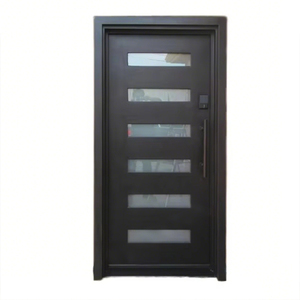
Enterprise Product Line
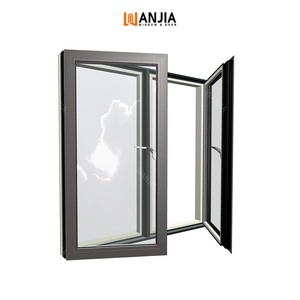
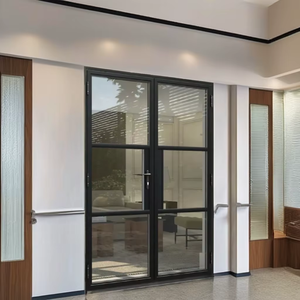
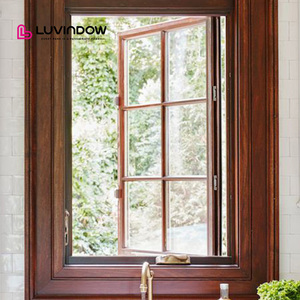
Engineered Folding, Casement & High-Span Architectural Portals
All systems manufactured under ISO 9001 quality supervision, verified through thermal simulation tests, and certified across global wind and impact standards including AS 2047, CE, and NFRC parameters.
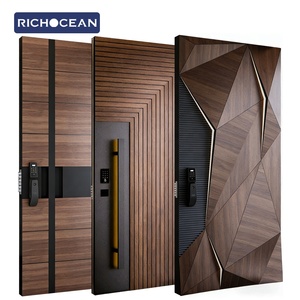
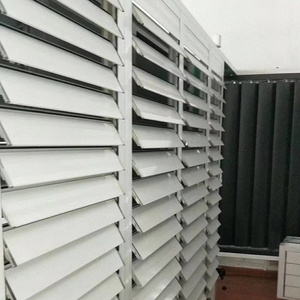
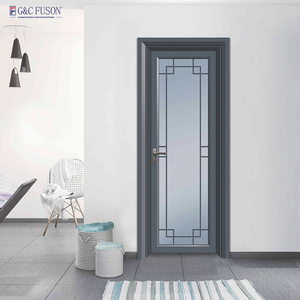
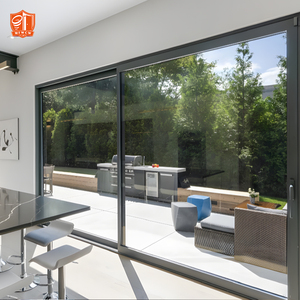
180,000m²
Integrated Production Base
25+
Years Engineering Track
600+
Specialized Technicians
100+
Global Patents & Certs
Engineering Whitepaper
Structural Rigidity & Thermal Kinematics in Modern Bi-Fold Portals
Evaluating the shift from standard sliding doors to heavy-duty aluminium folding glass systems: overcoming thermal conductivity, wind-load deflection, and hardware mechanical fatigue across expansive commercial apertures.
Polyamide Thermal Barriers
Standard architectural aluminium features high thermal conductivity (~160 W/m·K). Leading Chinese factories employ continuous PA66 GF25 (25% glass fiber reinforced polyamide) structural barriers crimped mechanically between primary extrusions. This reduces the composite U-factor below 1.6 W/m²·K, counteracting extreme temperature transfer across high-altitude and coastal zones.
Top-Hung Multi-Roller Kinematics
Bi-fold assemblies face severe gravity loads at cantilever pivot junctions. High-tier engineering shifts dynamic structural weight to cold-rolled stainless steel top-hung bogie wheels running in heavy-gauge 6063-T6 guide channels. Sealed dual ball-bearing designs disperse up to 400kg per leaf, eliminating ground-track debris jamming while maintaining finger-touch articulation.
EPDM Co-Extruded Weatherseals
Multi-panel folding designs introduce continuous vertical seal intersections. Utilizing vulcanized EPDM gaskets with vulcanized 90-degree corner joints ensures air infiltration ratings under 0.05 L/s·m² and water resistance up to 700 Pa (N6 wind class AS 2047 benchmark), preventing wind-driven capillary water ingress under hurricane conditions.
Strategic Sourcing Analysis
Future Procurement Trends in Aluminium Folding Door Systems
Forward-looking architectural intelligence: How global building codes, decarbonization targets, and smart automation are shaping international B2B fenestration supply chains through 2026-2030.
| Procurement Pillar | Legacy Industry Standard | Emerging Paradigm (2026-2030) | Impact on International B2B Buyers |
|---|---|---|---|
| Glazing Technology | Standard Dual-Pane Clear (6mm+12A+6mm) | Triple Argon Filled Low-E + Warm Edge Spacer | Decarbonization Compliance with European nZEB and Australian NCC thermal limits without redesigning frames. |
| Structural Profile Sightlines | Bulk frame widths exceeding 120mm | Ultra-Slim Minimalist Stile (<55mm visual face) | Architectural Value Maximized daylight ratio and glass surface, demanding higher structural alloys like 6060-T66. |
| Supply Chain Integration | Fragmented sourcing (Profiles + Hardware disparate) | One-Stop Turnkey Fabrication + Pre-Assembly Testing | Risk Mitigation Eliminates site fitting failures, mismatches in CNC routings, and fragmented logistics liabilities. |
| Hardware & Security | Single mechanical cylinder deadbolts | Integrated Multi-Point Motorized Concealed Locks | Building Automation Direct integration into BACnet/Modbus and home automation ecosystems for commercial venues. |
| Surface Protection | Basic decorative anodizing (<15 microns) | Qualicoat Class 2 / PVDF Marine Coating (>35 microns) | Durability Critical resistance against saline pitting within 1km of oceanic coastlines in Australasia and the Pacific. |
Manufacturing Authority
Factory Strength: Guangdong Dejiyoupin (DERCHI)
Recognized among China’s top tier door and window manufacturers, our Shishan Town (Foshan) operational headquarters brings more than 25 years of specialized fabrication capability to builders, developers, and architectural contractors worldwide.
- 180,000 m² Integrated Base: Housing extrusion conditioning, precise 5-axis CNC processing centers, robotic anodizing, and cleanroom glass lamination under one roof.
- Exhaustive Structural Validation: Independently tested to AS 2047 (N6 cyclone rating), CE standards, ISO 9001 quality management, and UL fire-rated criteria.
- Full Engineering Support: Complimentary custom CAD shop drawings, structural wind-load simulations, and BIM library models matching strict door schedules.
- Global Project Track Record: Trusted supplier for major luxury villa estates, commercial hotels, and urban residential projects across Australia, New Zealand, North America, and Europe.

Technical Procurement Clearinghouse
Frequently Asked Questions by Importers, Builders & Architects
Direct technical clarification on cross-border logistics, coastal metallurgy specifications, testing certifications, and custom structural tolerances.
How do Chinese folding glass door systems comply with AS 2047 and local building codes?
Compliance requires stringent third-party acoustic, thermal, and wind-load validation. Our systems undergo comprehensive AS 2047 mechanical testing, reaching an N6 wind load classification. Every batch ships with fully documented NATA-equivalent test certificates, window schedule verifications, and cross-sectional deflection calculations so private certifiers, structural engineers, and local building councils can approve installation without friction.
What profile alloys and surface treatments prevent corrosion in coastal salt-air environments?
For sites located within 5km of an oceanic coastline, standard architectural mill or basic powder finishes are prone to filiform corrosion. We mandate architectural-grade 6063-T6 or 6060-T66 primary aluminium billets combined with Qualicoat Class 2 fluorocarbon (PVDF) coatings minimum 35 microns thick, or 25-micron hard anodizing. In addition, all exposed mechanical fasteners, hinges, carriage bogies, and locking rods are specified in AISI 316 marine-grade stainless steel.
How are oversized multi-panel folding doors packaged to eliminate glass breakage during sea freight?
Packaging relies on ISPM-15 certified fumigated solid timber crates lined with high-density EPE shock absorption foams. Each door leaf is vacuum-filmed to protect against sea moisture corrosion, corner-protected with thermoplastic guards, and strapped with internal steel tension bands. Crates are engineered with internal forklift structural channels and desiccants to resist container sweating and heavy maritime rocking across FCL and LCL shipping channels.
What maximum panel dimensions and glass configurations can be engineered per leaf?
Utilizing heavy-gauge 3.0mm structural wall extrusions and reinforced overhead steel tracks, our engineering team manufactures bi-fold leaves up to 3.5 meters in height and 1.2 meters in width per leaf (handling up to 14 multi-panel configurations spanning over 14 meters). Glazing accommodates single monolithic safety glass, 28mm double-glazed argon units (6mm Low-E + 16Ar + 6mm Toughened), or triple-insulated low-conductance soundproof glass up to 44mm thickness.
What CAD, BIM, and technical pre-production verification is provided before fabrication begins?
We operate a zero-guesswork pre-construction protocol. Upon receipt of your architectural window schedule or rough opening dimensions, our in-house engineering team provides complete 1:1 CAD shop drawings showing jamb junctions, head track anchors, sill sub-drainage details, and floor transition thresholds. Manufacturing commences only after sign-off on finite dimensional tolerances, color swatches, and hardware placement.
Transform Your Architectural Fenestration Portfolio
Direct factory pricing, comprehensive AS 2047 / CE compliance, and certified shop drawings within 24 hours. Connect with our senior engineering team today.
Get Catalog