Impact & Low-E
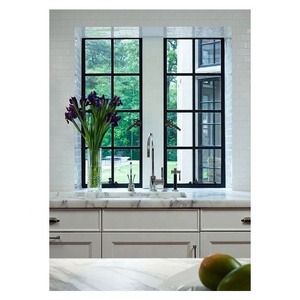
Direct factory configurations manufactured with European-grade polyamide thermal breaks, multi-point burglar-resistant locking systems, and low-emissivity high-acoustic glazing.
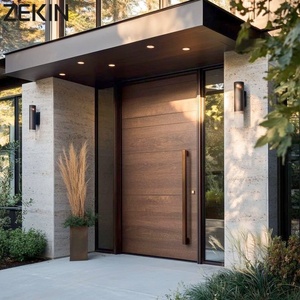
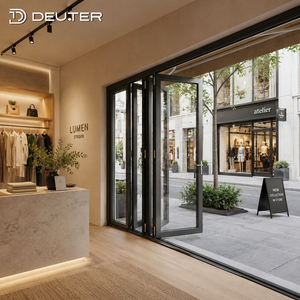
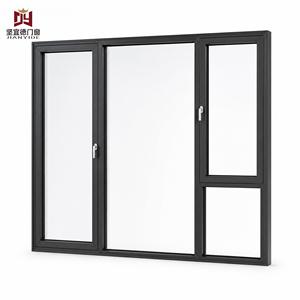
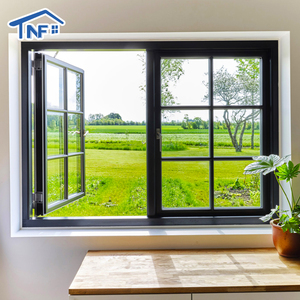
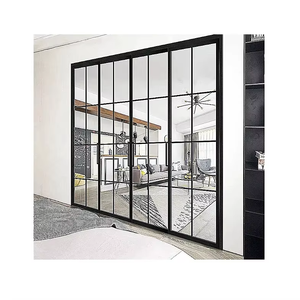
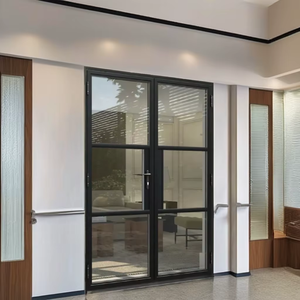
In commercial facade engineering and prestige residential building, procuring an aluminum with glass door requires rigorous performance vetting beyond aesthetic surface finishes. The integration of 6063-T5 and structural 6063-T6 aluminum alloys alongside multi-chambered thermal breaks establishes the modern benchmark for building envelopes. European harmonized standards (specifically EN 14351-1:2006+A2:2016) and international building benchmarks like Australian AS 2047 demand rigorous conformity assessments covering mechanical stability, wind load resistance, air infiltration rates, and precise thermal conductivity thresholds.
As international logistics corridors face shifting environmental conditions and escalating energy conservation standards (e.g., European Green Deal EPBD recast and US ASHRAE 90.1), commercial procurement managers must evaluate fenestration through three critical engineering vectors: profile wall geometry, structural glass bonding, and polyamide thermal isolation efficiency.
| Performance Parameter | Test Standard | Standard Commercial Grade | DERCHI Architectural CE Spec |
|---|---|---|---|
| Wind Load Resistance | EN 12210 / AS 2047 | Class 3 (1200 Pa) | Class 5 / N6 Rating (Up to 3000 Pa Ultimate) |
| Air Permeability | EN 12207 / ASTM E283 | Class 2 (300 Pa) | Class 4 / Superior Tightness (600 Pa < 0.5 m³/h·m²) |
| Water Tightness | EN 12208 / ASTM E331 | Class 5A (200 Pa) | Class 9A / E1050 (Static testing up to 1050 Pa) |
| Thermal Transmittance (U-Value) | EN ISO 10077-1/-2 | Uf 2.8 - 3.2 W/(m²·K) | Uw 0.85 - 1.4 W/(m²·K) (Triple Argon Low-E config) |
| Acoustic Attenuation | ISO 10140-2 / ASTM E90 | Rw 28 - 32 dB | Rw 38 - 45 dB (Multi-layer Acoustic PVB) |
Key directional shifts influencing global B2B procurement pipelines over the 2026–2030 building cycles.
Global specifiers increasingly mandate documented Environmental Product Declarations (EPDs). The transition toward low-carbon primary aluminum refined via hydroelectricity and high post-consumer recycled billet ratios (minimum 75%) is directly impacting tender approvals across Northern Europe and Australasia.
Architects are driving demand for single-leaf structural pivot doors scaling up to 4 meters high and 2.2 meters wide. These configurations require German-engineered concealed hydraulic bottom-pivot dampers capable of bearing up to 800 kg leaf weights with zero sag and effortless finger-touch operation.
Next-generation commercial and luxury entry modules require seamless incorporation of concealed multi-point electro-mechanical locking, biometric facial recognition terminals, smart home RS485/KNX protocols, and switchable PDLC privacy smart glass wired directly through structural thermal profiles.
Historic cold-bridge conductive profiles are now obsolete in modern development projects. DERCHI leverages continuous polyamide PA66 GF25 insulation strips (reinforced with 25% glass fiber) to physically split external and internal extrusion chambers. This structural barrier mitigates thermal bridge condensation, ensures isothermal line stabilization, and prevents thermal stress deflection (the "bimetal effect") that causes door sash binding in extreme climates with 40°C temperature deltas between exterior sunshine and conditioned indoor spaces.
Furthermore, our automated processing lines integrate vacuum sputtering triple-silver Low-E magnetron coating glass modules. These units utilize silicone structural sealants and automated warm-edge spacers filled with 90% Argon gas to achieve solar heat gain coefficients (SHGC) as low as 0.22 while maintaining clear visible light transmittance above 65%.
Operating from our 180,000 m² smart production base in Foshan, China, delivering comprehensive engineering accountability from raw billet extrusion to global port delivery.

With over a quarter-century of dedicated facade and fenestration craftsmanship, DERCHI maintains total internal control over design, 4-axis CNC profile machining, robotic vertical powder coating, structural silicone application, and pre-shipping assembly testing.
Essential answers addressing certification, logistics, coastal protection, and customized sizing.
Every shipment is accompanied by a formal Declaration of Performance (DoP) under EN 14351-1:2006+A2:2016, traceable factory production control (FPC) records, glass safety tempered certification (EN 12150), and independent third-party laboratory test reports for acoustic, thermal (Uw), and mechanical strength parameters.
For oceanfront locations exposed to salt spray and high humidity, we configure systems with Qualicoat Seaside-class fluorocarbon (PVDF) 3-coat spraying (minimum 40 microns) or architectural-grade 25-micron hard anodization, supplemented with Grade 316 stainless steel hinges and lock hardware to eliminate galvanic and crevice corrosion.
We employ fumigated, solid-wall A-frame marine plywood export crating. Glass faces receive protective peel-away PE films, profile corners are secured with reinforced composite edge-guards, and packages are desiccated to prevent oceanic condensation clouding during multi-week container shipping.
Yes. 100% of our production is custom-manufactured to the architect's schedule. Our engineering division produces full scale CAD and BIM cross-sections detailing structural anchoring, jamb reveals, drainage sub-sills, and threshold flushness before initiating profile extrusion or glass CNC cutouts.
Connect directly with our senior fenestration engineers to receive custom BIM profiles, structural wind load calculations, CE performance documentation, and competitive container-direct estimates.