High-Performance Aluminum Shopfront Systems for Commercial & Mixed-Use Architecture
As modern building envelopes evolve to balance stringent international thermal mandates, structural resistance under cyclic wind loads, and uncompromising aesthetic transparency, selecting a verified CE-certified aluminum shopfront door manufacturer is paramount. Guangdong Dejiyoupin Doors and Windows Co., Ltd. (DERCHI) leverages over 25 years of end-to-end industrial manufacturing to deliver bespoke, factory-direct storefront entrances engineered to surpass European, Australian, and North American performance thresholds.
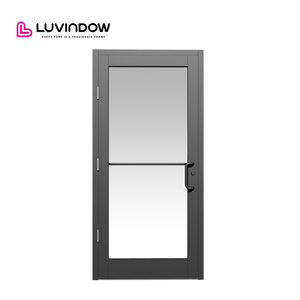
Luvindow Commercial Storefront Hurricane Impact Doors
Engineered with heavy-duty polyamide thermal barriers and laminated hurricane impact glazing for high-traffic retail entrances.
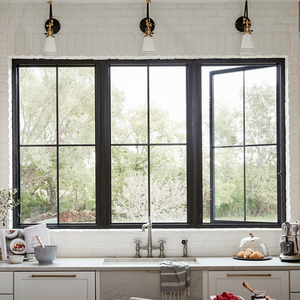
NFRC Energy Efficient Double Glazing Casement System
Integrated double glazing with argon spacer and architectural internal grills, perfectly suited for storefront sidelites.
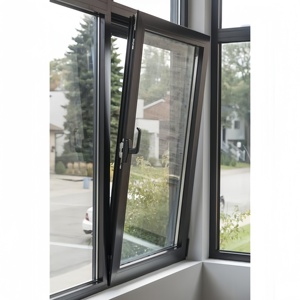
Modern Tilt & Turn Thermal Break Fenestration System
Versatile German-style dual-action ventilation system designed for commercial perimeter shopfront facades.
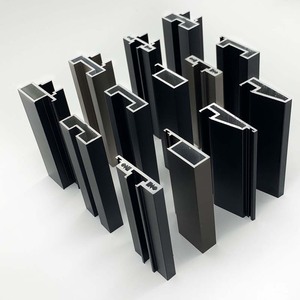
Slimline Architectural Glass Sliding Shopfront Entrances
Ultra-narrow 20mm interlock profiles maximizing daylight transmission and visual luxury for boutique retail storefronts.
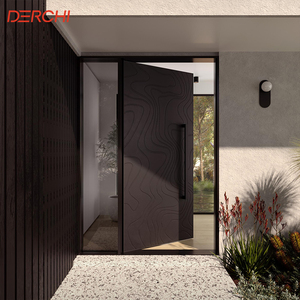
Commercial Fire-Rated & Security Aluminum Entrance Doors
UL and EN 1634 certified thermal composite insulated core resisting egress degradation and localized breach attempts.
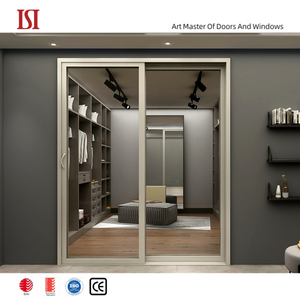
Double Glazed Commercial Acoustic Sliding Door Units
Precision-calibrated quad-roller tracks engineered for smooth low-friction operation across high-cycle hospitality venues.
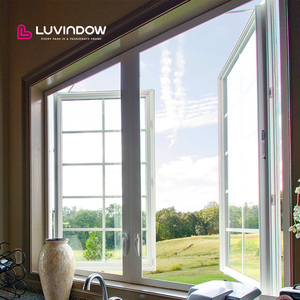
Soundproof Heavy-Duty Crank-Out Projecting Window Series
Stainless steel roto-gear scissor operator offering airtight compression sealing along commercial display shopfront lines.
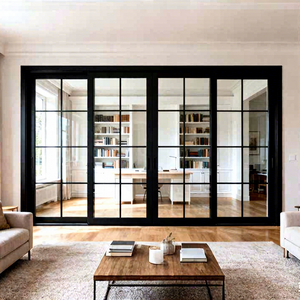
OUNA Minimalist SDL Heavy-Duty Commercial Sliding Portal
Architectural simulated divided lite (SDL) multi-track sliding entrance systems for flagship commercial retail outlets.
Anatomy of a CE-Certified Commercial Aluminum Shopfront System
Commercial storefront assemblies differ fundamentally from residential entry doors. They are subject to rigorous cyclic fatigue, unpredictable dynamic wind pressures, intentional physical abuse, and stringent thermal regulations governed by European EN 14351-1 harmonized standards, UKCA requirements, and international building codes (IBC).
Structural Integrity & Alloys
Our extrusions employ prime architectural grade 6063-T6 and 6061-T6 aluminum alloys. Wall thicknesses across primary load-bearing jambs, transoms, and stiles range from 2.5mm to 3.2mm, preventing torsional deflection under gust pressures up to N6 cyclonic ratings (AS 2047) and EN 12210 Class C5.
- Tensile strength exceeding 240 MPa
- Reinforced steel corner keys & crimped joints
- Continuous shear resistance under wind loads
Polyamide Thermal Barriers
Uninsulated storefront profiles act as severe thermal bridges. DERCHI integrates reinforced PA66 GF25 (25% glass-fiber reinforced polyamide) thermal break strips, isolating the exterior facade from the conditioned indoor retail environment to eliminate condensation and dramatically slash HVAC utility loads.
- Overall Uf values down to 1.3 W/m²·K
- Multi-cavity multi-barrier internal extrusion
- Prevention of dew-point frost condensation
High-Duty Commercial Hardware
A shopfront door is only as reliable as its operating pivot or hinge assembly. We specify institutional-grade German and American hardware, including concealed hydraulic overhead closers (tested to EN 1154 up to 1,000,000 operating cycles), electrified latch retractions, and electromagnetic security locks.
- Concealed heavy-duty pivot systems (up to 500kg)
- Multi-point locking with anti-drill Euro cylinders
- Full integration with building access control (RFID/BMS)
Technical Data Sheet: Commercial Shopfront Series Comparison
To assist architects, structural facade engineers, and procurement directors in qualifying technical performance, the matrix below details tested engineering metrics against European Harmonized Standard EN 14351-1:2006+A2:2016 and North American ASTM standards:
| Series Classification | Profile Depth | Thermal Transmittance (Uw) | Acoustic Attenuation (Rw) | Air Permeability | Water Tightness | Maximum Leaf Dimensions |
|---|---|---|---|---|---|---|
| SF-50 Narrow Stile (Standard Retail) | 50 mm | 2.8 – 3.2 W/m²·K | 32 dB | Class 3 (EN 12207) | Class 7A (300 Pa) | 1200 mm × 2800 mm |
| TB-70 Commercial Thermal (Office/Store) | 70 mm | 1.4 – 1.8 W/m²·K | 38 dB | Class 4 (600 Pa) | Class 9A (600 Pa) | 1400 mm × 3200 mm |
| TB-100 Heavy Cyclonic (Coastal/Malls) | 100 mm | 1.1 – 1.4 W/m²·K | 43 dB | Class 4 (600 Pa) | Class E1200 (1200 Pa) | 1800 mm × 4200 mm |
| PV-120 Architectural Pivot (Flagship) | 120 mm | 1.2 – 1.5 W/m²·K | 40 dB | Class 4 (600 Pa) | Class 9A (600 Pa) | 2400 mm × 6000 mm |
| FR-80 Fire-Rated Exit (Commercial Core) | 80 mm | 1.6 – 1.9 W/m²·K | 42 dB | Class 3 (EN 12207) | Class 8A (450 Pa) | 1350 mm × 3000 mm |
Future Sourcing & Technology Trends in Commercial Aluminum Shopfronts
B2B commercial door procurement is shifting from localized transactional purchases to strategic global manufacturing partnerships driven by decarbonization mandates, smart automation, and pre-engineered modular facades.
1. Low-Carbon Aluminum & CBAM Compliance
With the European Union Carbon Border Adjustment Mechanism (CBAM) fully maturing, international commercial developers are mandating certified low-carbon extruded billets produced using hydroelectric smelting. DERCHI leads this transition by offering traceable EPD (Environmental Product Declaration) certificates, reducing embodied carbon to < 4.0 kg CO2e per kg of finished aluminum alloy.
2. IoT & Touchless BMS Integration
Post-pandemic commercial design and ADA compliance require entrance systems with integrated automation. Future-ready aluminum shopfronts feature concealed magnetic reed switches, motorized multipoint lock actuators, facial recognition panels, and real-time door position telemetry interconnected with cloud-based building management systems (BMS).
3. Direct Factory Pre-Fabrication (Unitized)
Mounting site labor costs across Europe, Australia, and the US have prompted general contractors to reject field-assembled "knock-down" storefronts. Specifiers now overwhelmingly demand factory unitized assemblies, where glazed door units, automated overhead transoms, and perimeter sub-frames arrive pre-calibrated and crated for direct crane-in installation.
Guangdong Dejiyoupin (DERCHI): Vertically Integrated Production
Operating out of our 180,000 m² smart manufacturing center in Foshan, Guangdong, DERCHI eliminates subcontracting tiers. We control the complete lifecycle of our shopfront systems: in-house structural die design, precision CNC machining, automated PVDF/powder coating, thermal-break rolling, certified glass assembly, and comprehensive crating logistics.
Rigorous Multi-Tier Quality Assurance
Every production run adheres strictly to ISO 9001 quality management procedures. Extrusions undergo spectrographic alloy verification, cross-hatch coating adhesion tests, and thermal cycle evaluations. Finished shopfront door panels are loaded onto dynamic test rigs to verify air tightness under positive and negative pressures before release for international container packing.
- Full CE (EN 14351-1) Declaration of Performance (DoP) dossiers
- Australia AS 2047 N6 cyclonic chamber validation test reports
- North American NFRC thermal and acoustic certification records
- Individual barcode traceability for all glass units and hardware batches
Export Logistics & Oceania/European Compliance
Shipping delicate oversized storefront doors requires purpose-engineered logistics. Our crating protocols deploy heavy-duty ISPM 15 fumigated timber frames, internal shock-dampening polyfoam, and vacuum desiccants. We handle sea freight directly to major entry ports including Sydney, Melbourne, Brisbane, Auckland, Rotterdam, Hamburg, Los Angeles, and Felixstowe.
- Free professional CAD shop drawings & BIM model schedules
- Oceania English-speaking engineering desk operating on AEST/NZST
- Full support for customs tariff schedules, ocean bill of lading, & certificates of origin
- Dedicated replacement guarantee for transit-damaged components
Frequently Asked Questions: Sourcing CE Certified Aluminum Shopfront Doors
Direct technical answers addressing the compliance, engineering, and logistics criteria required by commercial facade estimators, project architects, and global procurement teams.
What specific standards constitute a valid "CE Certified" aluminum shopfront door?
Under the European Union Construction Products Regulation (CPR 305/2011), external commercial doors without resistance to fire/smoke leakage are governed by harmonized standard EN 14351-1:2006+A2:2016. To legally affix the CE marking and issue a valid Declaration of Performance (DoP), the manufacturer must provide verified type test (ITT) reports from an accredited Notified Body covering:
1. Resistance to wind load (EN 12211 / EN 12210).
2. Water tightness under static pressure (EN 1027 / EN 12208).
3. Air permeability (EN 1026 / EN 12207).
4. Thermal transmittance calculations (EN ISO 10077-1 and EN ISO 10077-2).
5. Operating forces for manual exits (EN 12046-2 / EN 12217).
DERCHI provides full DoP documents, Notified Body test reports, and factory production control (FPC) audit documentation with all commercial project shipments.
How does the structural performance of aluminum shopfront doors compare to steel or uPVC alternatives?
Aluminum (particularly 6063-T6 alloy with 2.5mm–3.0mm wall thickness) represents the global standard for commercial storefront applications. Compared to uPVC, aluminum exhibits vastly superior modulus of elasticity (approx. 70 GPa vs. 3 GPa for PVC), preventing thermal warp, sash sagging, and hinge detachment across high-traffic pedestrian entrances. Compared to carbon steel, extruded aluminum enables sophisticated internal screw ports, thermal-break cavity roll-crimping, and intricate weather-seal channels that cannot be economically cold-formed in steel, all while providing innate galvanic corrosion resistance without risk of rust bleed.
Can DERCHI shopfront systems comply with both CE standards and Australian AS 2047 / AS 1288?
Yes. Many of our international clients require multi-jurisdiction compliance. Our core aluminum commercial profiles are tested and certified to AS 2047: Windows and external glazed doors in buildings, reaching the extreme N6 wind rating (capable of withstanding ultimate wind pressures exceeding 4,000 Pa). Furthermore, all architectural glazing configurations strictly comply with safety impact standards AS 1288: Glass in buildings — Selection and installation, European EN 12150 (toughened), and EN 14449 (laminated safety glass).
What surface treatment finish is recommended for coastal or high-salinity retail storefronts?
For installations within 5 kilometers of a coastline or in severe industrial zones, standard powder coating is inadequate. We specify two premium finish categories:
1. Architectural PVDF (Polyvinylidene Fluoride) Fluorocarbon Coating: 3-coat or 4-coat system (minimum 35-45 microns film thickness) baked at elevated temperatures to withstand continuous salt fog (ASTM B117 > 4,000 hours) and intense UV radiation with zero chalking or color fade.
2. Marine-Grade Qualicoat Class 2 Powder Coating: Utilizing super-durable thermosetting architectural polyester resins tested to withstand 3-year outdoor Florida exposure weathering tests.
All hardware components for marine zones are upgraded to surgical Grade 316 austenitic stainless steel.
What is the lead time for bespoke shopfront doors, and what CAD engineering assets are supplied prior to fabrication?
Upon receipt of your architectural door schedule or floor plans, our in-house engineering team provides complete 2D CAD shop drawings, elevation details, and anchor point cross-sections within 48 to 72 hours. After structural review and client sign-off, commercial manufacturing typically requires 25 to 35 calendar days depending on customized surface finish requirements (such as specialized RAL colors or dual-color powder coat finishes). Transit via containerized ocean freight to major Western ports averages 18 to 28 days.
Request Detailed Shop Drawings & Commercial Project Pricing
Partner directly with one of China's premier top-10 architectural door and window manufacturers. Submit your project schedules, opening sizes, or elevation drawings to receive an engineering proposal and transparent factory-direct commercial quotation within 24 hours.
Dedicated technical support for architects, estimators, and commercial contractors.
Inquire Now Response guaranteed within 1 business day (AEST / GMT / EST)