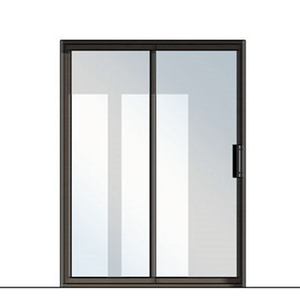
Factory Direct Catalog
Featured CE Certified Glazed Door Collections
Precision-engineered aluminum entrance, sliding, pivot, and French door systems tested to rigorous European and international standards.
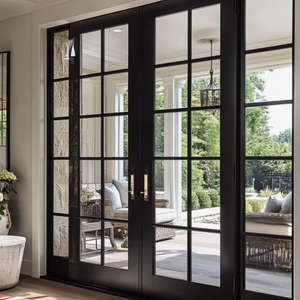
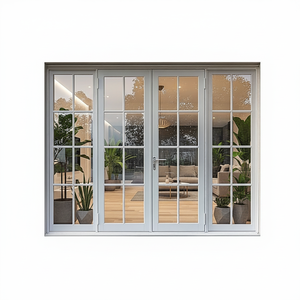
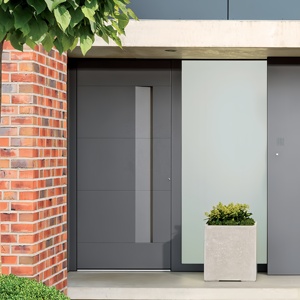

180,000 m²
Industrial Production Base
25+ Years
Precision OEM/ODM R&D
EN 14351-1
CE Compliance Certified
30+ Patents
Proprietary Door Systems
Architectural Glazed Door Engineering: The Critical Role of CE Certification & Standardized Compliance
In modern high-performance architecture, external pedestrian doorsets and glazed aluminum systems represent a crucial intersection of structural engineering, building envelope physics, and aesthetic intent. For commercial developers, architectural specifiers, and procurement agencies sourcing from high-capacity manufacturing centers in China, evaluating supplier credibility requires looking beyond basic surface aesthetics. Compliance with the European Construction Products Regulation (CPR 305/2011) and the harmonized standard EN 14351-1:2006+A2:2016 serves as the definitive benchmark for structural safety, thermal efficiency, and environmental longevity.
As premier CE certified aluminum glazed door manufacturers, Guangdong Dejiyoupin Doors and Windows Co., Ltd. (operating under the global brand DERCHI) bridges the gap between massive manufacturing economies of scale and strict European structural performance mandates. The CE mark signifies rigorous third-party and factory production control (FPC) testing across mandatory performance metrics, including wind load resistance (EN 12210), watertightness (EN 12208), air permeability (EN 12207), thermal transmittance (EN ISO 10077-2), and load-bearing capacity of safety devices.
Information Gain Insight: Genuine CE compliance under EN 14351-1 mandates full traceability of structural raw materials—from 6063-T5/T6 primary aluminum alloys to Polyamide PA66 GF25 thermal break strips and certified Low-E insulated glass units (IGU). Factory direct documentation must provide an official Declaration of Performance (DoP) accompanied by traceable initial type testing (ITT) reports.
1. Decoding EN 14351-1 Mandates for Commercial & Residential Glazed Systems
Procurement directors navigating overseas OEM/ODM partnerships must verify that certified aluminum glazed door factories maintain strict compliance with essential structural metrics defined by European standards:
- Structural Wind Load Resistance (EN 12210): Door assemblies must withstand severe positive and negative wind pressures up to Class C5 (2000 Pa wind load with relative frontal deflection below 1/300). This capability prevents catastrophic frame deformation in high-rise coastal developments and commercial storefronts.
- Watertightness Under Dynamic Pressure (EN 12208): Premium glazed door systems achieve Class 9A or E1050 ratings, preventing water ingress under continuous water spray at test pressures exceeding 1050 Pa during extreme storm conditions.
- Air Permeability & Infiltration (EN 12207): Class 4 compliance ensures controlled HVAC energy loss by restricting uncontrolled air leakage to less than 3 m³/h·m² at test pressures up to 600 Pa, directly contributing to LEED and BREEAM building accreditations.
- Thermal Transmittance Efficiency ($U_w$ Values): Combining engineered thermal breaks with Low-E double or triple glazing yields overall thermal transmittance values below $1.1 \text{ W/m}^2\text{K}$, significantly exceeding standard building code baselines.
Manufacturing Excellence
Enterprise Capabilities & Manufacturing Superiority
Inside DERCHI’s 180,000 m² automated manufacturing facility in Foshan, Guangdong—where precision engineering meets international compliance.
Automated CNC Processing
Utilizing high-precision multi-axis CNC machining centers imported from Germany, ensuring frame cutting tolerances within ±0.1mm and seamless corner joint crimping.
Qualicoat Surface Treatments
Equipped with vertical fluorocarbon (PVDF) powder coating lines meeting Qualicoat Class 2 and Class 3 standards, offering over 30 years of salt-spray and corrosion resistance in marine environments.
Integrated BIM & CAD Support
Dedicated architectural engineering team providing complimentary 2D CAD shop drawings and 3D BIM models to ensure seamless structural integration prior to mass production.
CE Certified Door Systems: Technical Performance Comparison Matrix
Selecting the optimal aluminum glazed door configuration requires matching system kinematics, profile depths, and glazing specifications with exact project criteria. Below is an engineering comparison matrix for technical procurement evaluation:
| System Kinematics | Profile Depth / Thickness | Thermal Break Insert | Glazing Specification | Target $U_w$ Transmittance | Acoustic Isolation ($R_w$) |
|---|---|---|---|---|---|
| Heavy-Duty Pivot Doors | 100mm – 120mm / 3.0mm | Polyamide PA66 GF25 | 6mm + 16Ar + 6mm Low-E Tempered | $\le 1.2 \text{ W/m}^2\text{K}$ | 38 dB – 42 dB |
| Thermal Break French Swing | 75mm – 85mm / 2.0mm | 24mm Multi-Cavity Strip | 5mm + 12Ar + 5mm Smart Glass | $\le 1.4 \text{ W/m}^2\text{K}$ | 35 dB – 40 dB |
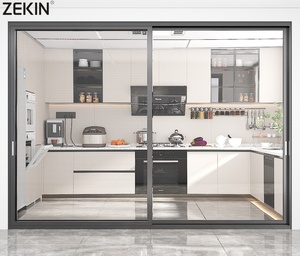
| 3-Track Heavy Patio Sliding | 140mm / 2.2mm – 2.5mm | PA66 Thermal Strut | 6mm + 12Ar + 6mm Toughened IGU | $\le 1.5 \text{ W/m}^2\text{K}$ | 36 dB – 40 dB |
| Crittall-Style Slim Frame | 50mm – 65mm / 2.0mm | Integrated Micro-Break | 8mm / 10mm Monolithic or Double IGU | $\le 1.8 \text{ W/m}^2\text{K}$ | 32 dB – 37 dB |
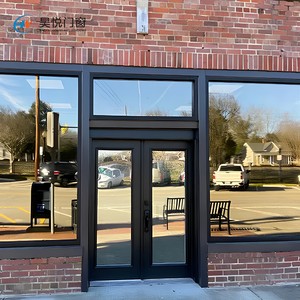
| Commercial Storefront Entry | 100mm – 150mm / 3.0mm | Heavy Non-Thermal / Thermal | 10mm or 12mm Clear Laminated Safety | $\le 2.0 \text{ W/m}^2\text{K}$ | 34 dB – 38 dB |
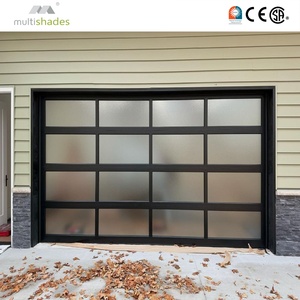
| Sectional Glass Garage | 40mm – 50mm / 2.0mm | Polyurethane Core Insert | Double Acrylic / Tempered Glass | $\le 2.2 \text{ W/m}^2\text{K}$ | 28 dB – 32 dB |
2025–2030 Architectural Sourcing Trends in Glazed Aluminum Systems
The global market for architectural aluminum doors and curtain wall systems is undergoing a rapid evolution, driven by regulatory decarbonization mandates, smart building integration, and modern structural minimalism. Procurement teams and developers must adapt their supply chain criteria to align with four critical market trends over the coming decade:
1. Transition to Low-Carbon Primary Aluminum Profile Extrusions
With the European Union implementing the Carbon Border Adjustment Mechanism (CBAM) and global ESG reporting requirements tightening, leading manufacturers are shifting from traditional coal-smelted aluminum to low-carbon primary aluminum produced using hydro-electric energy. Specifying low-embodied-carbon aluminum profiles allows commercial developers to reduce Scope 3 emissions significantly without sacrificing structural tensile strength (exceeding 230 MPa for 6063-T6 alloys).
2. Ultra-Minimalist Sightlines Paired with Heavy Load Hardware
Architectural preferences continue to favor floor-to-ceiling glass installations that maximize natural daylighting. Achieving structural sightlines under 30mm while supporting massive glass panel weights upwards of 400kg per leaf requires advanced engineering. This includes hidden floor-pivot hydraulics, continuous heavy-duty stainless steel gear hinges, and structurally bonded silicone glazing techniques (SSG) that distribute load stresses directly across the glass perimeter.
3. Integration of Smart Biometric Access & Automated Mechatronics
Contemporary commercial and high-end residential entry systems are no longer standalone mechanical barriers. Leading CE certified manufacturers now seamlessly integrate concealed motor drives, multi-point motorized locking bolts, dynamic electrochromic switchable glass, and biometric access controllers (fingerprint, facial recognition, and mobile IoT encrypted interfaces) directly into the thermal break profiles during factory assembly.
4. Acoustic Comfort Optimization for High-Density Urban Living
Urban noise pollution has elevated sound isolation ($R_w$ ratings) to a primary procurement metric alongside thermal U-values. Modern glazed door systems utilize asymmetric laminated double-glazed units (e.g., 6mm toughened + 1.52mm Acoustic PVB + 8mm toughened) alongside EPDM triple-gasket seals. This combination achieves sound attenuation levels exceeding 42 dB, shielding occupants from high-frequency traffic and urban noise pollution.
Procurement Knowledge Base
Frequently Asked Questions by B2B Buyers & Importers
Get authoritative answers regarding structural testing, international shipping logistics, factory audits, and OEM customization.
How can buyers verify the authenticity of a manufacturer's CE certification?
Authentic CE certification under EN 14351-1 requires the manufacturer to issue an official Declaration of Performance (DoP) tied to specific product families. Buyers should request test reports issued by an accredited European Notified Body (NB), verifying the laboratory's identification number, test standards (EN 12210, EN 12208, EN 12207), and Factory Production Control (FPC) audit certificates under ISO 9001:2015. DERCHI provides complete documentation packages, including certified test reports for global compliance checks.
What aluminum profile alloys and thermal breaks are used for harsh coastal environments?
For coastal and high-salinity applications, we utilize high-purity primary 6063-T5/T6 aluminum alloy extrusions treated with PVDF fluorocarbon coatings that exceed AAMA 2605 specifications. Thermal breaks consist of imported Polyamide PA66 GF25 (25% glass fiber reinforced) thermal struts, which match the thermal expansion coefficient of aluminum. This design prevents profile warping, seal degradation, or structural failure under severe ambient temperature swings and coastal salt air exposure.
Does DERCHI provide complimentary CAD shop drawings and custom engineering support?
Yes. Every order undergoes a rigorous technical shop drawing approval process before manufacturing begins. Our in-house architectural engineering team reviews structural wind load calculations, rough opening dimensions, drainage details, and hardware anchoring points. We issue complete 2D elevation/section CAD drawings and 3D BIM models free of charge to ensure flawless alignment with your architectural project plans.
What export packaging measures prevent damage to heavy glazed units during sea freight?
Our heavy-duty export packaging protocol includes complete profile corner protection, multi-layer protective PE film wrapping, shock-absorbing EPDM foam casing, and fully enclosed, heat-treated fumigation-free plywood crates. For oversized heavy glass pivot doors and storefront assemblies, we utilize steel-frame A-frame racks engineered specifically for secure LCL or FCL ocean container shipping.
How do DERCHI systems comply with Australian (AS 2047) and North American (NFRC/AAMA) standards?
In addition to European CE certification (EN 14351-1), DERCHI glazed door systems are engineered and tested to comply with Australian standard AS 2047 (achieving N6 wind load ratings for structural pressure and water penetration) as well as North American NFRC thermal rating standards. Test reports are available to support local council building certifiers, municipal inspectors, and engineering sign-offs.
What is the typical manufacturing lead time for custom OEM commercial orders?
Standard manufacturing lead times range from 20 to 35 business days following CAD drawing sign-off and material specification confirmation. For custom powder-coating colors, specialized wood-grain finishes, or custom laminated smart glass configurations, lead times may adjust slightly. We offer expedited production scheduling for urgent commercial contractor timelines.
Partner with a World-Class Glazed Door Factory
Streamline your architectural supply chain with CE certified aluminum door systems directly from China's leading manufacturing hub. Contact our engineering team for instant technical consultation, custom CAD drawings, and factory-direct wholesale pricing.
Inquire Now