Engineered Aluminum Window & Door Envelopes
Precision-extruded alloy profiles, dual-arm crank operators, and thermally isolated multi-chamber framing tested to international structural wind and acoustic attenuation standards.
Mechanical Kinematics & CE Architectural Certification
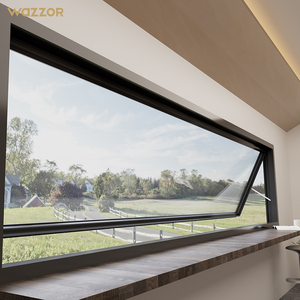
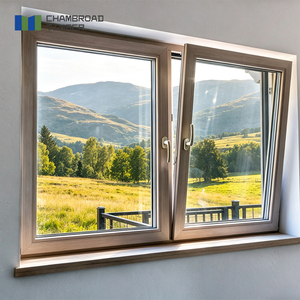
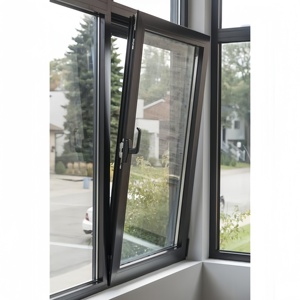
A comprehensive examination of why outward-opening crank-out fenestrations (casement and awning configurations) represent the pinnacle of airtightness, wind deflection resistance, and operational ergonomics for commercial and residential envelopes.
EN 14351-1 CE Harmonization
Compliance with the European Construction Products Regulation (CPR 305/2011) mandates rigorous third-party mechanical verification. Our aluminum crank out windows achieve Class 4 Air Permeability (EN 12207), Class E1200 Water Tightness (EN 12208), and Class C5 Wind Load Resistance (EN 12210), ensuring structural integrity under differential pressure up to 3000 Pa.
Dual-Arm Gear Kinematics
Equipped with zinc-alloy worm gear rotors and corrosion-resistant 304/316 stainless steel scissor arms, our dual-arm crank operators smoothly translate rotational torque into outward linear displacement. The low gear ratio allows effortless 90-degree opening for large glass panels while preventing wind-flutter or sash drift under violent gusts.
Polyamide Thermal Barriers
Utilizing high-grade PA66 GF25 (polyamide reinforced with 25% glass fiber) thermal breaks, our 6063-T5/T6 alloy extrusions eliminate heat bridges. Paired with argon-filled low-emissivity warm-edge double or triple glazing, systems achieve overall window thermal transmittance values down to Uw ≤ 1.1 W/(m²·K).
| Evaluation Parameter | Crank Out Casement / Awning | Standard Sliding Window | European Tilt & Turn | CE Benchmark Threshold |
|---|---|---|---|---|
| Air Permeability | Class 4 (≤ 0.75 m³/h·m² at 100 Pa) | Class 2 (≤ 27 m³/h·m²) | Class 4 (≤ 0.75 m³/h·m²) | EN 12207 Class 3/4 |
| Water Tightness | Class E1200 (Zero leakage at 1200 Pa) | Class 4A - 7A (150 - 300 Pa) | Class 9A - E1050 (600 - 1050 Pa) | EN 12208 ≥ Class 7A |
| Wind Pressure Resistance | Class C5 (Relative deflection < 1/300) | Class B2 / B3 | Class C4 / C5 | EN 12210 ≥ Class C3 |
| Perimeter Compression Seal | Continuous EPDM Triple Gasket Lip | Mohair Wool Pile (Prone to aging) | Continuous EPDM Dual/Triple Seal | ISO 3934 / EN 12365 |
| Hardware Cycle Life | ≥ 25,000 crank cycles (AAMA 901) | ≥ 10,000 roller passes | ≥ 20,000 cycle gear rotations | EN 13126-5 Verified |
Technological Evolution & Future Procurement Trends
Driven by net-zero building directives, heightened building code stringency (such as European EPBD and North American IECC), and rising climatic volatility, architectural window specifications are shifting dramatically.
1. Extreme Climate & Hurricane Adaptation
Modern fenestration procurement is decoupling from decorative selection toward climatic resilience. Aluminum crank out systems are inherently wind-resistant because external gusts force the compression sash tighter against the perimeter EPDM gaskets, compounding the sealing effect. Structural glazing with SentryGlas® (SG) ionoplast interlayers ensures structural survivability against Category 5 wind loads and cyclic airborne debris.
2. Concealed Mechatronic Actuation
The convergence of traditional mechanical cranks with 24V brushless DC concealed linear motors is accelerating. Building Management Systems (BMS) now demand dual functionality: automated nocturnal heat purging and smoke evacuation compliance (EN 12101-2) combined with manual high-torque crank-override capabilities for end-user autonomy and emergency egress.
3. Ultra-Slim Sightlines & Structural Glazing
Architects increasingly demand minimal profile exposure without sacrificing structural inertia (Ix/Iy). Advanced extrusion metallurgy using high-strength 6063-T6 or 6061 alloys paired with stepped structural silicone bonding allows frame face widths below 45mm, expanding clear daylight apertures while comfortably supporting triple-pane insulated glass units weighing over 160 kg.
4. Supply Chain Traceability & Digital Twins
Global developers and tier-1 contractors now mandate Environmental Product Declarations (EPD) and BIM (Revit/IFC) parametric modeling during early procurement phases. Manufacturers must demonstrate low-carbon primary aluminum billet sourcing, closed-loop scrap recycling, and documented life cycle assessments to qualify for international LEED Platinum and BREEAM certifications.
Direct-from-Factory Industrial Scale & Engineering Integrity
Headquartered in Shishan Town, Nanhai District, Foshan—the global manufacturing epicenter for structural aluminum extrusion—DERCHI provides institutional developers, commercial specifiers, and residential builders with uncompromised quality assurance.
Vertical Integration
From aluminum billet melting and precision mold development to extrusion, thermal break knurling, fluorocarbon (PVDF) coating, and automated assembly, every phase is controlled in-house to eliminate multi-tier subcontractor markups and quality drift.
Accredited Testing Lab
Our internal testing laboratory features computerized multi-chamber environmental simulators capable of testing full-scale mockups against AS 2047, EN 14351-1, AAMA/WDMA/CSA 101/I.S.2/A440, and ASTM E283/E330/E331 structural parameters.
Complimentary CAD & BIM
Our multilingual engineering team generates shop drawings, anchor load calculations, thermal simulation reports (LBNL THERM/WINDOW), and 3D Revit files tailored to your architectural window schedules before metal is cut.
Seamless Ocean Logistics
We provide full-container-load (FCL) and consolidated (LCL) freight directly to ports in Europe, North America, Australia, New Zealand, and Oceania. All units are encased in ISPM-15 compliant fumigated plywood crates with moisture barrier wrapping.
Frequently Asked Questions by Commercial Specifiers
Authoritative guidance on testing protocols, operational limitations, structural hardware integration, and international shipping logistics.
What specific documents are provided to verify CE compliance?
Every shipment is backed by an official Declaration of Performance (DoP) under EN 14351-1:2006+A2:2016, validated by an accredited Notified Body (NB). This includes comprehensive type test reports (ITT) verifying thermal transmittance (EN ISO 10077), mechanical durability, air tightness (EN 12207), water resistance (EN 12208), and load deflection indices for local municipal code approvals.
How do crank-out mechanisms perform against traditional push-out friction stays?
Push-out casements rely solely on sash friction shoes, leaving them vulnerable to wind gusts that can violently slam or over-extend the sash, risking hinge failure. Crank-out systems utilize positive mechanical worm-drive gearing that locks the sash rigidly at any intermediate opening angle (up to 90 degrees), providing controlled micro-ventilation, superior ease of operation over kitchen counters, and significantly higher security against forced mechanical prying.
What surface finishes are recommended for harsh coastal/marine environments?
For installations within 500 meters of open saltwater or severe industrial sulfur exposure, standard polyester powder coatings are insufficient. We recommend AkzoNobel or PPG certified fluorocarbon (PVDF) 3-coat architectural finishes meeting AAMA 2605 specifications (guaranteeing 20+ years of color retention and gloss integrity), or class-1 architectural anodization (≥ 25 microns) to prevent filiform oxidation and pitting.
Can insect and security screens be mounted on outward-cranking windows?
Yes. Because the window sash swings outward while the folding crank handle is located on the interior room side, full-perimeter interior insect screens or high-tensile 304 marine-grade stainless steel security mesh (0.8mm wire gauge) can remain permanently affixed inside without interfering with the mechanical operation of the sash.
What are the maximum dimension and glass load parameters for crank-out sashes?
Using our heavy-duty commercial Truth Hardware® or Roto® dual-arm kinematic assemblies with reinforced corner keys, maximum single-sash dimensions can reach 1000mm width × 2200mm height, supporting individual sash weights up to 90 kg (198 lbs). For larger structural spans, tandem motorized linear actuators or multi-lite mullion transoms are integrated.
What is the standard production lead time and minimum order quantity (MOQ)?
Our standard industrial production cycle is 25 to 35 business days following final CAD shop drawing sign-off and color chip approval. While we accommodate containerized commercial shipments (20GP/40HQ), our flexible CNC cell configuration allows custom residential sample orders with an MOQ starting from a single project schedule (typically ≥ 30 square meters).
Partner with a Certified Aluminum Fenestration Leader
Whether you are tendering for a multi-family mid-rise development, a high-end luxury villa project, or sourcing certified architectural envelopes for distribution, our engineering team is ready to analyze your window schedule.
Accurate Quotations within 24 Hours
Complete Shop CAD & Structural Data
Full European CE / CPR Compliance
Factory-Direct Wholesale Pricing
Connect Directly with Our Engineers
Submit your elevation schedules, architectural blueprints, or custom specification requests for immediate technical evaluation.
Send an Inquiry