Engineered Aluminum Doors & Architectural Systems
Precision-extruded 6063-T5/T6 architectural aluminum assemblies designed for high humidity, acoustic containment, and lifetime mechanical durability.
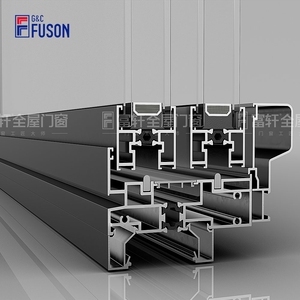
Fuson Hurricane Impact Aluminum Sliding Window & Louver System
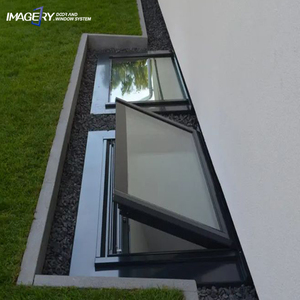
Automatic Remote Control Aluminum Roof Skylight Ventilation Window
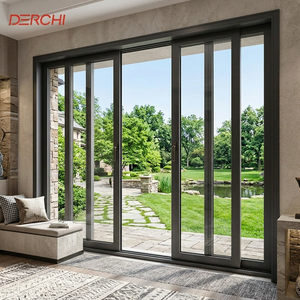
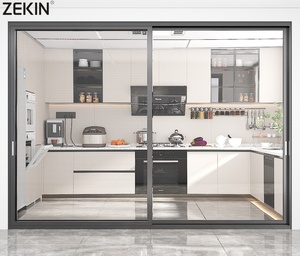
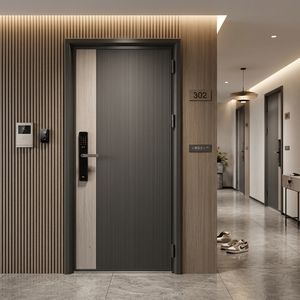
Soundproof Intricately Carved Cast Aluminum Precision Entry Door
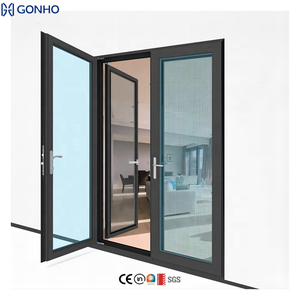
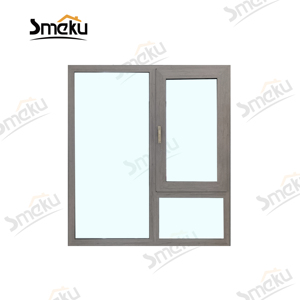
Commercial Thermal Break Waterproof Aluminum Casement Door
Executive Summary: The European and Global Imperative for CE Certified Bathroom Fenestration
In contemporary commercial architecture, hospitality planning, and upscale residential multi-family developments, the bathroom door is no longer treated as a passive interior partition. It operates as an active environmental boundary subjected to relentless vapor loads, frequent temperature cycling, detergent-induced chemical stress, and heavy mechanical cycles. Traditional medium-density fiberboard (MDF) or composite timber doors routinely suffer catastrophic moisture absorption, substrate swelling, delamination, and microbial colonization within 24 to 36 months of deployment in high-humidity zones.
Consequently, international developers, EPC contractors, and procurement managers across the European Union, the United Kingdom, Australia, North America, and the Gulf Cooperation Council (GCC) are uniformly transitioning their baseline interior schedules to CE certified aluminum bathroom door systems. Under European Harmonized Standards—specifically EN 14351-1 (Windows and external pedestrian doorsets) and related interior performance codes conforming to Regulation (EU) No 305/2011 (Construction Products Regulation - CPR)—a CE mark is not a marketing emblem; it is a legally enforced guarantee of mechanical stability, operating force calibration, dangerous substance restriction (RoHS compliance), glass safety (EN 12150 / EN 12600), and air/water performance verification.
Engineered Product Recommendations for High-Demand Procurement
Procuring bathroom doors for hospitality suites, medical clinics, corporate headquarters, and luxury villas requires nuanced matching between door typology, opening kinematics, and acoustic/spatial constraints. As a premier Foshan door and window manufacturer with over two decades of export leadership, Guangdong Dejiyoupin Doors and Windows Co., Ltd. (DERCHI) recommends four distinct architectural typologies:
Slim-Profile Casement Swing Doors
Featuring narrow 16mm–25mm sightline stiles, dual-perimeter Santoprene EPDM gaskets, and magnetic latching. Ideal for master ensuites requiring 32 dB acoustic separation without visual bulk.
Concealed Flush Aluminum Assemblies
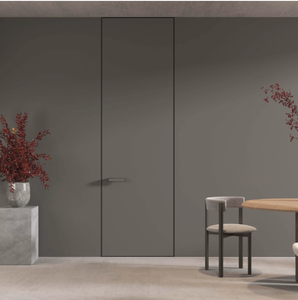
Zero-casing invisible sub-frames set flush with 12.5mm drywall or marble cladding. Incorporates 3D adjustable concealed hinges and moisture-impermeable internal aluminum honeycomb cores.
Heavy-Duty Pocket & Soft-Close Sliding
Overhead track systems engineered with German SUS304 tandem roller bearings and hydraulic bilateral dampers. Eliminates floor tracks, ensuring complete ADA and EN barrier-free accessibility.
Bi-Fold Aluminum Space-Savers
Designed for compact urban hospitality modules and secondary powder rooms. Precision articulated hinge nodes allow 90% clear opening access while retaining full vapor and water seals.
Technical Specification Matrix: CE Architectural Compliance
Commercial specifiers must verify that Chinese fabrication sources adhere to standardized metallurgical, mechanical, and glass tempering specifications. The table below outlines DERCHI's export fabrication benchmark against general commercial standards:
| Engineering Metric | Standard Commercial Grade | DERCHI CE Certified Export Benchmark | Applicable International Code |
|---|---|---|---|
| Aluminum Alloy & Temper | Commercial 6063-T4 / Remelt Scrap | Primary Virgin 6063-T5 / 6063-T6 Billet | EN 573-3, EN 755-2, ASTM B221 |
| Structural Wall Thickness | 1.0 mm – 1.2 mm | 1.4 mm – 2.0 mm Heavy Wall Reinforcement | GB/T 8478, AS 2047, BS EN 12020 |
| Surface Protection | Standard Anodizing (10 μm) | Qualicoat Class 2 Powder (60-80 μm) / Hard Anodized (20-25 μm) | ISO 2815, Qualicoat / AAMA 2604 |
| Corrosion Resistance (CASS) | 96 Hours Salt Spray | 1,000+ Hours Neutral Salt Spray (ASTM B117) | ISO 9227 Class 4 (Coastal/High Moisture) |
| Glazing Specification | Single Annealed / Low-grade Float | 4mm+4mm / 5mm+5mm Tempered Laminated or Frosted | EN 12150-1, EN 14449, ANSI Z97.1 |
| Air & Water Infiltration | Uncertified Non-Gasketed Joints | Continuous Extruded EPDM Dual-Fin Gaskets (Class 4 / 9A) | EN 1026, EN 1027, AS 2047 N6 Passed |
| Operating Durability | 20,000 Open/Close Cycles | 100,000 Cycles Verified Heavy Hardware Life | EN 1191, EN 12400 Grade 4 |
Guangdong Dejiyoupin: The Industrial Backbone
Founded in the global fenestration hub of Nanhai, Foshan, Guangdong Dejiyoupin Doors and Windows Co., Ltd. (DERCHI) commands an expansive 180,000 square meter intelligent manufacturing base. Recognized among China's top 10 premium door and window brands, we integrate the entire value chain: in-house structural die development, multi-axis automated CNC milling, automated anodizing and fluorocarbon powder coating, precision robotic corner crimping, and computerized acoustic/pressure testing chambers.
Unlike trading entities that outsource to disparate workshops, DERCHI maintains rigorous Factory Production Control (FPC). Over 600 skilled technicians ensure every sash, hinge pivot, and glass panel meets exacting European, North American, and Australasian standards before container consolidation.

Future Procurement Trends in Commercial Aluminum Bathroom Fenestration (2025–2030)
Strategic sourcing requires anticipating structural shifts in architectural preferences, decarbonization metrics, and smart living technologies. Tier-one hotel chains and residential developers are actively budgeting around four structural trends:
Low-Carbon Recycled Aluminum
Corporate ESG directives are prioritizing "green aluminum" extruded using hydroelectric power or minimum 60% post-consumer recycled billet, reducing embodied carbon to < 4.0 kg CO2e/kg Al.
Switchable PDLC Smart Glass
Integrating polymer-dispersed liquid crystal (PDLC) switchable privacy glazing directly into aluminum door panels. Transforms clear glass to opaque instantly via wall switches or dry-contact hotel access cards.
Direct BIM Integration
Architectural procurement workflows now require Revit/IFC digital twin models containing parametric opening dimensions, acoustic Rw ratings, thermal U-values, and CE Declaration of Performance (DoP) data.
Microbial & Fingerprint-Resistant Finishes
Hospitality specifiers are turning to fluoropolymer coatings embedded with silver-ion antimicrobial agents and nano-ceramic oleophobic topcoats that resist soap scum, water spotting, and fingerprint marks.
Technical & Engineering Evolution: Solving Bathroom Pain Points
Bathroom door failures in modern architecture typically manifest in three areas: acoustic bleed, frame oxidation, and latch jamming caused by thermal/moisture differential. DERCHI's engineering team has pioneered several structural solutions to resolve these fundamental defects:
Magnetic Cushion Latches
Traditional spring-loaded metal strike plates create harsh mechanical clatter and are vulnerable to rust. We employ neodymium magnetic latches that remain fully retracted when open, engaging silently only upon sash closure.
Decoupled Acoustic Glazing
By engineering specialized asymmetric double glazing (e.g., 5mm tempered outer + 12A argon cavity + 6.38mm PVB acoustic laminate), our doors achieve a verified sound transmission class (STC) of 36–38 dB, preventing sound transmission into adjacent living spaces.
Concealed Drainage Sub-Sills
In wet-room shower enclosures, water splashback can seep under door sills. DERCHI incorporates patented concealed aluminum weeping channels that collect runoff and cycle it back toward bathroom floor drains without exposed ugly scuppers.

Factory Certification & International Compliance
Every shipment from our Foshan facility is accompanied by traceable Factory Production Control (FPC) audit documentation and complete testing certificates from accredited laboratories including Intertek, SGS, and the Australian Fenestration Rating Council (AFRC). Our systems are certified under:
- CE Mark (EN 14351-1 & CPR EU 305/2011): Verifying structural, safety, and operational durability.
- Australian AS 2047 & AS 1288: Passed maximum N6 cyclonic wind load and impact resistance.
- ISO 9001:2015 & ISO 14001: International Quality Management & Environmental Systems.
- UL Fire Door Ratings: Certified fire-rated assemblies for commercial multi-family corridors.
Frequently Asked Questions for Sourcing Managers
Direct technical answers addressing structural, logistics, compliance, and custom engineering considerations for international importers.
How do CE certified aluminum bathroom doors differ from non-certified domestic Chinese doors?
What aluminum alloy specification is mandatory for high-humidity coastal bathrooms?
Can DERCHI engineer custom sizes, frameless flush jambs, and bespoke glass patterns?
What is the typical production lead time and sea freight packing standard for export orders?
What acoustic isolation (Rw/STC) can be achieved with aluminum bathroom doors?
How are warranty claims, field replacements, and hardware spare parts managed overseas?
Sourcing Checklist: Verifying Your Chinese Factory Supplier
Before issuing letters of credit (LC) or telegraphic transfers (TT) to Chinese door suppliers, commercial procurement teams must execute the following five-point quality verification protocol:
1. Demand FPC & DoP Documentation
Ensure the supplier provides an authentic Declaration of Performance (DoP) referencing EN 14351-1, verified by an accredited EU Notified Body, not merely a commercial trading certificate.
2. Inspect Billet Ingot Purity
Verify via spectral material test reports (MTR) that the extrusion billet is primary 6063 alloy with controlled magnesium and silicon ratios, eliminating brittle high-iron scrap content.
3. Validate Glass Safety Markings
Every individual sheet of tempered glass must feature a permanent ceramic frit logo proving certification under EN 12150-1, ANSI Z97.1, or AS/NZS 2208.
Accelerate Your Commercial Fenestration Project
Partner directly with Foshan's preeminent CE certified manufacturing facility. Connect with our senior architectural fenestration engineers for direct factory pricing, comprehensive CAD shop drawings, acoustic calculation reports, and custom door schedules within 24 hours.
Inquire Now