Engineered White Aluminium Door Systems & Glazing Solutions
Every fenestration unit undergoes strict dimensional tolerance verification, multi-stage anodized zinc pretreatment, and high-coverage RAL white powder formulation tested for cyclic weathering, salt mist impedance, and wind-load structural deflection.
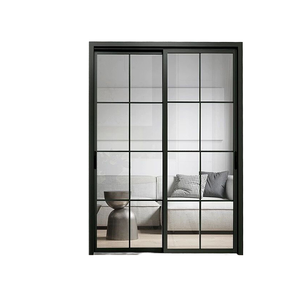
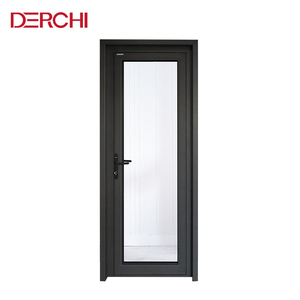 Acoustic & Interior
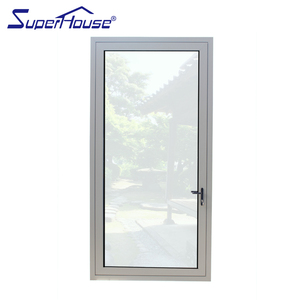 Patio & Swing
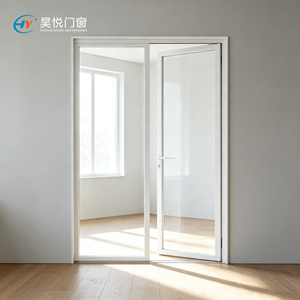 Slimline Visual
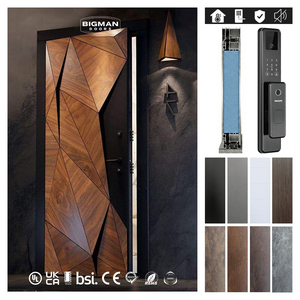 Anti-Burglary RC3
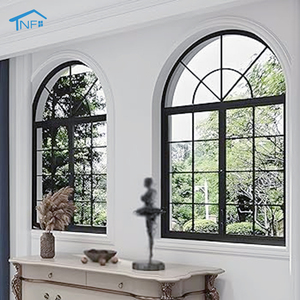 Architectural Form
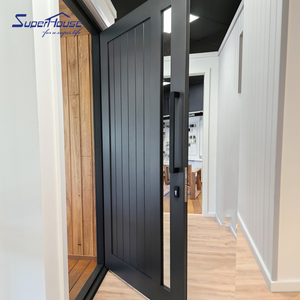
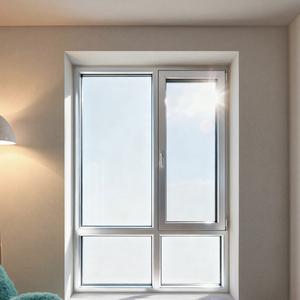
1. Technical Whitepaper: The Anatomy of CE-Certified Architectural White Doors
In contemporary architectural envelope engineering, the white aluminium door is no longer merely a visual divider; it serves as a critical structural node requiring precise mechanical equilibrium, high thermodynamic resistance, and acoustic attenuation. As an audited CE-compliant manufacturer operating under EN 14351-1 (Windows and doors - Product standard, performance characteristics), our engineering division eliminates the systemic vulnerabilities commonly encountered in commercial-grade fenestration: thermal bridge condensation, UV-induced powder chalking, weld-seam discoloration, and mechanical sash sag over high-cycle operating lifespans.
Our structural profiles are extruded exclusively from virgin prime primary 6063-T5/T6 and 6060-T66 architectural aluminium alloys. Unlike recycled foundry billet mixes that exhibit non-uniform crystalline grains and secondary metal contamination (leading to micro-pitting under saline atmospheric pressure), primary billet extrusion guarantees predictable yield strength (≥ 160 MPa) and tensile elongation properties (≥ 8%). For white exterior systems, metallurgical purity is paramount: zinc and iron trace elements are limited to < 0.05% to eliminate sub-film galvanic corrosion beneath the pure white organic polyester powder film.
Comparative Technical Matrix: Standard Commercial vs. DERCHI CE Architectural White Doors
| Performance Characteristic | Standard Commercial Supply | DERCHI CE White Door Specification | Standard / Verification Method |
|---|---|---|---|
| Aluminium Alloy & Billet Purity | Recycled blend 6063 scrap (>0.35% Fe) | Prime Virgin Primary A00 Aluminium 6063-T6 | EN 573-3 / EN 755-2 Spectrometry |
| White Surface Finishing Tech | Standard TGIC Powder (40–55μm) | Qualicoat Class 2 / Superdurable PVDF (75–90μm) | ISO 2810 Florida 3-Year Exposure ≥ 50% gloss |
| Thermal Separation Barrier | Standard PVC or 14.8mm PA66 generic | 24mm – 34mm Technoform® PA66 GF25 Polyamide | EN ISO 10077-2 (Uw down to 1.1 W/m²K) |
| Acoustic Damping Coefficient | Rw = 26 – 29 dB (Single bubble seal) | Rw = 38 – 43 dB (Triple continuous EPDM vulc) | ISO 10140-2 Laboratory Sound Transmission |
| Structural Corner Jointing | Mechanical single screw clamp | Cast Aluminium Cleats + Epoxy Dowel Injection | EN 12046-2 Operating Forces / Torsion Test |
| Air / Water Tightness Class | Class 2 (300 Pa) / Class 4A (150 Pa) | Class 4 (600 Pa) / Class 9A (600 Pa Continuous) | EN 12207 / EN 12208 Pressure Chamber Testing |
2. Surface Chemistry: Overcoming White Pigment Photo-Oxidation & Yellowing
White is historically the most rigorous color to maintain across exterior door applications. Incident solar radiation in the ultraviolet spectrum (specifically UV-A and UV-B between 295nm and 385nm) triggers photochemical bond cleavage within low-grade organic resin matrices. This manifests as chalking (degradation of the resin binder leaving unbonded titanium dioxide pigment on the surface) and severe Delta E (ΔE) color shifts toward yellow.
To eliminate this phenomenon, our automated vertical coating lines employ premium AkzoNobel Interpon® D2525 and Tiger Drylac® Series 68 Superdurable finishes. Our chemical pretreatment incorporates chrome-free zirconium conversion coating compliant with Qualicoat Seaside and GSB Master specifications. This creates an inert barrier film preventing filiform corrosion creep even when installed within 100 meters of marine coastlines. Our white palette options include standard RAL 9016 (Traffic White), RAL 9010 (Pure White), RAL 9003 (Signal White), and bespoke architectural matte finishes formulated with fluoropolymer resins achieving a 25-year gloss retention guarantee.
3. Future Procurement Trends for Architectural Door Systems (2025–2030)
Commercial contractors, volume homebuilders, and facade engineering consultants are transforming their global procurement frameworks. Traditional piecemeal purchasing is rapidly being displaced by value-chain integration, structural sustainability auditing, and digital product passports. Specifiers should align their procurement pipelines around four dominant procurement vectors:
Carbon Accounting & EPD Documentation
Global procurement criteria now enforce certified Environmental Product Declarations (EPDs). Procuring aluminium manufactured with hydroelectric-smelted low-carbon billet (≤ 4.0 kg CO₂/kg Al) enables projects to satisfy LEED v4.1, BREEAM Outstanding, and EU Taxonomy mandates without structural cost penalties.
BIM Integration & Digital Twin Shop Drawings
Specifiers no longer accept generic PDF submittals. Future-proof procurement requires full Building Information Modeling (BIM) objects natively generated in Revit and ArchiCAD formats, containing embedded thermal conductivity metrics, hardware schedules, and anchor point structural loads.
Smart IoT & Concealed Motorization
Procurement schedules for luxury villas and institutional buildings demand concealed perimeter automation. Motorized multi-point locking (e.g., Siegenia or Winkhaus automated bolt engagement) coupled with biometric and KNX building automation protocols are now base architectural specifications.
4. Global Industry Development Trends: Engineering Ultra-Low Energy & Extreme Format Fenestration
The global aluminium fenestration sector is experiencing radical technological advancement driven by stringent international energy codes (such as Germany's GEG, California Title 24, and the UK's Future Homes Standard). The white aluminium door has transitioned from simple mechanical barrier to active thermal envelope component:
Polyamide Cavity Optimization
Thermal breaks have evolved from simple rectangular strips to multi-chambered, hollow-core PA66 GF25 insulative webs filled with low-emissivity polyurethane aerogel foams. This design counteracts convection currents within the internal aluminium chambers, achieving frame thermal transmittance (Uf) values under 1.3 W/m²K without increasing visible sightline profiles.
Extreme Format Monumental Openings
Architectural demand is polarizing toward floor-to-ceiling uninhibited glazing spans. Modern white exterior pivot doors routinely exceed 3000mm in height and 2000mm in width, weighing up to 500kg per leaf. Manufacturing these formats demands high-precision CNC end-milling, robotic seal injection, and concealed hydraulic bottom pivots tested to 500,000 continuous cycles.
Circular Economy & Demountability
Design for Deconstruction (DfD) is reshaping structural corner assembly. Instead of irreversible crimping with rigid two-component polyurethane adhesives, cutting-edge systems incorporate demountable stainless steel mechanical corner connectors. This enables direct profile separation, repairability, and 100% closed-loop post-consumer recyclability at building end-of-life.
Why Leading Builders Partner with DERCHI
Operating from our 180,000 square meter intelligent manufacturing base in Foshan, Guangdong (Shenke Chuangzhi Park), Guangdong Dejiyoupin Doors and Windows Co., Ltd. (DERCHI) represents China’s premier engineering enterprise for exported high-performance fenestration. By controlling the entire manufacturing vertical—from precision profile CNC machining to multi-axis automated corner crimping and cleanroom glass bonding—we eliminate commercial middleman markups and safeguard project delivery schedules.
- Global Certification Portfolio: Full compliance with CE (EN 14351-1), Australian AS 2047 (N6 Wind Rating verified), ISO 9001 Quality Management, and UL Fire Rated configurations.
- Precision Engineering & Custom CAD Support: Dedicated bilingual structural engineering team providing free parametric CAD shop drawings, wind-load deflection calculations, and structural anchor schedules.
- Severe Environment Resilience: Marine-grade powder coat and fluorocarbon finishes specifically formulated for coastal UV exposure, humidity, and salt spray without blistering or delamination.
- Direct Export Logistics & Biosecurity Crating: Full-container-load (FCL) and consolidated less-than-container-load (LCL) logistics direct to major international ports, wrapped in fumigated steel-reinforced timber crates.

600+ Skilled Technicians, Automated Extrusion Processing & Quality Inspection
Frequently Asked Questions: Commercial Aluminium White Door Sourcing
Direct technical answers addressing regulatory compliance, custom fabrication options, acoustic calculations, and international shipping protocols.
Q1: How does CE Certification validate the performance of white aluminium doors?
CE marking confirms that the doorset conforms to EN 14351-1 under the EU Construction Products Regulation. It certifies third-party verified testing for air permeability (EN 12207), water tightness (EN 12208), wind load resistance (EN 12210), load-bearing capacity of safety devices, and overall thermal transmittance (EN ISO 10077-1). Every consignment leaves our factory with an audited Declaration of Performance (DoP) and batch-traceable test certificates.
Q2: Will exterior white powder coating turn yellow or chalk under high UV radiation?
No. We utilize architectural Qualicoat Class 2 Superdurable polyester powders and AAMA 2605-compliant PVDF fluorocarbon coatings engineered with non-reactive ceramic and rutile titanium dioxide pigments. These formulations withstand extensive South Florida 3-year outdoor weathering testing, retaining over 50% gloss and limiting Delta E (ΔE) color variance to < 5.0 units across a 15- to 25-year operational exterior lifespan.
Q3: Can you fabricate oversized white aluminium pivot doors for commercial lobbies?
Yes. We engineer customized architectural pivot systems measuring up to 3200mm in height and 2200mm in width per sash. These heavy-duty installations feature concealed Dormakaba® or FritsJurgens® bottom pivot mechanics capable of supporting leaf loads up to 500kg, engineered with multi-point locking pins, adjustable dampening control, and full perimeter perimeter weather seals.
Q4: How do your thermal break doors prevent interior condensation?
Our thermal break doors incorporate multi-chamber 24mm to 34mm PA66 GF25 polyamide insulation strips reinforced with 25% glass fiber. This breaks the thermodynamic conductivity between the exterior and interior aluminium profile sections. When combined with argon-filled, warm-edge spacer double or triple Low-E glazing, the interior profile surface temperature stays above the dew point even when exterior temperatures drop below -15°C.
Q5: What are the lead times for custom-dimension commercial project orders?
Standard custom architectural projects require 20 to 30 days of production time following final client CAD shop drawing sign-off and color swatch approval. Expedited schedules are available for priority multi-unit housing and commercial hospitality contracts, supported by our 180,000 square meter plant's automated profile machining and assembly capacity.
Q6: What protection is provided during ocean freight to prevent surface scratching?
Every white door frame and sash is wrapped in low-tack protective polymer film, protected with high-density EVA corner cushions, encased in continuous moisture-barrier polyethylene wrap, and secured within custom heavy-duty plywood crates lined with steel bands. All timber materials comply with ISPM 15 international phytosanitary export regulations.
Ready to Engineer Your Project's White Aluminium Door Schedule?
Submit your architectural drawings, window/door schedules, or performance requirements. Our technical sales engineers will review your specifications, verify local building compliance, and deliver fully itemized project pricing within 24 hours.