Engineered Architectural & Exterior Shed Door Assemblies
Direct factory manufacturing of precision-extruded 6063-T6 aluminium systems, hurricane-rated sliding systems, thermal barrier configurations, and high-impact exterior barrier doors tailored for industrial outbuildings, commercial sheds, luxury residential utility suites, and harsh coastal environments.
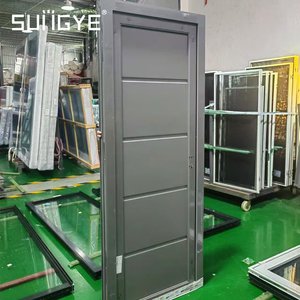
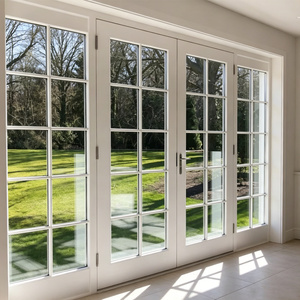
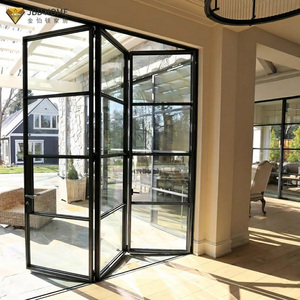
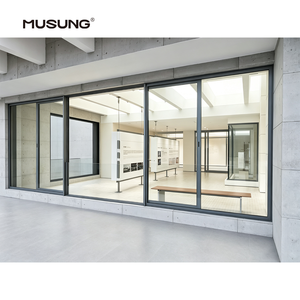
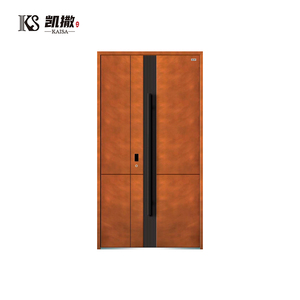
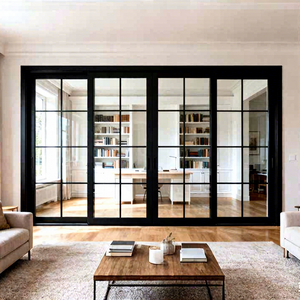
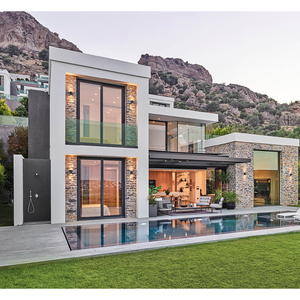
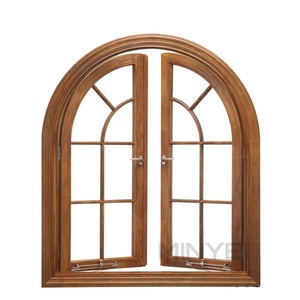
Intelligent production base located in Foshan, integrating automated extrusion, multi-axis CNC machining, and automated powder coating lines.
Quarter-century of structural design expertise, holding tier-one status in precision fenestration, heavy industrial closures, and utility doors.
Dedicated technical personnel, certified welders, structural facade engineers, and bilingual international export project managers.
Extensive portfolio of independent structural patents, alongside CE, AS 2047 (N6 Cyclone Tested), ISO 9001, and UL fire performance certifications.
Comprehensive Engineering Criteria for CE Marked Aluminium Shed & Utility Enclosures
Procuring exterior shed doors for European Union, Australian, and transatlantic projects demands rigorous compliance with harmonised standards, predominantly EN 14351-1:2006+A2:2016 for external pedestrian doorsets and EN 13241:2003+A2:2016 for industrial, commercial, and garage doors. Shed and storage architectures are no longer considered simple secondary barriers; modern industrial workshops, residential agricultural outbuildings, prefabricated modular units, and high-spec garden workshops mandate stringent water impermeability, mechanical load deflection tolerances, and structural integrity.
Our CE certified aluminium shed doors undergo thorough testing protocol series under accredited Notified Bodies (NB). Wind resistance verification to EN 12210 / EN 12211 proves structural rigidity under severe positive and negative air pressures up to Class C5/B5, preventing sash deflection or track displacement during gale events. Concurrently, watertightness testing per EN 12208 reaches up to Class 9A (600 Pa) via our dual-perimeter engineered EPDM continuous gasket seals, which mitigate moisture infiltration that typically damages stored assets or high-value technical machinery.
- Mechanical Infill Reinforcement: Aluminium honeycomb sandwich cores bonded with thermosetting polyurethanes delivering >32 dB sound dampening and high rigidity.
- Severe Atmospheric Protection: Qualicoat Class 2 architectural powder coating and 25μm marine-grade anodizing resisting over 3,000 hours of continuous salt-spray exposure.
- Thermal Barrier Optimization: Polyamide PA66 GF25 thermal breaks achieving U-values down to 1.3 W/m²K, eliminating condensation in climate-controlled storage.
Verified Performance Benchmarks
Every batch manufactured at our Foshan facility comes complete with mill certificates, Declaration of Performance (DoP), and Factory Production Control (FPC) documentation ready for municipal code review.
Engineered Shed Door Typologies for Targeted Functional Applications
Different building profiles, structural clearances, and operational cycles require tailored door mechanisms. Explore the primary recommendations from our lead fenestration engineers.
Solid Aluminium Honeycomb Utility Doors
Primary Application: Industrial machinery sheds, acoustic testing sheds, chemical storage facilities, and private workshop enclosures.
Technical Highlights: Fabricated using 2.0mm to 3.0mm aircraft-grade 6063-T6 alloy exterior faces with an internal high-density aviation aluminium honeycomb mesh. Offers superior flexural strength, unyielding intrusion resistance, zero moisture absorption, and thermal warping resilience even under direct 60°C radiant sunlight.
Heavy-Duty Thermal Break Bi-Folding Shed Doors
Primary Application: Boat storage sheds, oversized agricultural vehicle bays, luxury poolside cabanas, and indoor-outdoor hobby sheds.
Technical Highlights: Multi-leaf articulated folding configurations accommodating wide spans up to 12 metres. Stainless steel bottom-rolling guide carriages rated at 300kg per leaf ensure silky-smooth glide action. Equipped with 24mm continuous thermal breaks and argon-filled Low-E laminated double glazing.
Prehung Multi-Point Security Entry Sets
Primary Application: Modular container sheds, secured commercial battery energy storage sites (BESS), and telecom transmitter huts.
Technical Highlights: Pre-assembled unitary frames with integrated anti-jemmy perimeter flanges, European mortise multi-point hook locking gear, and 3D adjustable security hinges. Dramatically reduces site installation labor by up to 65% while delivering certified RC2/RC3 burglary resistance.
Engineering Matrix: Extruded Aluminium vs. Traditional Shed Door Materials
Specifiers must weigh lifecycle operational cost, environmental weathering, deflection under cycling loads, and total cost of ownership (TCO) across 20-year building horizons.
| Evaluation Parameter | DERCHI Extruded Aluminium (6063-T6) | Standard Galvanized Steel | Solid Timber / Engineered Wood | PVC / Vinyl Composite |
|---|---|---|---|---|
| Corrosion & Salt Resistance | Outstanding C5-M Marine Rated / Qualicoat | Moderate; rust occurs at cut edges & welds | Poor; rots, fungal decay under dampness | Good; immune to rust, but degrades via UV |
| Weight-to-Strength Ratio | High Minimizes hinge strain & motor load | Heavy; requires oversized reinforcement | Moderate to Heavy; sags over multi-year spans | Low; requires internal steel reinforcing bars |
| Thermal Dimensional Stability | Exceptional Linear coefficient 23×10⁻⁶/K | Moderate; subject to high solar gain bowing | Poor; swells in moisture, contracts in drought | Very Poor; substantial thermal warping |
| Design Customization & Glass | Bespoke Slim profiles, SDL, large glazing | Industrial/rigid; limited modern aesthetics | High aesthetic value; high maintenance cost | Bulky frames, restricted architectural options |
| Lifecycle & Maintenance | 30+ Years; zero repainting required | 10-15 Years; frequent anti-rust recoating | 5-10 Years; biennial varnishing or painting | 10-12 Years; embrittlement and discoloration |
| CE & Safety Compliance | Full EN 14351-1 / EN 13241 System Testing | Partial structural compliance | Varies greatly by wood species & adhesive | Limited load capacities in oversized vents |
Next-Generation Sourcing Trends & Technological Evolution (2025–2030)
Global commercial supply chains are pivoting toward high-performance envelope engineering, ultra-low carbon building materials, automated off-site construction integration, and smart security telematics.
1. Circular Decarbonized Aluminium (Low-Carbon Billets)
Institutional developers and green building directives (such as the EU Energy Performance of Buildings Directive - EPBD) increasingly require verifiable Environmental Product Declarations (EPD). Future procurement mandates primary billets smelted using renewable hydro-power or containing >75% post-consumer scrap (PCR), slashing embodied carbon from 18 kg CO₂/kg aluminium down to under 4.0 kg CO₂/kg without sacrificing structural yield strength.
2. Extreme Climate & Cyclone Hardening
Intensifying climatic oscillations have expanded cyclonic design zones inland across coastal Europe, Australasia, and North America. Procurement specifications have graduated from simple static wind calculations to dynamic cyclic pressure and projectile impact testing (AS/NZS 1170.2, ASTM E1886/E1996, and EN 12424 Class 4/5). Heavy extrusion web walls (≥2.5mm) and reinforced steel dead-bolt corner gussets are becoming the non-negotiable norm.
3. Smart Access Automation & Micro-Sensors
Modern shed and utility operations are integrated into building management systems (BMS). The integration of concealed RFID badge readers, optical fingerprint scanners, automated motorized concealed actuators, and NB-IoT open/closed sensors directly inside the extruded profile chamber permits remote security audits and automated climate-controlled exhaust venting without secondary external fixtures.
The Foshan Industrial Advantage: Guangdong Dejiyoupin (DERCHI)
Recognised among China's Top 10 High-End Door & Window Brands, our sprawling 180,000m² manufacturing complex offers an unbroken chain of precision control from billet extrusion to final ocean freight crating.
Full In-House CAD/BIM Detailing
Our drafting engineering division generates bespoke structural CAD shop drawings, 3D section cuts, and BIM/Revit families matching client schedules prior to metal fabrication, eliminating job-site discrepancies.
CNC Multi-Axis Milling Centers
Automated cutting, coping, and robotic drilling centers ensure profile tolerances within ±0.2mm, assuring that hardware cutouts, mortise pockets, and thermal breaks mate with total airtight mechanical precision.
Stringent 6-Stage QC Protocol
Every doorset undergoes anodizing thickness eddy-current checks, coating adhesion cross-hatch tests, seal compression verification, corner welding shear analysis, and pre-packing operational cycling inspection.
Heavy Export-Grade Crating
Export units are secured within IPPC-certified fumigated solid plywood crates with protective foam corner wraps, desiccant packs, and moisture-vapor barrier films engineered for rough multi-modal ocean freight.
Frequently Asked Questions for B2B Importers, Architects & Specifiers
Essential technical, compliance, commercial, and logistic guidance for commercial project procurement managers.