Featured Architectural Systems for Commercial & Luxury Residential Projects
Explore our precision-extruded, thermally broken fenestration solutions tested to international CE, AS 2047, and ISO standards for rigorous engineering compliance.
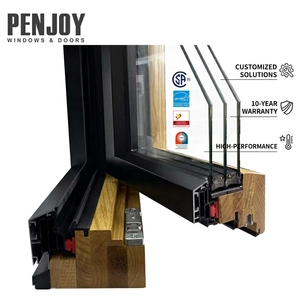 Passive House
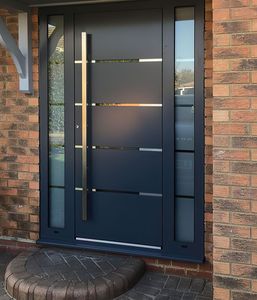 CE Certified Pivot
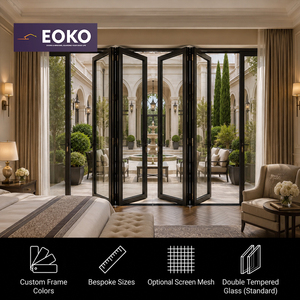 AAMA Rated
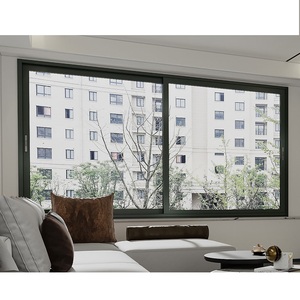 High Acoustic
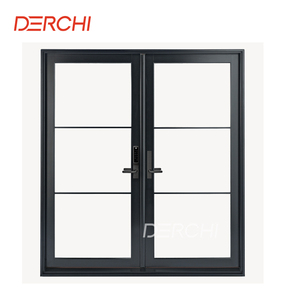 Impact Rated
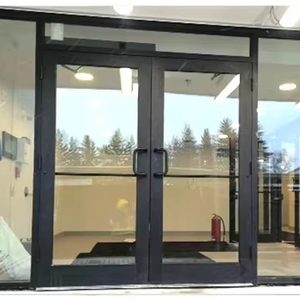 Heavy Commercial
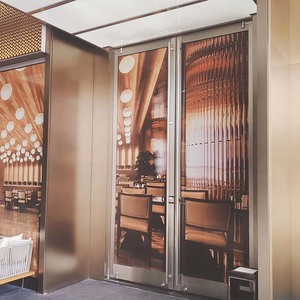 Crittall Style
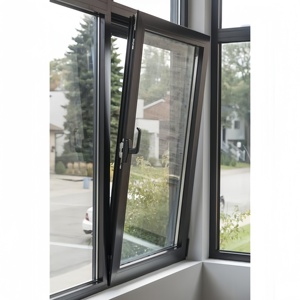
Industrial Scale, Automated Precision, and Global Compliance Standards
Headquartered in Foshan's high-tech industrial cluster, Guangdong Dejiyoupin Doors and Windows Co., Ltd. (DERCHI) operates one of Asia's most advanced fenestration manufacturing bases, uniting automated 5-axis CNC machining, structural thermal barrier infusion, and certified testing laboratories.
"Procuring CE certified aluminium pivot doors directly from a source factory requires deep technical vetting. Specifiers must demand complete traceability from raw 6063-T6 aluminum extrusion billets and polyamide thermal break structural tests to EN 14351-1 harmonized European norms, ensuring structural resistance under cyclical wind pressures."
Architectural Mechanics: Why Pivot Entry Doors Lead Modern Building Facades
Large-aperture architectural openings require mechanical systems capable of managing substantial dead loads, operational fatigue, and severe wind deflection without compromising airtightness or thermal insulation performance.
Offset Pivot Kinematics & Load Transfer
Unlike traditional butt hinges fixed to vertical jambs, heavy-duty floor and header pivot systems transfer vertical structural loads straight down into concrete floor slabs. This eliminates vertical hinge creep and jamb deflection, enabling leaf dimensions exceeding 2.2m width by 4.0m height with leaf dead weights scaling up to 800kg.
Dual Polyamide PA66 Thermal Barriers
To comply with stringent European Energy Performance of Buildings Directives (EPBD), our extruded 6063-T6 profiles integrate precision-knurled 25% glass fiber reinforced Polyamide 66 (PA66 GF25) thermal struts. This isolates the exterior aluminum shell, driving door thermal transmittance (Ud) below 1.1 W/(m²·K).
Perimeter Multi-Drop Gasket Sealing
The inherent engineering bottleneck of pivot doors has historically been bottom and top clearance leakage. DERCHI eliminates air infiltration via mechanical concealed auto-drop drop-down seals synchronized with the pivot cycle, combined with dual-durometer continuous EPDM perimeter automotive-grade weatherstripping.
Qualicoat Class 2 Marine Surface Treatment
Engineered for extreme coastal exposure from Sydney Harbor to the Mediterranean coast, door extrusions receive chemical pre-treatments followed by AkzoNobel or PPG fluorocarbon PVDF electrostatic coatings. Tested beyond 3,000 hours of neutral salt spray (NSS), profiles resist pitting corrosion and UV color shifting.
Integrated Motorized Multipoint Access Control
Modern commercial and residential security requires unified hardware. Systems support concealed electromagnetic European multipoint deadbolts fully compatible with KNX, Crestron, biometric recognition, and dry-contact building management systems (BMS) with high resistance class RC3/RC4 security certifications.
Acoustic Glazing Lamination Configurations
Engineered glazed pivot apertures deploy acoustic laminated safety glass assemblies (e.g., 8mm Low-E Tempered + 16Ar Warm Edge Spacer + 6.6.2 Acoustic PVB Tempered). This configuration attains sound reduction indices of Rw ≥ 42 dB, effectively attenuating urban airborne acoustic frequency spectra.
Engineering Benchmark: CE Mark (EN 14351-1) vs. AS 2047 vs. AAMA/WDMA
Global B2B procurement contracts require unambiguous performance documentation. The technical comparative matrix below outlines our engineering verification benchmarks across international auditing standards.
| Performance Attribute | CE Standard (EN 14351-1) | Oceania Standards (AS 2047 / AS 1288) | North American (AAMA/WDMA/CSA) | DERCHI Engineered Pivot Specification |
|---|---|---|---|---|
| Wind Load Resistance | Class 1 to Class 5 (EN 12211 / EN 12210) | Serviceability (SLS) & Ultimate (ULS) to N6 (4500 Pa) | Performance Grade (PG 30 to PG 100) | Exceeds Class 5 / Tested to AS 2047 N6 (4500 Pa) |
| Air Permeability | Class 1 to Class 4 (EN 1026 / EN 12207) | Air Infiltration Test (≤ 1.0 L/s·m² at 75 Pa) | Air Leakage ≤ 0.3 cfm/ft² at 75 Pa (1.57 psf) | Class 4 (≤ 0.6 m³/(h·m) at 100 Pa) / ≤ 0.8 L/s·m² |
| Watertightness | Class 1A to Class 9A / Exxx (EN 1027) | Water Penetration Resistance (up to 450 Pa) | Water Resistance Test Pressure (min 15% of DP) | Class 9A (600 Pa) with concealed threshold drain |
| Thermal Transmittance (Ud) | EN ISO 10077-1 / EN ISO 10077-2 | BCA Section J / WERS energy rating | NFRC 100 / NFRC 200 simulation criteria | Ud 0.95 – 1.25 W/(m²·K) (Triple Glazed / Insulated Core) |
| Acoustic Rating (Rw) | EN ISO 717-1 (dB Rw + C; Ctr) | AS/NZS ISO 717.1 Acoustic Verification | ASTM E90 / ASTM E413 (STC & OITC rating) | Rw 38 dB to 44 dB (Acoustic laminated configurations) |
| Operating Force & Cycles | EN 1191 (Class 1 to 8: up to 1,000,000 cycles) | Operating force test ≤ 110 N to release | AAMA 920 Cycle Durability (25,000 - 100,000) | Grade 8 (Tested past 200,000 cycles without drop) |
Future Procurement Trends in Architectural Aluminium Fenestration (2025–2030)
Forward-looking developers, façade engineers, and large-scale builders are evolving their supply-chain metrics from mere unit cost to lifetime thermal performance, digital fabrication integration, and sustainable metallurgy.
1. Low-Carbon Recycled Billets (Scope 3 Decarbonization)
With the implementation of the EU Carbon Border Adjustment Mechanism (CBAM) and strict global ESG reporting, institutional specifiers now prioritize doors extruded from aluminum billets produced via hydroelectric smelters and containing upwards of 75% post-consumer recycled aluminum scrap (holding embodied carbon ≤ 4.0 kg CO2/kg Al). Source factories with audited Environmental Product Declarations (EPD) are capturing tier-one market share.
2. Oversized Apertures with Ultra-Slim Sightlines
Modern architectural briefs mandate monolithic entrance statements. Procurement orders are skewing dramatically toward panels ranging from 1,800mm to 2,400mm width and heights scaling up to 4,500mm. Achieving this aesthetic demands rigid 6063-T6 or 6005A structural internal ribs, structural glazing silicone bonding (SSG), and specialized concealed overhead mechanical decelerators to ensure smooth, safe deceleration.
3. Fully Concealed Smart Automation & Biometrics
The standalone mechanical door handle is being replaced by integrated smart architectural extrusions. Modern pivot designs feature full-height flush recessed handles incorporating continuous concealed LED ambient lighting, integrated 3D facial recognition cameras, motorized multi-bolt shoot-bolts, and wireless power-transfer hinges (eliminating exposed wiring harnesses between sash and jamb).
4. Integrated BIM & DfMA Factory Direct Workflows
Procurement cycles are moving away from manual shop drawing markups. Leading manufacturing hubs accept native IFC or Revit models directly into their Enterprise Resource Planning (ERP) and CAM systems. Automated CNC centers mill hinge pockets, weatherseal chases, and electronic access ports straight from algorithmic model coordinates, cutting fabrication tolerances down to ±0.5mm.
Technological Innovations Shaping the Future of Pivot Systems
Our engineering R&D department continues to innovate beyond static mechanical barriers, transforming the building entry point into an active, high-performance structural barrier.
Hydraulic Active-Damping Floor Pivot Cartridges
Next-generation pivot engineering utilizes fully sealed 316 marine-grade stainless steel floor units with integrated dual-valve thermo-constant hydraulics. These systems eliminate thermal viscosity shifts, guaranteeing the door leaf closes at the identical, controlled speed whether ambient temperatures are -25°C in Scandinavia or +48°C in the Arabian Gulf.
Vacuum Insulated Glazing (VIG) Hybrid Paneling
By pairing outer 8mm tempered glass with a 0.3mm micro-spacer vacuum cavity and an inner Low-E lite, overall glazed panel center-of-glass thermal conductance plunges to an extraordinary Ug ≤ 0.45 W/(m²·K). This allows full-height vision pivot doors to exceed the thermal performance of solid wood and insulated composite panels.
Dynamic Magneto-Fluidic Compression Seals
To completely resolve the mechanical friction common with traditional rubber sweep gaskets, R&D focuses on micro-magnetic responsive gaskets. Upon closure, embedded neodymium magnetic arrays pull continuous dual-fin silicone gaskets tightly against the leaf perimeter, releasing instantaneously when the electronic lock unlatches.
Essential Technical Due Diligence for Global Buyers & Importers
Critical questions answered by our structural engineering and international compliance team to simplify your factory-direct procurement.
What documents are required to prove authentic CE compliance for aluminum pivot doors?
How do you resolve perimeter air infiltration and bottom water leakage on large pivot doors?
Can your pivot doors withstand severe coastal wind loads and cyclonic conditions?
What surface finishing options provide long-term resistance in salt-spray marine environments?
What is the standard production lead time and export crating protocol for overseas projects?
How does DERCHI support remote installation and on-site alignment for international contractors?
Request Complete Architectural Engineering Dossier & CAD Catalogs
Connect directly with our technical engineering department in Foshan. Submit your door schedules, project elevation drawings, or specification inquiries to receive a comprehensive factory-direct quotation, complete DWG/BIM details, and certified laboratory test reports within 24 hours.
Get Catalog