Engineered Architectural Systems & Louvre Assemblies
Explore our CE-marked and internationally certified portfolio of thermal break louvres, structural pivot systems, high-performance patio doors, and architectural casements manufactured for global supply chains.
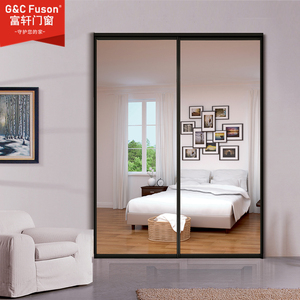
Fuson American Style Patio Doors Sliding Glass Water Proof Frameless Aluminum Sliding Door
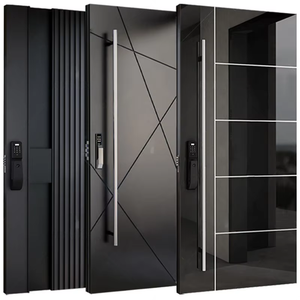
Alucasa Modern Design New Style Entrance Pivot Front Aluminum Door Luxury Villa
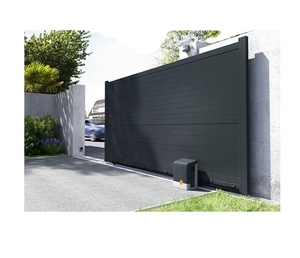
Custom Aluminum Alloy Automatic System Sliding Door Lane Door Sliding Door
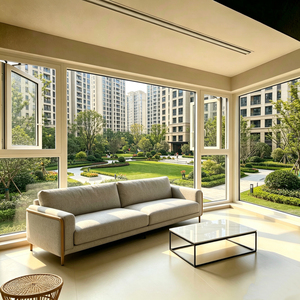
Modern Villa UV Protection Tempered Double Glass Soundproof Thermal Break Casement Windows
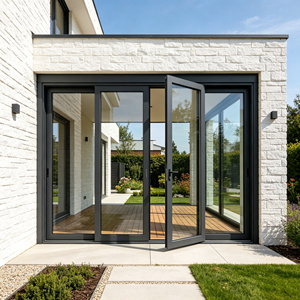
120 Series Heavy Duty Aluminum Lift Sliding Door Double Glazed Tempered Glass Large Panel
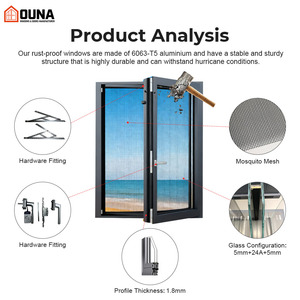
OUNA NFRC Thermal Break Energy Efficient Swing Tilt and Turn Casement Windows
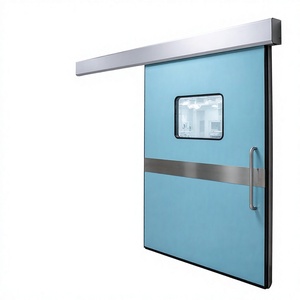
Cleanroom Sliding Door Medical Isolation Door Hybrid System for Hospital ICU OT
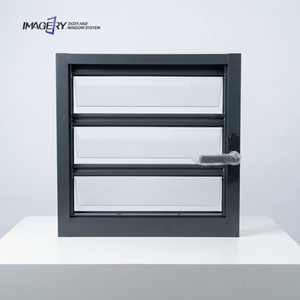
High Quality Aluminium Glass Louvre Window Sound Insulation Weather Resistant
Aero-Thermal Physics and Regulatory Compliance in Louvre Windows
Evaluating structural deflection under extreme pressure differentials, discharge coefficients (Cd), European harmonized standard EN 13659, and CE execution protocols.
Harmonized Standards: EN 13659, EN 14351-1, and CE Marking Protocols
For architectural specifiers, mechanical consultants, and facade engineers across the European Economic Area, the UK, and Australasia, specifying aluminium louvre windows requires adherence to stringent structural and thermodynamic validations. Under the Construction Products Regulation (EU CPR No 305/2011), louvres operating as exterior building envelopes must bear legitimate CE markings based on Harmonized European Standard EN 13659 (Shutters and external blinds - Performance requirements including safety) and EN 14351-1 (Windows and external pedestrian doorsets).
Achieving genuine CE certification requires thorough testing by third-party notified bodies covering: wind load resistance up to Class 6 (≥ 400 Pa up to cyclonic 4,500 Pa under customized testing), operating effort classes under continuous duty cycles (EN 12046-1), air permeability classes (EN 12207), and watertightness under dynamic pneumatic pressure (EN 12208). Our manufacturing framework at Guangdong Dejiyoupin Doors and Windows Co., Ltd. integrates full Factory Production Control (FPC) audit mechanisms, guaranteeing that every extruded 6063-T6 architectural profile satisfies dimensional tolerances aligned with EN 12020-2 and structural deflection criteria of L/175 or L/250 under peak design load conditions.
| Performance Characteristic | Test Methodology / Standard | Certified Performance Value | Engineering Significance |
|---|---|---|---|
| Wind Load Resistance | EN 1932 / AS 2047 (Clause 2.3.1) | Class 6 (> 4,500 Pa Ultimate) | Permits installation in high-rise coastal facades and cyclone-prone categories. |
| Discharge Coefficient ($C_d$) | EN 13030 / BS 476 | Class 2 ($C_d$ = 0.32 – 0.38) | Quantifies aerodynamic efficiency for natural displacement and smoke extraction. |
| Thermal Transmittance ($U_w$) | EN ISO 10077-1 / EN ISO 10077-2 | 1.8 – 2.4 W/(m²·K) (Thermal Break) | Reduces building heating/cooling loads via polyamide PA66 GF25 thermal barriers. |
| Acoustic Attenuation ($R_w$) | EN ISO 10140-2 / ISO 717-1 | Up to 34 dB (Dual-Glazed Blade) | Dampens environmental decibel intrusion across dense urban transportation corridors. |
| Operating Durability | EN 14248 / EN 12046-1 | 20,000+ Mechanical Actuation Cycles | Assures continuous functional integrity under building automation and BMS operation. |
Fluid Dynamics: Aerodynamic Free Area and Water Penetration Control
A common failure mode in lower-tier louvre sourcing is the miscalculation between geometric free area and true aerodynamic effective free area ($A_e$). Standard louvres may exhibit a geometric opening ratio of 60%, but due to turbulent boundary layer friction around the blade tips, the actual coefficient of discharge ($C_d$) drops dramatically, starving passive cooling designs of necessary volumetric airflow.
DERCHI’s aerodynamic blade configurations utilize curved hydrofoil and dual-chamber hollow profile extrusions that reduce vortex shedding and drag coefficient ($C_L/C_D$ ratio). Simultaneously, our integrated internal drainage channels and secondary EPDM drainage flutes prevent capillary water migration even under negative atmospheric draw. When paired with high-performance marine-grade architectural seals, our CE certified aluminium louvre window assemblies prevent water ingress up to Class 9A (600 Pa) under severe laboratory driving-rain simulation.
Future Procurement Trends for Architectural Louvre Systems (2025–2030)
Strategic supply chain dynamics shaping commercial tender schedules, carbon emission reductions, and automated facade engineering across tier-one contractors.
Decarbonization & Low-Carbon Metallurgy
International green building rating systems (LEED v4.1, BREEAM, Green Star) are mandating comprehensive Environmental Product Declarations (EPD). Tier-one developers are shifting procurement specifications toward secondary recycled billets (> 75% recycled aluminium content) and smelted hydropower-based ingots to minimize embodied carbon per square meter of facade.
BMS-Connected Mechatronic Actuation
Manual toggle handles are increasingly superseded by 24V DC micro-linear brushless actuators integrated directly with Building Management Systems (BMS). Using KNX, BACnet, or Modbus protocols, dynamic louvres autonomously modulate pitch based on interior $CO_2$ sensor spikes, solar zenith tracking, and ambient enthalpy calculations for optimized passive cooling.
Multi-Hazard Resilience & Cyclone Mitigation
Extreme meteorological events are driving coastal specifications toward dual-rated fenestration assemblies capable of handling sustained cyclic wind loading, large missile impact testing (ASTM E1996 / AS/NZS 1170.2), and bushfire flame mitigation (BAL-40 and BAL-FZ ember resistance via integrated stainless micro-mesh).
Technological Evolutions in Louvre Architecture
How proprietary extrusion geometries, multi-stage surface treatments, and composite thermal breaks are eliminating traditional performance compromises.
1. Thermal Barrier Integration in Structural Blades
Historically, aluminium louvre assemblies represented major thermal bridges across building envelopes, rendering them unusable in cold-climate or strictly regulated energy codes. Contemporary systems overcome this via roll-crimped, fiberglass-reinforced Polyamide (PA66 GF25) thermal breaks inserted directly into both frame profiles and structural blade holders. This structural break isolates exterior metal faces from internal conditioned rooms, lowering convective transfer and completely preventing condensation issues in high-humidity internal conditions.
2. Advanced Metallurgy and Architectural Surface Treatments
High-exposure coastal and chemical industrial environments demand advanced finishing chemistries. Our manufacturing base leverages 6063-T6 and 6061-T6 structural alloys treated with:
- Marine-Grade AAMA 2605 Fluorocarbon (PVDF): 3-coat, 2-bake systems containing ≥ 70% Kynar 500 resin, providing resistance against 4,000+ hours of continuous neutral salt spray (ASTM B117) and chalking resistance under extreme UV exposure.
- Architectural Anodizing (Class I - 25 Microns): Electro-chemically grown oxide matrices exceeding Qualanod specifications, ensuring scratch resistance and metallic luster without the risk of filiform corrosion.
- Micro-Textured AkzoNobel Super-Durable Powders: Environmentally friendly VOC-free electrostatic coatings meeting Qualicoat Class 2 performance with superior gloss retention.
3. Acoustic Aerofoil Cavity Dampening
Urban density demands that exterior ventilation elements do not act as auditory conduits for traffic and industrial noise. DERCHI's proprietary acoustic louvre line utilizes hollow aerofoil blades injected with sound-absorbent, non-combustible hydrophobic mineral wool insulation (density 60–80 kg/m³) combined with micro-perforated lower blade skins. When sound waves hit the blade cavity, acoustic energy is dissipated into thermal micro-motion within the mineral matrix, realizing a weighted sound reduction index ($R_w$) up to 34 dB while maintaining open-area airflow paths.
Industrial Scale, In-House Quality & Global Delivery
Guangdong Dejiyoupin Doors and Windows Co., Ltd. (DERCHI) operates one of Southern China's most comprehensive, certified smart fenestration production networks.
180,000m² Production Base
Foshan-based smart manufacturing campus with automated CNC 5-axis profile milling centers, automated thermal break crimping, and computerized double-head miter saws guaranteeing tolerances within ±0.2mm.
600+ Skilled Craftsmen
A workforce of specialized technicians, facade engineers, and bilingual project managers collaborating with our in-house R&D laboratory to validate cyclic fatigue, hydrostatic resistance, and weld integrity.
Free CAD & BIM Engineering
Comprehensive engineering submittal support. We deliver fully coordinated shop drawings, structural wind load calculation reports, anchor detailing, and Revit BIM models tailored directly to your project schedules.
Global Export Compliance
Export-certified timber crating meeting ISPM 15 phytosanitary treatment. Proven track record supplying commercial towers, hospital cleanrooms, luxury villas, and multi-residential projects across 60+ countries.
Frequently Asked Questions for Architectural Specifiers
Direct technical, commercial, and compliance answers for facade consultants, contractors, and international procurement managers.
Valid CE documentation requires a manufacturer-issued Declaration of Performance (DoP) referencing standard EN 13659 or EN 14351-1, backed by Initial Type Testing (ITT) reports issued by an accredited third-party notified testing laboratory. DERCHI supplies full certified test dossiers detailing wind load classifications, water resistance, and air infiltration for every project batch.
We utilize vulcanized EPDM compression perimeter gaskets combined with internal drainage channels integrated into the vertical jamb extrusions. The blades overlap with inter-blade fin seals that create a tortuous labyrinth seal, neutralizing capillary action and dynamic pressure differentials up to Class 9A (600 Pa) under EN 12208.
Yes. Our motorized louvres can be specified with concealed 24V DC mechanical actuators compatible with all major commercial building automation protocols, including KNX, BACnet, Modbus, and 0-10V analog controllers. Actuator stroke lengths and torque ratings are custom-calculated based on blade weight and design wind loads.
Depending on localized wind pressure requirements, our heavy-duty architectural louvre blades can span up to 2,400 mm for extruded aluminium aerofoils and 1,200 mm for 6mm–10mm toughened glass blades. For higher spans, our engineering department designs structural internal steel stiffeners or concealed intermediate mullions.
Within 1 km of saltwater shorelines, we strictly recommend AAMA 2605 compliant PVDF fluorocarbon finishes with a minimum dry film thickness (DFT) of 40 microns, or Class I 25-micron architectural anodizing. All fixing fasteners must be specified in Marine Grade 316 stainless steel to prevent galvanic corrosion between dissimilar metals.
Upon final sign-off of CAD shop drawings and finish approvals, standard production requires 25 to 35 business days depending on extrusion complexity and motorized hardware integration. FCL container loading is executed directly within our Foshan facility with strict balance and strapping controls.
Engineer Your Facade With Proven Fenestration Authority
Whether you require wind load calculations, BIM models, customized extruded aerofoil profiles, or a competitive quote for an international project schedule, our engineering team is ready to assist.
Contact Us