Engineered Aluminium Glass External Door Systems
Explore our flagship certified exterior entrances, sliding glass stacks, and architectural pivot systems. Manufactured with 6063-T6 architectural aluminium extrusions, multi-point hermetic seals, and high-performance Low-E thermal units.
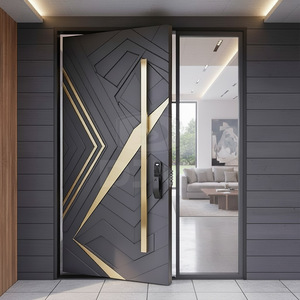
American Villa Luxury Black Aluminium Wood Irregular Entrance Pivot Door
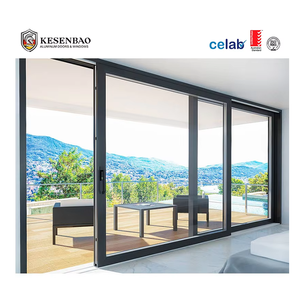
AS2047 Australia Balcony Aluminium Double Tempered Glass Sliding Stacker Door
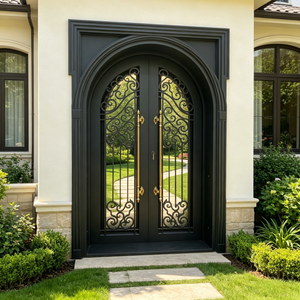
Impact Resistant Architectural Entrance Door AAMA Tested Hurricane Glazing
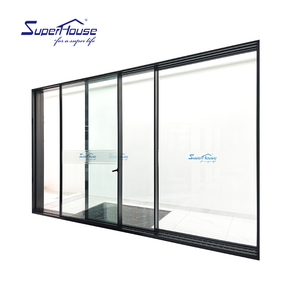
Ultra Narrow Frame Aluminium Sliding Door Double Glazed Soundproof System
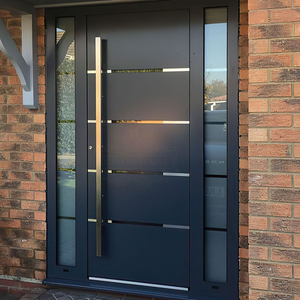
Luxury Modern Design Anti-Theft Exterior Villa Aluminium Entry Front Door
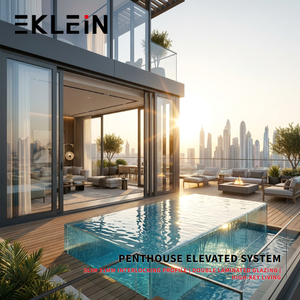
French Style Aluminium Internal Grid Sliding External Patio Glass Door
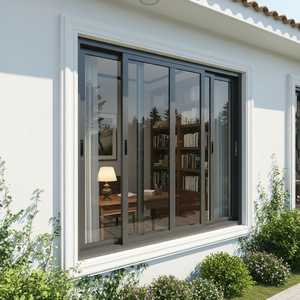
DERCHI Acoustic Double Glaze Heavy Sliding External Door & Window Suite
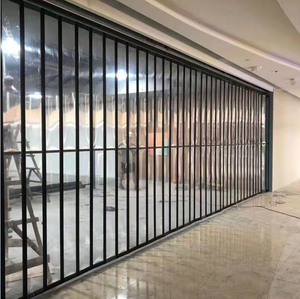
Commercial Architectural Aluminium Folding Sliding Door Storefront Facade
Technical Mandates for CE Certified External Aluminium Door Systems
In modern high-performance building envelopes, an exterior glass door is no longer merely a movable barrier—it functions as an active structural facade element subjected to dynamic wind pressure, severe cyclic weather loads, strict acoustic decibel attenuation thresholds, and stringent whole-fenestration energy ratings ($U_w$). Within the European Union, the CPR (Construction Products Regulation No. 305/2011) and the harmonised product standard EN 14351-1:2006+A2:2016 dictate mandatory CE marking criteria for external pedestrian doorsets and glazed assemblies.
For international real estate developers, facade engineers, and volume procurement directors across Europe, Australia (AS 2047 / AS 1288), and North America (AAMA / NAFS / ASTM), specifying an overseas manufacturing partner requires forensic due diligence. Extrusion alloy chemistry, thermal-break continuity using polyamide strips (PA66 GF25), glass edge seal longevity, water tightness under driving rain, and anti-intruder structural security classifications (EN 1627 RC2 to RC4) must all be verified by accredited third-party laboratories.
Guangdong Dejiyoupin Doors and Windows Co., Ltd. (DERCHI) operates one of Asia's most sophisticated facade extrusion and fenestration fabrication hubs in Shishan Town, Foshan. By synthesizing computerised automated CNC 5-axis profile machining centers, in-house horizontal and vertical electrostatic powder-coating lines, and robotic insulated glass unit (IGU) secondary structural silicone sealing, DERCHI bridges the gap between boutique European custom craftsmanship and industrial-scale B2B export capacity.
25 Years of Precision Manufacturing Behind Global Architectural Projects
Founded in Foshan, China's architectural aluminium manufacturing capital, DERCHI has consistently ranked among the nation's Top 10 fenestration and door engineering brands. Operating across an integrated 180,000 m² footprint with more than 600 specialized facade technicians, we deliver end-to-end quality assurance certified under ISO 9001, ISO 14001, CE EN 14351-1, and Australia's AS 2047 standard.

Global Procurement & Architectural Engineering Trends
Facade design is experiencing an unprecedented structural and environmental evolution. Project specifiers who understand these shifts can eliminate redesign overhead and prevent project non-compliance.
1. Ultra-Low Carbon & Passive House $U$-Values
Stringent European EPBD (Energy Performance of Buildings Directive) updates mandate whole-door thermal transmittance values $U_w \le 0.8\text{ W/m}^2\text{K}$. Global developers are shifting from standard thermal breaks to continuous multi-chamber polyamide struts infused with aero-gel insulation and triple-glazed warm-edge krypton/argon cavity units.
2. Oversized Glass Spans with Concealed Pockets
Architects are pushing the boundaries of daylight admission with oversized sliding doors exceeding 4000mm in panel height and 1000kg in sash mass. Slim-frame minimalist systems featuring concealed perimeter frames recessed into finished floor screeds and head ceilings are becoming standard for luxury waterfront estates.
3. Hurricane Impact & Severe Cyclic Wind Testing
With erratic climatic anomalies intensifying, export doors must now satisfy dual standards: CE air/water tightness alongside severe hurricane missile impact protocols (AAMA 501 / ASTM E1886/E1996 and AS 2047 N6 rating). SGP (SentryGlas®) ionoplast interlayers are replacing conventional PVB to prevent delamination under extreme wind pressure.
4. Biometric Access & Smart Building Integration
Exterior entry doors are transitioning into IoT-enabled security portals. High-end procurement schedules demand fully integrated motorized concealed multipoint lock mechanisms, fingerprint and facial biometrics, dry-contact automation linking to BACnet/KNX smart home automation protocols, and hidden perimeter status sensors.
5. Direct-from-Factory Turnkey Procurement
To eliminate intermediary markups (typically 35%–55%) and mitigate communication errors across multiple job sub-contractors, global commercial developers are establishing direct B2B supply lines with tier-1 Chinese manufacturers capable of providing certified test reports, structural calculations, and CAD fabrication drawings.
6. Marine-Grade C5-M Surface Coatings
Coastal and offshore luxury villa projects require surface protection against salt spray and intense UV degradation. Specifications are transitioning to Qualicoat Class 2 / AAMA 2605 compliant PVDF fluorocarbon coatings, withstanding over 4,000 hours of continuous neutral salt spray testing without blistering or chalking.
Technical Testing Benchmarks: European & International Standards
When procuring architectural aluminium glass external doors, specifiers must review verified laboratory test reports rather than generic marketing brochures. Below is a comparative engineering matrix detailing DERCHI's performance parameters against European (EN) and Australasian (AS) regulatory mandates:
| Test Parameter | Standard Reference | Regulatory Baseline | DERCHI Certified Value | Structural Significance |
|---|---|---|---|---|
| Air Permeability | EN 12207 / AS 2047 | Class 2 (300 Pa) | Class 4 (600 Pa) | Prevents draft leakage, minimizes HVAC thermal loss in winter. |
| Water Tightness | EN 12208 / AS 2047 | Class 4A (150 Pa) | Class 9A / E1050 (1050 Pa) | Hermetic resistance under extreme storm and wind-driven monsoon rains. |
| Wind Resistance | EN 12210 / AS 2047 | Class C2 (800 Pa) | Class C5 / N6 (4500 Pa) | Resists cyclic hurricane shear stress without sash deflection or pop-out. |
| Thermal Transmittance | EN ISO 10077-1/2 | $U_w \le 2.0\text{ W/m}^2\text{K}$ | $U_w \le 1.1\text{ W/m}^2\text{K}$ | Achieved via continuous 34mm PA66 GF25 thermal breaks and argon IGUs. |
| Acoustic Insulation | EN ISO 717-1 | $R_w \ge 28\text{ dB}$ | $R_w \ge 42\text{ dB}$ | Acoustic laminated glass dampens traffic noise in urban hotel and villa zones. |
| Burglar Resistance | EN 1627 - EN 1630 | RC 1 | RC 3 / RC 4 Optional | Multi-point mechanical deadbolts, anti-drill plates, and laminated security glass. |
*All performance data are derived from third-party laboratory test reports conducted by accredited testing institutes (including Intertek, TÜV Rheinland, and national construction quality supervision testing centers).
B2B Procurement & Engineering FAQ
Direct technical answers addressing common due-diligence questions asked by facade engineers, quantity surveyors, and project developers importing exterior doors from China.
What specific CE documentation does DERCHI supply for European customs and building control?
How do you ensure zero water infiltration on flush-sill sliding and large pivot doors?
What alloy compositions and thermal barrier technologies are used in your profile extrusions?
Can DERCHI engineer doors to comply simultaneously with CE, AS 2047, and US Florida Building Code (AAMA)?
What are the logistics, crating standards, and transit damage guarantees for ocean freight?
How are warranty claims, hardware replacements, and on-site technical issues resolved overseas?
Initiate Your Custom Architectural Door Specification
Send your project schedules, CAD drawings, or tender specifications. Our senior facade engineering team provides comprehensive shop drawings, structural calculations, and factory-direct pricing within 24 hours.