Featured CE-Certified Double Entry Doors & Architectural Fenestration
Engineered for luxury residential villas, high-traffic commercial lobbies, and modern hospitality developments requiring supreme thermal barrier performance and anti-burglary security.
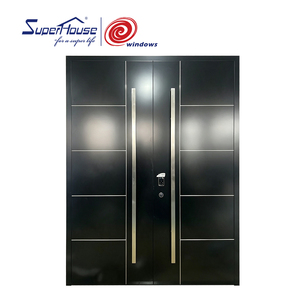
Modern Style Aluminum Double Entry Door Custom Design Exterior Front Door With Smart Lock Long Pull Handle For Luxury Villa
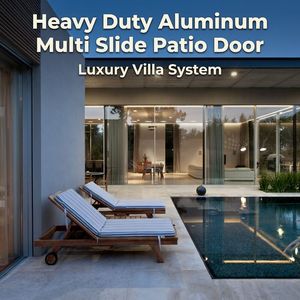
Heavy Duty Aluminum Multi Slide Patio Door for Hotel Luxury Villa German Hardware Ultra Slim Sightline Minimalist Double Glazed
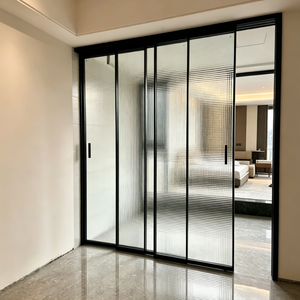
Modern Design Aluminum Frame Custom Art Glass Kitchen Living Room Sliding Door Ultra-thin Double-layer Glass Indoor Sliding Door
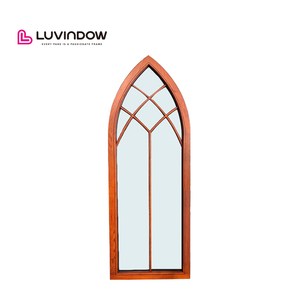
Modern House Designs Wooden Aluminium Casement Arch Window Custom Special Shape Glass Windows
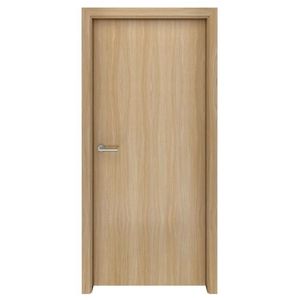
CBMmart White Oak Veneer Stain Grade Modern Hotel Room Wood Door Designs With Metal Aluminum Strip Inlay For Hospitality Project
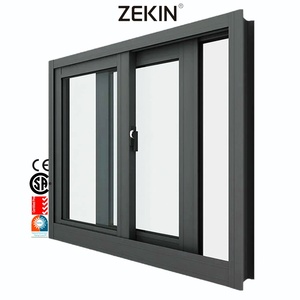
ZEKIN Modern Aluminium Laminated Glass Window Blackout Sound Absorbing Sliding Windows Steel Frame for Master Bedrooms Living
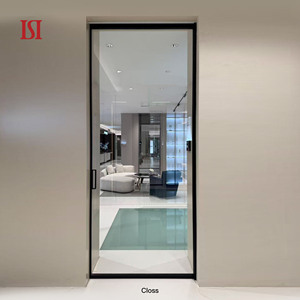
Recessed Aluminum Tempered Glass Pocket Sliding Door Hennissy STARLIGHT Slim Frame Space Saving Modern Minimalist Decoration
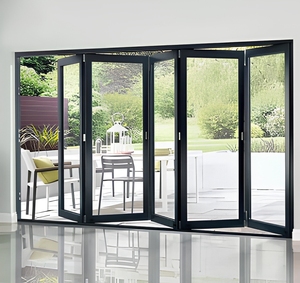
Bi Fold Aluminum Modern Double Tempered Glass Exterior Patio Veranda Folding Doors with Germany Brand Hardware
Engineering Specifications & Structural Mechanics of CE Certified Aluminium Double Front Doors
An authoritative technical analysis for architectural specifiers, façade consultants, and commercial B2B procurement managers regarding safety compliance, thermal insulation, and mechanical longevity.
Architectural entrance systems represent a critical intersection between structural integrity, building envelope thermal efficiency, and security engineering. When specifying CE Certified Aluminium Double Front Doors, global procurement teams must navigate precise performance mandates codified under the European standard EN 14351-1:2006+A2:2016. This framework governs external pedestrian doorsets, evaluating parameters such as wind load resistance, air permeability, water tightness, thermal transmittance ($U_d$ values), and load-bearing capacity of safety devices.
1. Metallurgy & Extrusion Profile Engineering
The structural backbone of high-performance double front doors relies on primary aluminum extrusions manufactured from high-purity alloy matrix formulations—predominantly 6063-T5 or 6063-T6 architectural grade aluminum. Unlike standard residential door frames, heavy-duty double entry door assemblies require profile wall thicknesses ranging between 2.0mm to 3.0mm at load-bearing hinge junctions and locking stile zones. This structural density prevents torsional flexing, frame sag, and wind-induced deflection under severe ambient load conditions.
Multi-Chamber Geometry
Extruded profiles utilize complex internal multi-chamber cavities designed to dissipate sound vibration waves and house thermal insulation barriers while maintaining exceptional structural rigidity against lateral displacement.
Polyamide Thermal Break
Interlocking PA66-GF25 (25% glass fiber reinforced polyamide) thermal barriers physically separate the exterior and interior aluminum profiles, mitigating thermal bridging and lowering overall system $U_d$ values.
EN 1627 RC2 / RC3 Security
Reinforced locking points, steel anti-drill plates, and high-tensile corner cleat crimping enable double entrance doors to resist mechanical breach attempts according to European anti-burglary standards.
2. Thermal Transmittance ($U_d$) & Glazing Mechanics
Modern building codes across Europe (EPBD directives), North America (IECC standard), and Oceania (NCC / AS 2047) enforce strict energetic limits on exterior fenestration. A CE-marked double front door must demonstrate validated thermal transmittance values, often requiring $U_d \le 1.2 \text{ W/m}^2\text{K}$ for low-energy and Passive House compliant architectural projects.
To achieve these figures, manufacturers combine thermal break profile cavities with high-performance Insulated Glass Units (IGU) or solid insulated sandwich panels. IGU configurations typically comprise double or triple toughened safety glass panels ($6\text{mm Low-E} + 12\text{mm Argon Gap} + 6\text{mm Toughened}$), fitted with warm-edge composite spacers and double-EPDM weather sealing gaskets around the full door perimeter and interlocking meeting stiles.
3. Structural Performance Test Metrics (EN Standard Benchmarks)
When reviewing factory Declaration of Performance (DoP) documentation during B2B supplier audits, buyers should reference the following technical testing thresholds verified under EN laboratory conditions:
| Performance Parameter | Testing Standard | CE Certification Level / Grade | B2B Engineering Relevance |
|---|---|---|---|
| Resistance to Wind Load | EN 12210 | Class C3 / C5 (up to 2400 Pa) | Prevents frame deformation and seal displacement in high-rise or coastal storm zones. |
| Watertightness | EN 12208 | Class 9A / E900 (Unlocked / Driven Rain) | Ensures zero water penetration under driving rain pressure up to 900 Pa. |
| Air Permeability | EN 12207 | Class 4 (Highest Seal Grade) | Minimizes unwanted exfiltration/infiltration, enhancing HVAC operational efficiency. |
| Thermal Transmittance ($U_d$) | EN ISO 10077-2 | $0.9 - 1.3 \text{ W/m}^2\text{K}$ | Meets zero-carbon and stringent green building rating mandates (LEED / BREEAM). |
| Acoustic Attenuation ($R_w$) | EN ISO 140-3 | $38 \text{ dB} - 45 \text{ dB}$ sound reduction | Dampens ambient street noise for luxury hotels, private villas, and urban developments. |
| Mechanical Durability | EN 12400 | Class 8 (1,000,000 operational cycles) | Validates hinge, pivot, and lock gear reliability for heavy commercial foot traffic. |
Future Procurement & Architectural Trends in Exterior Double Door Systems (2025–2030)
Strategic insights for commercial developers, importers, and architects planning high-volume sourcing projects in global markets.
1. Smart Access Control & Motorized Multi-Point Integration
The global luxury real estate and commercial hospitality sectors are rapidly abandoning traditional mechanical key cylinders. Future procurement schedules prioritize biometric fingerprint scanners, facial recognition cameras, integrated LED status strips, and motorized automatic locking systems built directly into the aluminum door profile at the factory level. Pre-wired internal channels inside the door leaf ensure clean cable routing, supporting seamless connection to smart home automation platforms (KNX, Zigbee, Control4).
2. Oversized Leaf Geometries & Hidden Heavy-Duty Pivot Hardware
Architectural demand is shifting away from standard 2.1-meter tall doors toward grand, statement entranceways reaching heights of 3.5 to 4.5 meters. To support double leaves exceeding 250kg per door leaf without sagging, traditional butt hinges are being replaced by floor-recessed hydraulic pivot mechanisms with 3D adjustment capabilities. These concealed pivot systems offer soft-close self-closing action, 90-degree hold-open positioning, and ultra-smooth operation.
3. Low-Carbon Sustainable Extrusions & EPD Transparency
With stringent European carbon border adjustment mechanisms (CBAM) and global ESG investment guidelines, developers are scrutinizing the embodied carbon of aluminum construction components. Top-tier manufacturers are adopting hydro-powered recycled aluminum billets and providing verified Environmental Product Declarations (EPD). Powder coatings are shifting toward Qualicoat Class 2 and Class 3 weather-resistant fluorocarbon (PVDF) formulations designed to resist salt spray corrosion for over 30 years without fading.
4. Flush Zero-Threshold ADA/Universal Accessibility Designs
Inclusive design mandates are requiring entrance doors to eliminate stepped thresholds. Modern double front door engineering incorporates mechanized drop-down bottom seals combined with recessed drain channels. When the door closes, a spring-loaded neoprene gasket automatically deploys downward against a flush threshold plate, maintaining water-tight integrity and acoustic sealing while enabling step-free wheelchair access.
Guangdong Dejiyoupin Doors & Windows Co., Ltd. (DERCHI)
Recognized as one of China’s premier top-10 fenestration manufacturers, DERCHI operates a state-of-the-art 180,000 m² industrial production base in Foshan, Guangdong. Backed by over 25 years of engineering heritage and a workforce of 600+ skilled technicians, DERCHI delivers custom end-to-end door and window solutions for major global projects.
Our comprehensive manufacturing hub houses automated CNC extrusion cutting centers, precision corner-crimping machinery, a dedicated powder-coating line, and an advanced testing laboratory certified for AS 2047, CE, ISO 9001, and UL standards.

Frequently Asked Questions (FAQ) for Global Buyers & Specifiers
Addressing key technical, compliance, custom manufacturing, and international logistics concerns for B2B double door procurement.
Request Architectural Shop Drawings & Factory Direct Pricing
Inquire today to connect with our senior fenestration engineers. Receive a complete CE technical compliance dossier, custom CAD shop drawings, and wholesale manufacturing pricing within 24 hours.