Featured CE-Compliant Aluminium Windows & Architectural Doors
Explore our precision-fabricated portfolio engineered for high wind loads, maximum acoustic attenuation, and superior thermal barrier ratings across international commercial and residential specifications.
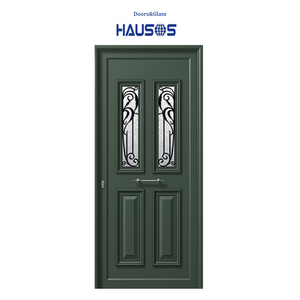
Conventional Aluminum Entrance Security Doors with Crystals and a Black Traditional Neoclassical Character
Cast aluminum alloy reinforced construction featuring multi-point anti-burglary hardware, decorative crystal inserts, and multi-layer corrosion-resistant electro-deposition coatings.
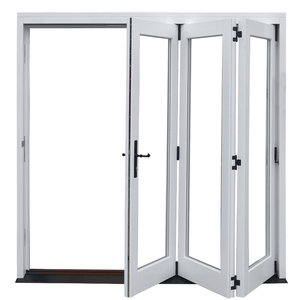
Aluminium Glass Sliding Folding Doors Accordion Folding Doors to Sydney Perth Soundproof Accordion Door
Heavy-duty bottom-rolling bifold system engineered with AS 2047 compliance, dual EPDM weatherseals, and sound-reduction laminated glazing for coastal urban zones.
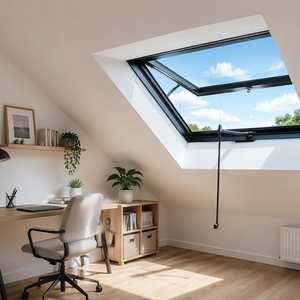
Manual Pitched Roof Skylight | Top-Hung Attic Window | Thermal Break Aluminum Frame | Double Glazed Low-E Glass
CE certified roof fenestration integrated with gas-spring hinges, condensation drain channels, and argon-filled insulated Low-E tempered glass units.
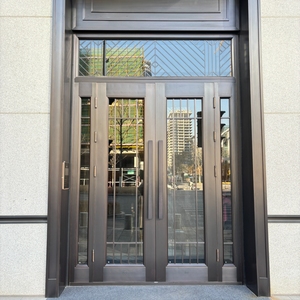
Top grade Commercial Glass Door Aluminum Storefront Door
High-traffic architectural entrance assemblies utilizing 6063-T6 tempered extrusions, concealed hydraulic overhead closers, and Qualicoat-certified durable powder coatings.
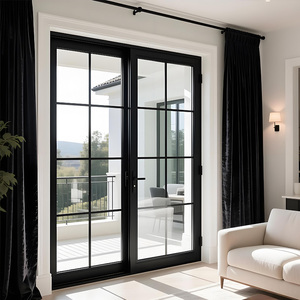
Manufacturer Sliding Doors for Balcony Side Glass Door Australian Style Aluminum Alloy Sliding Doors with Tempered Double Glazed
Constructed for oceanfront high-velocity wind zones (tested to AS 2047 N6), with corrosion-resistant stainless tracks and thermal break multi-chamber barrier profiles.
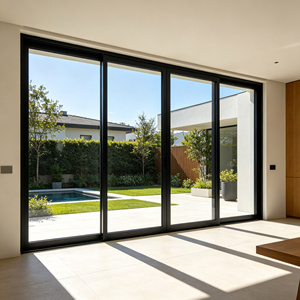
Thermal Break Aluminum Multi Slide Door Glazed Glass Stacking Design Large Opening Custom Size For USA Luxury Homes
Ultra-narrow sightline sliding wall engineered for massive architectural openings, providing flush sill transitions, multi-stack configurations, and superior water resistance.
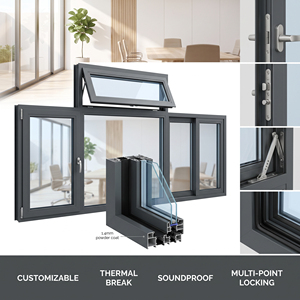
Custom Soundproof Aluminium Frame Windows for Office and Home Thermal Insulation
Engineered multi-cavity thermal break frame profiles integrated with PA66 nylon insulation strips and asymmetric acoustic laminated double glazing for office towers and residences.
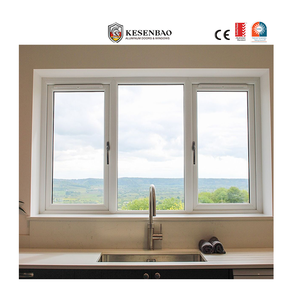
Thermal Break Aluminum Double Casement Windows With Mosquito Nets Tilt Turn Windows For House
Dual-action European tilt-and-turn hardware pairing micro-ventilation with maximum weather-tight perimeter locking and integrated 304 stainless mesh flyscreens.
Need Bespoke Profiles, Wind Load Calculations, or Tailored CAD Shop Drawings?
Our dedicated fenestration facade engineers deliver full structural compliance packages, thermal modeling calculations, and free architectural CAD schedules within 24 hours.
The Engineering Science of Aluminium Surface Coatings & CE EN 14351-1 Compliance
In modern architectural facade design, the intersection of metallurgic durability, thermal separation, and surface treatment integrity determines the lifecycle value of structural glazing. Below is an engineering overview of CE certification frameworks and architectural coating technologies.
CE EN 14351-1 Structural Harmonization
Under the European Construction Products Regulation (CPR 305/2011), exterior fenestration systems must achieve verified CE Marking through independent third-party Notified Bodies. Critical benchmark tests evaluate air permeability (EN 12207 up to Class 4), water tightness under driving rain (EN 12208 up to Class 9A/E1200), and resistance to positive/negative cyclic wind pressures (EN 12210 Class C5). Compliance ensures zero envelope failure across harsh Atlantic and Mediterranean coastal climates.
AAMA 2605 & Qualicoat Class 2/3 Coatings
Standard decorative coatings degrade rapidly under high ultraviolet exposure and salt-spray ionization. Certified architectural aluminum fenestration employs 70% Polyvinylidene Fluoride (PVDF) fluorocarbon liquid finishes or hyper-durable thermoset TGIC-free polyester powder systems. Formulations adhere to AAMA 2605 and Qualicoat Seaside standards, enduring beyond 4,000 hours of continuous acetic acid salt spray (AASS) with negligible color delta (ΔE < 5) over 25 years.
Polyamide Thermal Barrier Technology
Raw aluminum possesses high thermal conductivity (~160 W/m·K), which causes substantial interior cooling/heating loss and condensation. High-performance CE systems counteract this by crimping continuous multi-chamber glass-fiber reinforced polyamide strips (PA66 GF25) between interior and exterior profiles. By decoupling the thermal conduction pathway, overall frame U-values (Uf) drop below 1.2 W/m²K, enabling complete facade energy compliance with Net-Zero and Passive House metrics.
| Performance Criterion | Standard Commercial Grade | CE Certified Architectural Grade | High-Spec Coastal / Marine Grade |
|---|---|---|---|
| Aluminium Alloy & Temper | Recycled 6063-T5 | Primary Billet 6063-T6 / 6061-T6 | Architectural 6063-T6 / 6082-T6 Anti-Corrosion |
| Surface Coating Spec | Standard Anodized (10-15 µm) | Qualicoat Class 1 / AAMA 2604 (60-80 µm) | 70% Kynar 500 PVDF / Qualicoat Seaside Class 2/3 |
| Salt Spray Resistance (ISO 9227) | 500 Hours Neutral Salt Spray | 1,500 Hours CASS / AASS Tested | 4,000+ Hours Acetic Salt Spray (Zero Blistering) |
| Air Tightness (EN 12207) | Class 2 (300 Pa) | Class 3 (600 Pa) | Class 4 (>600 Pa Ultra-sealed EPDM Gaskets) |
| Water Tightness (EN 12208) | Class 4A (150 Pa) | Class 7A (300 Pa) | Class 9A / Exx (Up to 1200 Pa Dynamic Storm Tested) |
| Thermal Transmittance (Uw) | > 2.8 W/m²K (Non-thermal break) | 1.4 – 1.8 W/m²K (Dual Glazed Low-E) | 0.75 – 1.1 W/m²K (Triple Argon + Warm Edge Spacer) |
180,000 m² Integrated Production Facility: Precision at Industrial Scale
Guangdong Dejiyoupin Doors and Windows Co., Ltd. (DERCHI) stands among China's premier top-10 fenestration engineering groups. Spanning 25+ years of dedicated continuous development, our fully modernized manufacturing facility integrates billet pre-treatment, precision extrusion processing, automated horizontal and vertical PVDF coating lines, multi-axis CNC milling, and comprehensive testing laboratories under a singular quality framework.
By controlling every manufacturing phase from raw alloy formulation to automated glass unit lamination, we eliminate vendor markups, minimize manufacturing deviations, and guarantee total traceability. Our quality management system maintains ISO 9001, CE, AS 2047, and UL certifications, backed by comprehensive factory pre-assembly and full crating checks before port departure.
- Direct Engineering Collaboration: Bilingual facade engineers work directly with your schedule to produce tailored shop drawings and BIM models.
- High-Wind Tested Structural Integrity: Systems tested up to N6 cyclone ratings and severe hurricane positive/negative cyclic loads.
- Strict Export Grade Crating: Anti-scratch peel-off film, multi-layer corner protectors, and IPPC-certified fumigated structural wooden crates.

Future Procurement Trends in Architectural Aluminium Glazing
As sustainable building regulations, building envelope decarbonization, and smart automation reshape global commercial architecture, procurement directors must stay ahead of the following macro trends.
1. Low Embodied Carbon & Circular Aluminum
International green building rating systems (LEED v4.1, BREEAM, Green Star) are transitioning from strictly operational energy efficiency to full lifecycle Embodied Carbon caps. Global developers are prioritizing aluminium extrusions smelted using renewable hydro-power, yielding an embodied footprint below 4.0 kg CO₂e/kg Al (compared to the historical industry average of ~16.0 kg). B2B procurement specifications increasingly require verifiable Environmental Product Declarations (EPDs) with verified recycled content.
2. Prefabricated Unitized Facade Systems
Escalating on-site labor costs in North America, Western Europe, and Australasia have catalyzed a structural shift away from field-glazed stick framing toward factory-glazed, fully unitized curtain wall cassettes and pre-hung window sub-assemblies. Sourcing turnkey modules with integrated perimeter flashing, dry silicone structural glazing, and pre-adjusted European hardware reduces installation timelines by up to 60% while mitigating weather-induced job-site defects.
3. Smart Home IoT & Concealed Automation
High-end residential villas and luxury commercial spaces demand uninterrupted minimalist sightlines paired with motorized operation. Modern procurement frameworks mandate internal profile routing for concealed multi-point electric actuators, magnetic sensor contacts, electrochromic dynamic solar tinting glass (switchable smart glass), and automated building management system (BMS) integration via KNX, Zigbee, or BACnet communication protocols.

Streamlining Factory Audits via Virtual Inspection
In cross-border B2B procurement, verifying true manufacturing infrastructure is essential. To eliminate travel friction for overseas procurement directors, developers, and architects across Europe, the Americas, and Oceania, we offer an interactive 360° VR factory tour alongside live video walkthroughs.
Inspect our automated profile cutting centers, robotic glass seal bonding machines, curing ovens, and load testing rigs from your desk. Every manufacturing phase is backed by standardized digital inspection records, dimension verification reports, and pre-shipment photo documentation.
Frequently Asked Questions: Global Sourcing & Compliance
Essential answers for project managers, structural engineers, and general contractors specifying and importing CE certified aluminium coated windows and architectural systems.
What documentation proves genuine CE compliance under EN 14351-1?
Genuine CE certification requires a formal Declaration of Performance (DoP) issued under EN 14351-1:2006+A2:2016, supported by an Initial Type Testing (ITT) report from an accredited European Notified Body (NB). This includes verified laboratory data for wind load resistance (EN 12210), water tightness (EN 12208), air permeability (EN 12207), and acoustic performance (EN ISO 717-1). We supply complete certification files for review by your municipal certifiers or building authorities.
How does PVDF fluorocarbon coating compare to traditional powder coating?
Standard architectural powder coating (Class 1) utilizes polyester resin that offers good general durability but begins to chalk and fade under severe UV radiation after 5–7 years. PVDF (Polyvinylidene Fluoride) employs a 70% fluoropolymer resin matrix with covalent carbon-fluorine bonds—one of the strongest chemical bonds known. It complies with AAMA 2605, resisting chemical attack, acid rain, industrial pollutants, and coastal salt-spray for over 25 years without degradation.
Can you manufacture oversized custom dimensions and pivot systems?
Yes. Our heavy-duty architectural profiles and CNC machining lines support casements, multi-slide doors up to 3.8 meters in single-panel height, and oversized architectural pivot doors weighing up to 500 kg per sash. We calculate glass deflection and wind pressure resistance per local building codes, integrating German-engineered pivot hinges and multi-point perimeter compression seals.
How do you guarantee glass safety and thermal performance compliance?
All glazing units are processed under EN 12150 (tempered safety glass) and EN 12600 (impact resistance). Double and triple insulated glass units (IGUs) are built with warm-edge composite spacers, dual silicone structural sealants, and 90%+ argon gas filling. Low-emissivity (Low-E) pyrolytic or magnetron sputtering vacuum coatings are positioned on surface #2 or #3 to achieve solar heat gain coefficients (SHGC) and U-values suited to your climate zone.
What are your standard export lead times and shipping packaging specs?
Custom engineered orders typically require 25 to 35 business days from final CAD shop drawing sign-off to container loading. Every window sash and outer frame is wrapped in anti-scratch protective film, corner-guarded with high-density EPE foam, strapped, and packed inside fully enclosed, fumigated marine-grade plywood crates suitable for FCL or LCL ocean freight with desiccants to prevent transit condensation.
How does your technical team support project installation remotely?
Every shipment includes labeled, project-indexed installation drawings, sub-frame anchoring schedules, drainage weep-hole schematics, and perimeter flashing details. Our bilingual engineering team provides direct video consultation and technical support throughout your installation, ensuring perimeter expansion joints, flashing membranes, and hardware adjustments match design tolerances.
Tested to International Standards: AS 2047, CE & ISO Quality Control
Compliance across distinct regulatory jurisdictions is a hallmark of DERCHI fenestration engineering. Our products undergo rigorous testing across independent NATA-accredited and European Notified Body laboratories.
In Australia, our door and window assemblies achieved the stringent AS 2047 standard with an exceptional N6 maximum wind pressure rating, water penetration resistance up to 450 Pa, and verified operating forces. In Europe, our full lines carry complete CE EN 14351-1 declarations, backed by factory production control (FPC) verified under ISO 9001 and ISO 14001 environmental frameworks.


Accelerate Your Project with Certified Architectural Fenestration
Connect directly with our senior fenestration engineering team. Submit your architectural elevations, window schedules, or tender documents to receive free CAD shop drawings, structural wind load evaluations, and direct factory pricing within 24 hours.