Architectural Whitepaper & Export Schedule
Engineering Structural Integrity: CE Mandates & Composite Systems
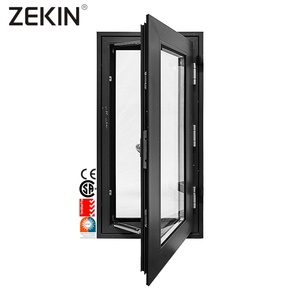
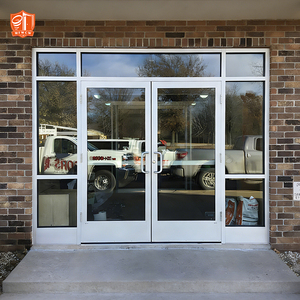
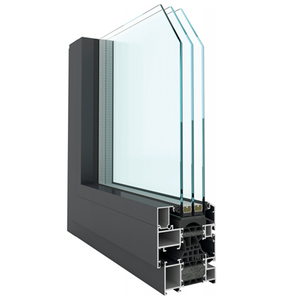
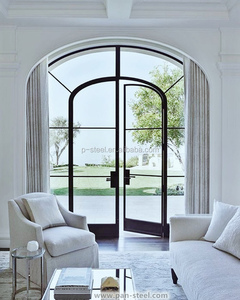
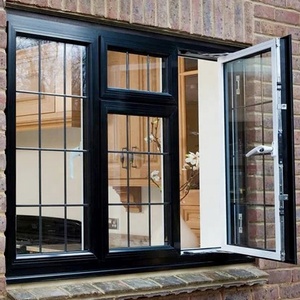
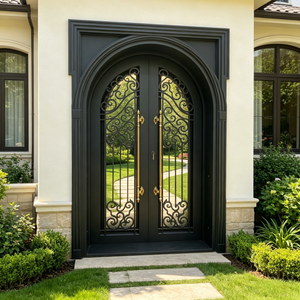
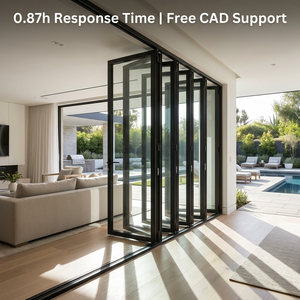
Global architectural facades demand front entrance assemblies that effortlessly unify acoustic suppression, thermal insulation, continuous weathering resistance, and high-level forced entry deterrence. As a prime CE certified aluminium and wood front doors exporter, Guangdong Dejiyoupin Doors and Windows Co., Ltd. (DERCHI) integrates multi-chambered, thermally broken 6063-T6 architectural aluminium frameworks with interior sustainable hardwood veneers and cores. This comprehensive engineering dossier breaks down technical evaluation benchmarks, global specification pathways, operational procurement cycles, and certified system offerings configured for project distributors, structural specifiers, and regional builders.
180,000m²
Manufacturing Footprint
25+
Years Engineering Expertise
600+
Specialized Technicians
100+
Patents & CE/AS Certs
Technological Evolution
Structural Architecture & Future Engineering Trends
The modern aluminium-clad timber fenestration sector has shifted away from purely cosmetic bonding toward mechanically detached, high-performance hybrid assemblies. By isolating thermal movement coefficients, engineering teams prevent warped stiles, internal condensation, and premature seal failure.
Mechanical Clip-System Decoupling
Linear thermal expansion differs vastly between aluminium (approx. 23 × 10⁻⁶ / K) and organic hardwood (5 × 10⁻⁶ / K). Modern systems employ composite nylon clips with sliding tolerances, completely avoiding direct surface adhesive failures under heavy solar exposure.
Polyamide Thermal Barriers
Advanced exterior frames now utilise PA66 GF25 (polyamide reinforced with 25% glass fibre) structural barriers. This isolates extreme external sub-zero or coastal heat regimes, lowering total assembly heat transfer coefficients down to Ud < 0.85 W/(m²·K) for passive housing criteria.
AAMA 2605 & Marine-Grade Fluorocarbon
High salt air environments across coastal Australia and oceanic Europe trigger catastrophic galvanic breakdown in standard anodised layers. Trend-setting exporters integrate multi-layer PVDF/fluorocarbon finishes capable of withstanding beyond 4,000 hours of neutral salt spray testing.
Strategic Procurement Analysis
Future Sourcing Patterns for Commercial & Residential Exporters
Modern commercial builders and multi-family developers have re-engineered their supplier qualification models. Procurement protocols now prioritize documented testing regimens, shop drawing speed, and verified multi-point locking mechanisms over initial quote-level costs.
Compressed CAD/BIM Lead Times
Leading architectural developers integrate IFC and Revit BIM families into early design. Direct-from-factory engineering support that provides bespoke CAD shop drawings within 48 hours drastically eliminates on-site opening discrepancies and construction delays.
Supply Chain Consolidation
Procuring separate entry doors, structural curtain window sets, and internal timber packages introduces split warranty liabilities. High-volume buyers consolidate full fenestration packages into single FCL sea-freight deliveries directly from unified manufacturers.
Smart Lock & Multi-Point Integration
Modern entrance security mandates RC2/RC3 European burglary resistance standards. Modern buyers require factory-calibrated German-engineered auto-locking multi-point systems compatible with dry-contact smart home interfaces and biometric controls.
Factory Direct Manufacturing Capability
DERCHI: Decades of Structural Door Manufacturing Rigour
Guangdong Dejiyoupin Doors and Windows Co., Ltd. operates across a massive 180,000 m² industrial infrastructure in Foshan, China. Ranked among the foremost top-tier entrance door and fenestration manufacturers, DERCHI engineers bespoke aluminium entrance, cast aluminium, glass storefront, and precision-clad timber systems for multi-scale ventures worldwide.
Our production ecosystem eliminates third-party component markups and variable quality gaps. By housing profile extrusion tooling, automated German 5-axis CNC machining centers, electrostatic powder coating lines, and computerized moisture-controlled timber lamination under direct quality supervision, we deliver fully documented compliance for Australian (AS 2047 N6 wind resistance) and European Union (CE EN 14351-1) building codes.


Third-Party Validated
Stringent Compliance Testing & Quality Assurances
A CE certificate represents more than an export stamp; it confirms factory production control (FPC) compliance with harmonised European standards (EN 14351-1) and structural testing validation.
- Acoustic Isolation: Multi-layer sealed timber cores achieving sound transmission class (STC) ratings exceeding 42 dB.
- Watertightness & Air Permeability: Triple EPDM perimeter co-extruded gaskets engineered to Class 4 (EN 12207) air tightness and Class 9A (EN 12208) water resistance.
- Timber Stability Control: Multi-layered finger-jointed engineered white oak, teak, or larch seasoned down to strict 8%–12% internal moisture content to prohibit seasonal split failure.
Technical Help Center
Frequently Asked Technical & Procurement Questions
Clear specifications, engineering methodologies, and export parameters answered directly by our Foshan factory facade technical desk.
How does the CE EN 14351-1 standard govern structural aluminium and timber composite doors?
The CE marking pursuant to EN 14351-1 dictates rigorous mandatory testing protocols for external pedestrian doorsets. Core metrics cover operating forces, thermal transmittance (U-value calculations and hot-box tests), air permeability (EN 1026), watertightness under dynamic pressure (EN 1027), wind load resistance (EN 12211), and load-bearing capacity of safety devices. Our export units provide complete Declaration of Performance (DoP) documentation verified for customs clearance and regional building control sign-offs.
How is differential thermal expansion managed between the outer aluminium shell and inner timber core?
We use proprietary composite sliding clip mounts rather than rigid chemical adhesive or fixed direct fasteners. These heavy-duty nylon connectors anchor into the exterior aluminium extrusion tracks while sliding freely along the timber backing blocks. This engineered float accommodates differing seasonal thermal dimensional variations without shearing internal joints, warping the main door stile, or straining the primary locking latches.
Can DERCHI doors be specified to satisfy Australian AS 2047 and regional cyclone codes?
Yes. Our export profile designs are independently lab-evaluated to AS 2047 standards, having achieved an N6 ultimate design wind pressure rating (surpassing 4,400 Pa). When requested, systems are built with structural heavy-duty perimeter sub-frames, impact-resistant laminated PVB glazing assemblies, and multipoint shoot-bolts suitable for extreme marine exposure throughout northern Australian cyclone bands and Pacific Island ocean fronts.
What timber species are utilized, and how is internal fungal/moisture degradation prevented?
We primarily select radially sawn, multi-layered laminated European White Oak, American Walnut, Larch, and Burmese Teak. The multi-ply timber billets are oven-kilned to a stable 8%–12% internal moisture equilibrium. They undergo automated four-sided vacuum pressure impregnation with water-borne, environmentally non-toxic fungicidal and anti-rot treatments, capped by four coats of flexible water-based microporous ecological finishes that allow natural respiration without peeling.
What export packaging safeguards ensure zero transit damage during long-distance container freight?
Every individual door slab and pre-hung outer frame undergoes automated clean wrapping in peelable protective PE film, heavy corner guards, multiple layers of shock-absorbent pearl cotton, and complete enclosure in fumigated export-grade OSB/solid plywood composite crates. Moisture-absorbing desiccant packs are enclosed inside the vapour-sealed wrapping to prevent sea-freight humidity damage across trans-equatorial maritime shipping corridors.
Connect Directly with Our Façade Engineering Team
Send your door schedules, site wind load targets, and architectural layouts. Receive full CAD shop drawings, glass thermal performance estimates, and project container pricing within 24 business hours.