Certified Window & Glazing Door Portfolio
Engineered for commercial towers, luxury estates, and high-performance sustainable residences. Each system complies rigorously with CE structural, acoustic, and thermal barrier directives.
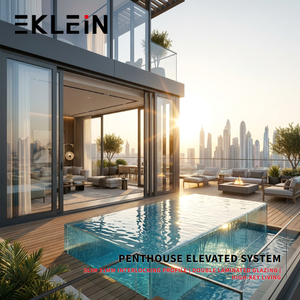
French Style Aluminum Sliding Doors with Grid Design Patio Door
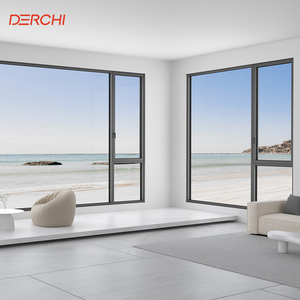
DERCHI Thermal Break Aluminum Casement Windows Energy Efficient
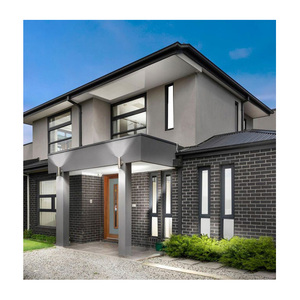
AS2047 Australian Standard Exterior Aluminium Double Doors
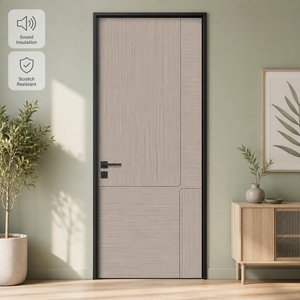
Custom Wood Aluminum Solid Core Architectural Doors
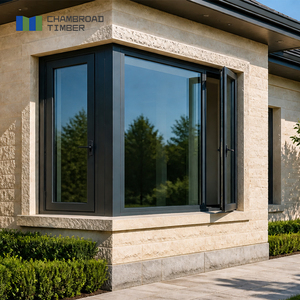
CHAMBROAD Passive House Aluminum Clad Wood Tilt & Slide
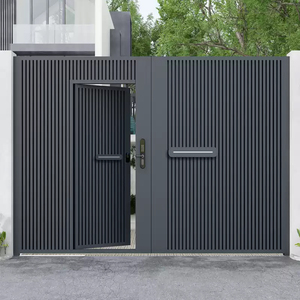
Modern Automatic Swing/Sliding Aluminium Alloy Villa Entry Door
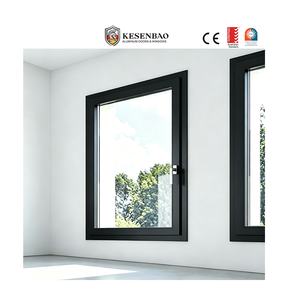
NFRC Custom Double Glazed Aluminum Casement with Screens
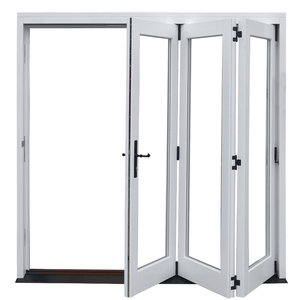
Soundproof Aluminium Glass Sliding Accordion Folding Doors
Institutional Manufacturing Backbone: Foshan Engineering Facility
Guangdong Dejiyoupin Doors and Windows Co., Ltd. (DERCHI) operates one of Southern China's most advanced fenestration manufacturing bases, delivering end-to-end quality assurance from alloy billet casting to computerized crating.
Full Vertical Integration: From Extrusion Billet to Glazed Unit Assembly
Global procurement directors and commercial facade consultants encounter high project failure rates when working with fragmented assemblers. DERCHI eliminates multi-tier subcontracting vulnerabilities by integrating architectural design, extrusion die creation, CNC precision machining, computerized thermal barrier insertion, automated insulating glass unit (IGU) fabrication, and final testing under a single roof.
Operating under ISO 9001:2015 quality control management, our automated CNC milling lines ensure profile fabrication tolerances within ±0.2mm. Every corner crimp is mechanically injected with dual-component polyurethane structural adhesive, establishing impenetrable airtight seals and structural deflection resistance tested up to 5,000 Pa.

EN 14351-1 Compliance Matrix & Laboratory Testing Metrics
For architectural specifiers and import distributors, CE marking is not merely a label—it represents a mandatory Construction Products Regulation (EU No 305/2011) legal covenant backed by an accredited Declaration of Performance (DoP).
| Performance Dimension | Harmonized Standard | DERCHI Test Performance | Engineering Significance for Specifiers |
|---|---|---|---|
| Thermal Transmittance ($U_w$) | EN ISO 10077-1 / EN ISO 10077-2 | 0.78 – 1.4 W/(m²·K) | Calculated through finite element simulation. Enables Passivhaus and ultra-low energy compliance across EU zones. |
| Resistance to Wind Load | EN 12210 / EN 12211 | Class C5 / B5 (2000 Pa) | Frontal deflection limited to less than 1/300 of the span at maximum hurricane pressures; prevents glass dislocation. |
| Watertightness Under Pressure | EN 12208 (Static Pressure) | Class E900 – E1200 | Zero water leakage at driving air pressures exceeding 900 Pa to 1200 Pa, essential for coastal high-rise fenestration. |
| Air Permeability | EN 12207 (Airtightness) | Class 4 (600 Pa Max) | Limits uncontrolled infiltration to < 3 m³/(h·m²), minimizing mechanical HVAC load and eliminating condensation cold bridges. |
| Acoustic Attenuation ($R_w / C; C_{tr}$) | EN ISO 717-1 / EN ISO 10140-2 | Up to 45 (-1; -4) dB | Asymmetric laminate glass (e.g., 6mm Low-E + 16Ar + 4mm + 0.76PVB + 4mm) neutralizing low-frequency urban traffic noise. |
| Load-Bearing Capacity of Safety Devices | EN 14608 / EN 14351-1 Clause 4.8 | Threshold Passed (350 N) | Ensures stays, hinges, and restrictors retain the sash securely during severe manual forced opening or extreme pressure shocks. |
| Dangerous Substances Release | EN 14351-1 Clause 4.6 | Compliant / Zero VOC | Powder coatings and sealants verified free from lead, hexavalent chromium, and phthalates, fulfilling REACH chemical safety directives. |

Dual Compliance: Harmonizing European CE with Oceanic AS 2047 Standards
Cross-continental developers frequently struggle with suppliers who fail to translate European certification into regional building approvals. DERCHI bridges this regulatory gap. For export markets in Australia, New Zealand, and the Pacific Rim, our window lines are independently tested to AS 2047 (Windows in Buildings) and AS 1288 (Glass in Buildings).
Our heavy-duty profiles have demonstrated structural deflection compliance under N6 cyclonic design wind pressures exceeding 4.5 kPa. This cross-standard qualification protects importers from catastrophic re-testing costs, onsite delays, or council building surveyor rejections.
Future Procurement Trends in Aluminium & Glazing (2025–2030)
The international facade industry is undergoing a paradigm shift driven by stringent carbon taxation (CBAM), thermal efficiency mandates, and minimal architectural design preferences.
Low-Carbon Aluminum & CBAM Preparedness
As the European Union’s Carbon Border Adjustment Mechanism (CBAM) phases in, imported aluminium windows will face heavy border tariffs unless produced with certified low-carbon billets (< 4.0 kg CO₂/kg Al). Procurement teams are prioritizing manufacturers using renewable hydropower smelting and closed-loop scrap recycling.
Ultra-Slim Sightlines with Structural Inertia
Architects demand maximized daylight through glass ratios exceeding 88%. This has stimulated market growth for concealed outer frames, structural glazing beads, and flush zero-threshold drainage systems. Structural rigidity is maintained via high-modulus 6063-T6 alloy ribs and stainless steel reinforcements.
Triple & Quadruple IGU Glazing Standardization
With national energy performance codes tightening, double glazing is rapidly becoming obsolete in temperate and continental zones. Global tenders increasingly specify triple insulated glass units (IGU) featuring warm edge TPS spacers, double low-emissivity magnetron sputtering, and 90% argon gas chambers.
Integrated Building Automation & Smart Actuation
Commercial windows are shifting from passive envelope barriers to active microclimate regulators. Concealed 24V DC chain actuators integrated with Building Management Systems (BMS) automatically optimize natural nighttime purge ventilation, motorized shading, and smoke-heat exhaust ventilation (SHEV) fire protocols.
Why Institutional Buyers Partner with DERCHI
From single luxury estates to multi-unit commercial developments, our engineering operations safeguard client margins, regulatory compliance, and project construction milestones.
Parametric CAD/BIM Shop Drawings
Our dedicated engineering department converts client architectural schematics into detailed fabrication drawings, thermal boundary simulations, structural wind calculations, and BIM Revit families (LOD 350+), ensuring flawless site installation.
Marine-Grade Surface Finishes
For coastal and high-salinity applications, all extrusions undergo pre-treatment anodizing (20–25 microns) or Qualicoat Seaside Class 2 certified fluorocarbon PVDF electrostatic spraying, backed by a 20-year warranty against chalking, blistering, and fading.
Zero-Defect Multi-Stage QA/QC
Strict quality inspections are conducted at six manufacturing junctures: raw alloy ultrasonic flaw detection, CNC machining dimensional checks, powder-coating cross-hatch adhesion testing, IGU argon concentration analysis, corner joinery water tightness, and pre-packing trial assembly.
Export-Grade Armored Crating
Every window unit is wrapped in multi-layer protective PE film, cushioned with dense closed-cell EPE foam, corner-guarded with vulcanized rubber, and encased in ISPM-15 compliant fumigated marine plywood cases, engineered to withstand rigorous multi-modal sea freight.
Frequently Asked Questions for Global Importers & Contractors
Clear, technically rigorous answers to common commercial, structural, and logistical questions encountered when sourcing aluminium windows from China.
What specific test documents and declarations are included in DERCHI’s CE compliance package?
Under European Union Construction Products Regulation (CPR 305/2011) and harmonized norm EN 14351-1, every export project is supplied with a comprehensive Technical Dossier. This includes the legal Declaration of Performance (DoP), identifying the product type, intended use, and designated performance metrics for air permeability, watertightness, wind resistance, and thermal transmittance ($U_w$).
Furthermore, we furnish Initial Type Testing (ITT) reports verified by accredited third-party notified bodies, Factory Production Control (FPC) audit documentation, and glass safety certificates fulfilling EN 12150 (thermally toughened safety glass) and EN 12600 (pendulum impact testing).
How does DERCHI verify thermal insulation calculations for Passivhaus and Low-E window projects?
Thermal transmittance is determined in strict accordance with EN ISO 10077-1 and EN ISO 10077-2 using specialized finite element two-dimensional heat flux analysis software (such as THERM and WINDOW). We evaluate profile frame thermal bridging ($U_f$), center-of-glass performance ($U_g$), and spacer bar linear thermal transmittance ($\Psi$).
For Passive House requirements, our Chambroad series incorporates 34mm multi-cavity polyamide PA66 GF25 thermal breaks with aero-gel insulation cores, paired with triple-glazed IGUs (4Low-E+16Ar+4Clear+16Ar+4Low-E) and Swisspacer Ultimate warm edge spacers, achieving an overall window rating of $U_w \le 0.8\text{ W/(m}^2\cdot\text{K)}$.
Can your engineering team calculate structural wind load resistance for high-rise or coastal installations?
Yes. Our in-house structural facade engineers execute structural member deflection calculations compliant with EN 1999 (Eurocode 9 for Aluminium Structures) and AS 1170.2 (Structural Design Actions - Wind Actions). We analyze moment of inertia ($I_{xx}$, $I_{yy}$) for mullions, transoms, and corner assemblies based on project elevation, terrain roughness category, and local design wind pressures (up to N6 / 4500 Pa).
When required, profiles are reinforced with internally concealed galvanized structural steel tubes or extruded exterior fins to ensure maximum frontal deflection remains within permissible architectural thresholds (typically $L/250$ or $L/300$, not exceeding 15mm).
What are the lead times, production capacities, and minimum order quantities (MOQ)?
With our 180,000 m² campus and 600+ personnel, DERCHI maintains an annual output capacity of over 300,000 square meters of high-end fenestration. Standard commercial production lead times range between 25 to 35 business days following final CAD shop drawing sign-off and material specification confirmation.
While we support large-scale full-container load (FCL) commercial developments, we have established flexible project provisions with an accessible MOQ of 50 square meters for bespoke architectural villas and boutique developments, supported by consolidated LCL marine shipping.
How does DERCHI prevent glass seal degradation and desiccant saturation during ocean transport?
Ocean freight exposes fenestration to severe relative humidity fluctuations and salt-fog corrosive atmospheres. We mitigate premature desiccant exhaustion through automated dual-seal IGU processing: an unbroken primary polyisobutylene (PIB) seal containing high-absorption 3A molecular sieve desiccant, protected by a minimum 4.5mm secondary structural silicone or polysulfide seal complying with EN 1279-2 and EN 1279-3.
Furthermore, shipping containers are equipped with industrial container-grade desiccant bags, and glass panes are isolated with non-marking cork spacer pads to prevent chemical glass leaching, surface haze, or static friction cracking during dynamic ocean transit.
What onsite technical support and post-sales guarantees are provided to overseas contractors?
DERCHI provides comprehensive remote and site-level technical integration. Every manufactured window panel bears a unique QR identification code linked to its CAD fabrication drawing, installation manual, and hardware maintenance schedule. Our bilingual facade engineers provide video installation briefings, fixing anchor layout guice, and perimeter EPDM flashing details.
Products are covered by a 10-year warranty on structural profile stability and thermal seals, a 10-year warranty on insulating glass units against hermetic failure, and a 5-year replacement guarantee on hardware mechanics, supported by rapid air-freight spare parts replacement.
Accelerate Your Fenestration Tender with Certified Engineering Support
Submit your project window schedule, architectural elevations, or structural tender specifications. Our technical engineering team will deliver preliminary thermal modeling, CAD interface sections, and a transparent FOB/CIF commercial proposal within 24 hours.