0%

China Top 10 Aluminum Door Manufacturers for Global Buyers examines suppliers shaping today’s international architectural market. Aluminum Door systems now serve villas, apartments, hotels, offices, and coastal buildings. Their appeal is practical: slim frames, large glass areas, low maintenance, and strong weather resistance. Yet appearance alone proves little.

Building-science expert Dr. Joseph Lstiburek puts it plainly: “If you don’t understand water, you don’t understand buildings.” His warning matters here. A reliable Aluminum Door must manage rain, wind pressure, drainage, thermal movement, and daily operation. A frame may look flawless in a showroom. It can still fail beside a salt-heavy coastline.

This guide compares ten Chinese manufacturers through clearer purchasing signals. These include extrusion quality, powder-coating consistency, thermal-break design, hardware options, testing records, customization ability, lead times, and export experience. Factory photographs help, but they are not enough. Buyers should request section drawings, performance reports, sample corners, and installation guidance. Ask difficult questions early.

No ranking is perfect. Supplier capabilities change. Some companies communicate brilliantly but struggle with after-sales support. Others offer quieter, more dependable production than their websites suggest. That uncertainty deserves attention, not polished assumptions. The goal is not to select the cheapest door. It is to identify a manufacturer whose Aluminum Door solution matches the project’s climate, budget, design language, and long-term maintenance reality. Small details matter: a clean corner joint, a firm handle, a dry threshold, and a door that closes properly after thousands of cycles.
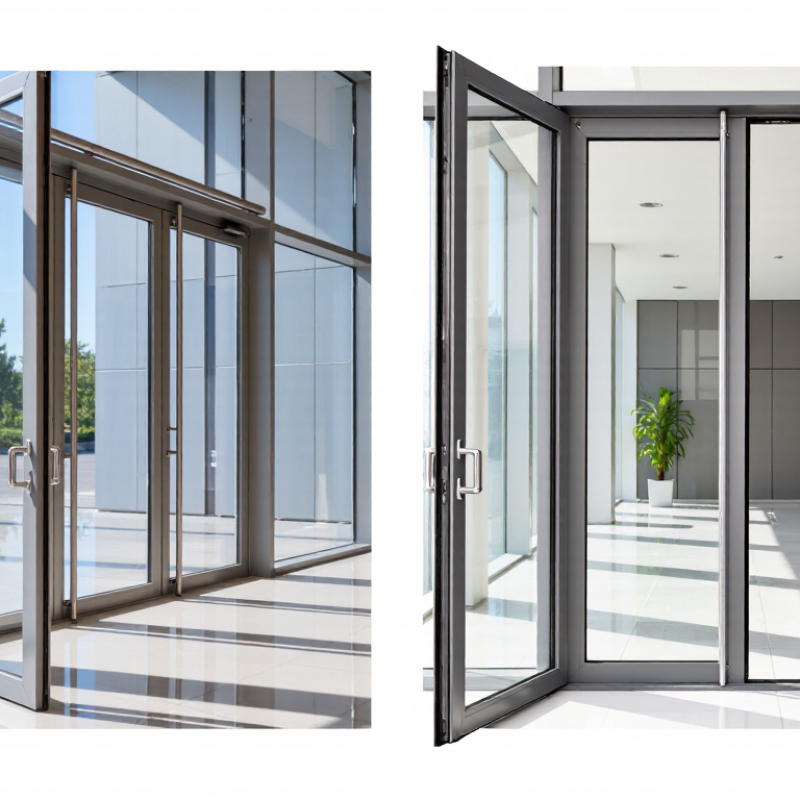
China Top 10 Aluminum Door Manufacturers for Global Buyers

How China’s Aluminum Door Manufacturing Industry Serves Global Buyers

China’s aluminum door industry serves global buyers through scale, customization, and integrated production. The International Aluminium Institute reported that China produced about 41.5 million tonnes of primary aluminum in 2023, nearly 60% of global output. This supply base supports stable access to profiles, hardware, glass, coatings, and thermal-break components. Buyers can often source complete door systems from one manufacturing region.

The export process is increasingly specification-driven. Factories commonly provide shop drawings, sample approvals, surface-finish testing, and packaging plans for long-distance delivery. The International Trade Centre records China as a major exporter of aluminum structures and related building components. However, trade volume alone does not prove manufacturing quality. Not enough.

Experienced buyers should examine alloy certificates, coating thickness, corner joints, drainage paths, and hardware compatibility. Test reports should identify standards clearly, rather than using vague claims such as “international quality.” Factory audits also reveal practical details: profile storage, glass protection, moisture control, and final inspection records. These details affect installation more than polished showroom images.

China’s advantage is flexible production. Manufacturers can adjust colors, opening directions, dimensions, glazing, and thermal performance for different climates. Yet customization can create errors when drawings lack local building requirements. The International Energy Agency continues to highlight building efficiency as an important route for reducing energy demand. Better doors can support that goal, but only when installation matches the tested design. Global buyers should compare total delivered performance, not just the lowest quotation.

Key Criteria for Selecting China’s Top Aluminum Door Manufacturers

Selecting China’s top aluminum door manufacturers requires more than comparing catalog prices. Start by checking their production experience, export history, and material control. A reliable factory should identify aluminum alloy grades, wall thickness, surface treatment, and hardware specifications clearly. Ask for recent project references with similar climates and door sizes. Real evidence matters more than polished brochures.

Factory verification is essential. Review production lines, welding areas, powder-coating equipment, and quality inspection records. Request samples before placing a large order. Test frame alignment, gasket compression, drainage, locking force, and glass installation. Small defects often appear at corners. They should not.

Independent testing for air leakage, water resistance, wind pressure, and thermal performance can support professional decisions. Check whether reports match the actual product configuration.

Communication also reveals manufacturing maturity. The supplier should provide accurate drawings, tolerances, packing details, and realistic lead times. Confirm who handles design changes, replacement parts, and warranty claims. Export experience helps with documentation and protective packaging, but it does not guarantee perfect performance. I have seen attractive samples fail after poor installation guidance. That risk deserves attention. A strong manufacturer offers installation manuals, responsive technical support, and traceable quality records. Still, buyers should verify every claim, because even experienced factories can overlook details during busy production periods.

Profiles of the Top 10 Chinese Aluminum Door Manufacturers

China’s top 10 aluminum door manufacturers serve different project needs, rather than one identical market. The first profile focuses on thermally broken doors for cold regions. Its production team checks polyamide strips, corner joints, and frame alignment. The second specializes in slim sliding systems for apartments and retail spaces. Large glass panels require careful roller testing.

The third profile represents a manufacturer experienced in fire-rated assemblies. It documents material behavior and installation limits clearly. The fourth produces customized entrance doors for hotels and offices. It combines CNC cutting with manual finishing around handles and hinges. The fifth focuses on coastal projects. Powder coating thickness and drainage design receive close attention. Salt air is unforgiving.

The sixth profile covers balcony and folding doors for high-density housing. Its engineers test repeated opening cycles and lock strength. The seventh supplies energy-efficient systems with insulated glass options. Buyers should request verified thermal data, not attractive promises. The eighth serves renovation contractors with standard-sized replacement doors. This can reduce site delays and measurement errors. The ninth develops oversized commercial doors, where reinforced frames and controlled delivery matter. The tenth supports export orders with drawings, sample approval, and packaging inspections.

These profiles should be compared through factory audits, sample reviews, and production records. Some manufacturers communicate well but still need stronger after-sales systems. Others offer excellent fabrication yet provide incomplete installation guidance. That weakness deserves attention. A reliable supplier should explain tolerances, warranty boundaries, spare parts, and local code responsibilities before production begins. Real experience often reveals details missing from a polished catalog.

Products, Customization, Certifications, and Production Capabilities

China’s top aluminum door manufacturers serve projects ranging from apartments to commercial buildings. Global buyers should compare products, customization, certifications, and production capabilities carefully. Standard options include sliding doors, hinged doors, folding systems, and thermally broken frames. Experienced suppliers can adjust profiles, glass types, colors, hardware, and opening sizes. A reliable factory should explain its design limits clearly. Overpromising is a warning sign.

Production capacity matters when schedules are tight. Review extrusion access, powder-coating lines, assembly areas, and packaging methods. Ask for monthly output, lead times, quality checkpoints, and sample approval procedures. Certifications should match the destination market, not merely decorate a website. Request current documents for tested materials, energy performance, fire resistance, and environmental management. Independent inspection can verify dimensions, coating thickness, glass safety, and operating performance. Factory visits or live video audits add useful evidence, although neither method is perfect.

Tips: Send detailed drawings and finish codes before requesting prices. Confirm tolerances, drainage design, wind-load requirements, and replacement-part support. Order a physical sample when the project is sensitive. Check whether production records are traceable. Small misunderstandings can become expensive after installation. Even capable manufacturers may miss a detail when specifications change late. A written approval process protects both sides.

Ordering, Quality Control, Pricing, and Export Considerations

China Top 10 Aluminum Door Manufacturers for Global Buyers

Choosing among China’s top 10 aluminum door manufacturers requires more than comparing online catalogs. Start with technical drawings, opening sizes, glass specifications, hardware requirements, and target delivery dates. Request a production sample before placing a large order. A sample reveals frame alignment, gasket fitting, surface texture, and locking performance better than photographs.

Quality control should cover incoming aluminum, alloy grades, wall thickness, welding, drainage holes, and coating consistency. Ask for inspection records and measurable coating data, not general promises. For export orders, confirm packaging details, pallet strength, corner protection, labeling, and container loading plans. Small damage during shipping can erase an attractive factory price. It happens.

Pricing must be compared on identical terms. Check whether quotations use EXW, FOB, or another delivery basis. Include tooling, mold charges, glass upgrades, hardware changes, inland transport, inspection fees, and import taxes in the landed-cost calculation. A low quotation may exclude essential components. A high quotation may include unnecessary upgrades.

Reliable suppliers should explain production capacity, lead times, replacement procedures, and document control clearly. Verify business licenses, factory addresses, quality certificates, and previous export experience through independent checks. Keep approved drawings and color samples signed before production begins. Even experienced buyers make mistakes when verbal changes replace written records. Build a payment schedule around milestones, with final balance linked to inspection results and shipping documents.

FAQS

What should buyers check before choosing an aluminum door manufacturer?

Review production experience, export history, alloy grades, wall thickness, finishes, and hardware details. Ask for recent project references. Brochures are not enough.

Why is factory verification important?

Factory checks reveal welding quality, coating equipment, assembly methods, and inspection habits. Review records and inspect corners, drainage paths, and frame alignment. Small defects matter.

Should buyers request physical samples?

Yes. Test gasket compression, locking force, glass fitting, drainage, and opening movement. A sample may expose problems hidden in drawings.

Which aluminum door types can experienced factories usually provide?

Common options include sliding, hinged, folding, and thermally broken systems. Factories may adjust glass, colors, profiles, hardware, and opening sizes.

How can buyers judge customization capability?

Send detailed drawings, finish codes, tolerances, and opening dimensions. Ask the factory to state its design limits clearly. Overpromising is a warning sign.

What production details should buyers confirm?

Ask about extrusion access, coating lines, assembly space, monthly output, checkpoints, and packing methods. Confirm realistic lead times. Capacity alone proves little.

Which certifications and tests are useful?

Documents should match the destination market and actual product configuration. Request evidence for air leakage, water resistance, wind pressure, thermal performance, and glass safety.

How does communication affect project reliability?

A capable supplier provides accurate drawings, packing details, installation guidance, and change records. Confirm responsibility for spare parts and warranty claims. Details get missed.

Can export experience guarantee good performance?

No. Export experience supports documentation and protective packaging, but installation guidance still matters. Attractive samples can fail after poor installation.

How can buyers reduce mistakes during production?

Use written approvals for drawings, finishes, hardware, and changes. Request traceable production records and independent inspection. Even experienced teams overlook details under pressure.

Conclusion

China’s aluminum door manufacturing industry has become an important sourcing option for global buyers because it combines large-scale production, flexible customization, competitive pricing, and established export experience. This guide explains how to evaluate China’s top Aluminum Door manufacturers by examining product quality, material selection, design capabilities, factory capacity, quality management systems, certifications, and experience with international orders. It also introduces ten leading manufacturer profiles without focusing on brand promotion, helping buyers compare their strengths and suitability for different projects.

The article covers common products, including entrance doors, sliding doors, folding doors, and customized architectural systems, as well as options for colors, glass, dimensions, hardware, and thermal performance. It further outlines practical considerations for requesting quotations, confirming specifications, inspecting production, controlling quality, calculating total costs, selecting suitable packaging, and managing export documentation and delivery schedules. These insights are intended to help global buyers make informed, efficient, and reliable purchasing decisions.

Ethan

Ethan

Ethan is a dedicated marketing professional with extensive knowledge of the company’s products, services, and overall business strategy. With a strong ability to translate complex product features into clear, practical insights, he helps customers better understand how the company’s solutions can......