Choosing a bathroom door seems simple until steam, splashes, tight spaces, and daily use expose weak details. An attractive finish alone does not guarantee lasting performance. An Aluminum Bathroom Door can offer a practical balance of light weight, corrosion resistance, and clean design. Yet quality depends on more than the metal frame.
This guide explores ten useful checks before you buy. Measure the opening carefully, including wall thickness, floor level, and available swing space. A few millimeters can affect alignment. Examine the aluminum grade, surface coating, glass or panel safety, hinges, handles, seals, and drainage-friendly design. Look for clear product specifications and tested finishes, not vague claims. In humid bathrooms, powder coating and properly sealed joints can reduce staining and moisture entry. Small details matter.
Real experience also teaches caution. A door may feel smooth in a showroom but behave differently after months of steam exposure. Cheap rollers, thin panels, or poor installation can create noise and leaks. I have found that buyers often focus on color first, then regret ignoring ventilation and maintenance access. That mistake is easy to repeat. No door is maintenance-free. Choose a model that you can clean, adjust, and repair without unusual tools. Compare manufacturer guidance, installer recommendations, warranty terms, and applicable local requirements. The best choice should fit your room, routine, and budget—not merely follow a fashionable photograph.
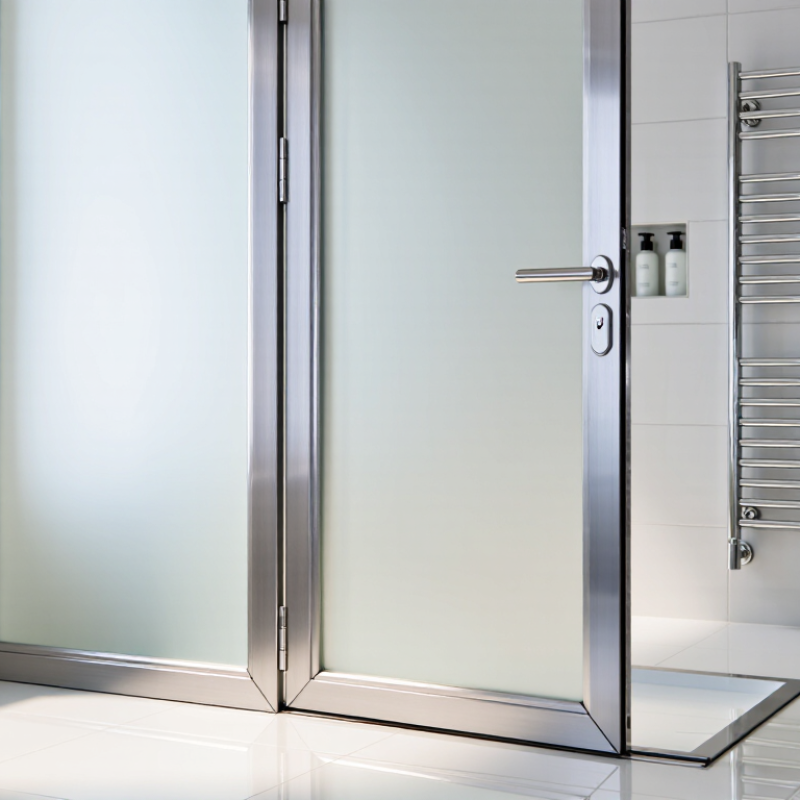
Define Your Bathroom Door Requirements and Available Space
Define Your Bathroom Door Requirements and Available Space
Tip 1: Measure the opening at the top, middle, and bottom. Walls are rarely perfectly square. Record width, height, and depth in millimeters. Tip 2: Check the door swing carefully. A door opening inward may strike a toilet, vanity, or shower screen. Sliding doors save space, but they need clear wall length.
Tip 3: Mark the wet zone before choosing the frame. Frequent splashing requires corrosion-resistant aluminum and dependable seals. Tip 4: Leave enough clearance for cleaning and maintenance. I once underestimated the space beside a vanity, making the handle awkward to use. That mistake was avoidable. Tip 5: Consider ventilation. A tightly sealed bathroom still needs safe airflow, especially after hot showers.
Tip 6: Confirm the wall structure can support the selected door system. Tiles alone may not provide reliable fixing strength. Tip 7: Think about accessibility, including handle height and opening force. Tip 8: Check the threshold. A low profile reduces tripping risk, but it must still limit water escape. Tip 9: Compare the actual opening with the manufacturer’s fitting tolerance. Do not rely on visual estimates. Tip 10: Recheck every measurement before ordering. Measurements can change after tiling, flooring, or trim installation. My advice is practical, but each bathroom has different constraints. A final site check remains worthwhile.
10 Tips for Choosing an Aluminum Bathroom Door - Define Your Bathroom Door Requirements and Available Space
| Tip | Requirement to Define | Useful Measurement or Data | Recommended Selection Guideline | Pre-Installation Check |
|---|---|---|---|---|
| 1. Measure the opening accurately | Confirm the available width, height, and wall thickness before ordering. | Measure width at the top, middle, and bottom; measure height on both sides and in the center. Record the smallest dimension. | Choose the door size based on the smallest verified opening measurement, allowing the clearance specified by the installation system. | Check whether the opening is square, plumb, and free from obstructions such as trim, pipes, or towel rails. |
| 2. Select the correct opening type | Decide between a hinged, sliding, pivot, or bi-fold aluminum bathroom door. | A hinged door needs a clear swing area; a sliding door needs sufficient wall or panel overlap; a bi-fold door needs folding clearance. | Use a sliding design where floor space is limited. Use a hinged design where a wider, simpler access route is preferred. | Open the proposed door on a floor plan or with masking tape to verify that it will not hit fixtures. |
| 3. Plan for comfortable access | Define the required clear passage for household members and potential accessibility needs. | A clear opening of 813 mm (32 in) is a widely used accessibility benchmark in the United States; local codes may differ. | Select a door and frame combination that provides the required clear opening after accounting for hinges, seals, and hardware. | Verify local building requirements, especially for accessible bathrooms, rental properties, and public facilities. |
| 4. Match the door to moisture conditions | Assess exposure to steam, splashing water, condensation, and cleaning chemicals. | Bathrooms commonly experience high humidity and repeated wetting, particularly near showers and bathtubs. | Choose corrosion-resistant aluminum components with durable finishes, sealed joints, and replaceable water seals. | Confirm that the finish and hardware are rated for wet interior locations and that drainage paths are not blocked. |
| 5. Define privacy requirements | Determine how much visibility and natural light are appropriate for the bathroom. | Options include opaque panels, frosted glass, textured glass, translucent plastic panels, or solid infill. | Use opaque or frosted glazing for direct sight lines; use clear glazing only where privacy is provided by the room layout. | Check visibility from adjacent rooms, mirrors, windows, and shared circulation areas. |
| 6. Choose suitable panel construction | Balance light transmission, privacy, weight, and impact resistance. | Panel materials may include safety glass, acrylic, polycarbonate, or solid moisture-resistant boards. | For glazed doors, specify safety glazing where required by local regulations, especially near wet areas and floor level. | Review the panel thickness, edge protection, safety markings, and compatibility with the aluminum frame. |
| 7. Check ventilation needs | Determine whether the bathroom relies on mechanical ventilation, transfer air, or a gap beneath the door. | A tightly sealed door can reduce air transfer when no separate ventilation path exists. | Coordinate the door with the exhaust-fan layout and any required undercut or transfer grille. | Confirm that the planned seals do not unintentionally block the room’s required airflow path. |
| 8. Select practical hardware | Define the handle, lock, hinges, rollers, and emergency-release requirements. | Wet-area hardware should tolerate frequent contact with water, humidity, and cleaning products. | Prefer smooth, easy-to-grip hardware with corrosion-resistant components and accessible adjustment points. | Make sure the lock can be released from outside in an emergency where required by local safety practice. |
| 9. Confirm water-control performance | Determine how effectively the door must limit water escaping from the shower or wet zone. | Water control depends on the threshold, seals, panel overlap, floor slope, and the direction of spray. | Use continuous seals and suitable overlaps near direct spray; avoid relying on the door alone where a shower curb or screen is needed. | Check floor drainage, threshold height, seal contact, and whether the door opens toward or away from the wet zone. |
| 10. Plan maintenance and replacement | Estimate cleaning frequency, access to replacement parts, and long-term adjustment needs. | Common maintenance items include seals, rollers, hinges, handles, screws, and surface-cleaning materials. | Choose a design with accessible fasteners, replaceable seals, smooth surfaces, and clear cleaning instructions. | Keep the installation instructions, measurements, and spare-part specifications for future repairs. |
Note: Dimensions and accessibility guidance should be checked against the building codes and safety requirements applicable to the installation location.
FAQS
Measure the width, height, and depth at the top, middle, and bottom. Record every result in millimeters. Walls may not be square. Recheck after tiling, flooring, or trim installation.
Open the door fully and inspect nearby toilets, vanities, and shower screens. A small clearance error can make the handle awkward. Sliding doors save floor space, but they need clear wall length.
Frequent splashing requires corrosion-resistant aluminum, sealed joints, and dependable seals. Wipe away mineral deposits, salt, and cleaner residue. Aluminum still needs care.
Yes. Confirm whether fixing enters tile, concrete, or a waterproof membrane. Tiles alone may not provide dependable support. Ask how the installer will protect waterproofing during drilling.
A low threshold reduces tripping risk, especially near the shower entrance. It must still limit water escape. Ask how water will drain beside the threshold. A raised lip can control splashes but create a trip point.
Yes. Hot showers create humid air, even with sealed joints. Plan safe airflow to reduce lingering moisture. This detail is easy to overlook.
Wipe the frame and hardware regularly, especially after cleaning. Rinse away salt or chemical residue. Check hinges and seals twice yearly. Small defects can become expensive.
Confirm coverage for the frame, finish, seals, hardware, labor, and water-related defects. Ask for delivery, removal, trimming, waterproofing repairs, and final adjustment in writing. A long frame warranty may exclude installation damage or coastal corrosion.
Compare the total five-year cost, not only the purchase price. Include replacement seals, service visits, installation, and possible repairs. The cheapest quote may omit important work. My earlier assumption about low cost was not reliable.
Conclusion
Choosing the right Aluminum Bathroom Door begins with understanding your bathroom’s layout, available space, ventilation needs, and preferred level of privacy. Measure the opening carefully and consider whether a sliding, hinged, or folding design will work best. Compare aluminum grades and profile thicknesses to find a balance between strength, weight, corrosion resistance, and appearance. Surface finishes should complement the room while remaining easy to clean. Glass selection is also important, with options varying in transparency, texture, privacy, and safety.
Before purchasing, inspect the door’s waterproofing details, seals, hinges, handles, locks, and other hardware. Reliable safety features and smooth opening mechanisms can improve daily comfort and long-term performance. Also determine whether professional installation is needed, how much maintenance the door requires, and what warranty coverage is provided. Finally, evaluate the complete cost, including delivery, installation, upkeep, and potential replacement parts, rather than focusing only on the initial purchase price.